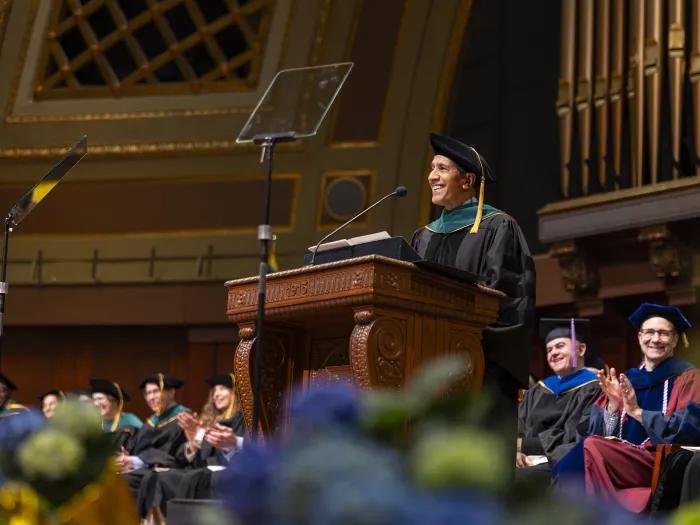
DeMarcus Burke, MD student: Finding community and exploring passions
DeMarcus’ Michigan Answer: I came to Michigan searching for purpose and belonging in medicine. While here, I learned that caring for people starts with knowing yourself. Through reflection, research and advocacy, I’ve found meaning that feels like home.
DeMarcus Burke (he/him) is originally from Mobile, AL. He knew he wanted to be an anesthesiologist since his high school days, but didn’t grow up around anyone in medicine. After graduating from Morehouse College in 2017, DeMarcus found his way to the University of Michigan Medical School to pursue this dream. While he had no family in Michigan, he soon found community and support through Phi Rho Sigma and LEAD, numerous student groups and supportive faculty and mentors. DeMarcus enjoys research, mentoring others and has developed a passion for global health and creative writing. He plans to graduate UMMS in 2028 and specialize in anesthesiology.
What are the ways in which you’ve been able to explore your passions during med school, and what resources or people have helped you do so?
At Michigan, I’ve been able to explore the many sides of who I am — research guy, global citizen and creative thinker. Through our Global REACH office, I connected with a mentor and a graduating student who helped me join a health equity research project focusing abroad, something I’d dreamed about since before medical school. Global work has always felt personal to me; my paternal family lives in Israel, and before Michigan I spent time in South Africa and Zimbabwe learning about health equity, HIV/AIDS care and social justice.
Working with my anesthesiology mentor in the pain lab has been one of the highlights of my Michigan experience. It’s helped me grow as a researcher and confirm my passion for pain medicine. Beyond academics, the Medical Humanities Path of Excellence encouraged me to keep writing and reflect on my experiences, and I even started taking piano lessons — a childhood dream I’d never had time to pursue. Michigan has been the kind of place that lets me explore every part of who I am and keeps opening doors to new interests.
What is your Path of Excellence, why did you choose to pursue it, and what have you enjoyed most about it?
I joined the Medical Humanities Path of Excellence because I’ve always loved the arts. As a philosophy grad who writes to clear his mind, it’s my way to step outside medicine and reconnect with purpose. The Path gave me the freedom and mentorship to keep writing, even when school got busy, and reminded me that creativity belongs in medicine too. The sessions are unlike anything else — one day we listened to an oboist share how a surgeon saved her career; another, we reflected on artwork that mirrored our experiences in medicine and life. Seeing my classmates’ creative sides helped me find my own voice and the confidence to share my work more openly. Since then, my writing has been published in a few journals, and most recently, I was named a 2025 Rattle Poetry Prize Finalist (watch this video for a reading of my poem, Inheritance).
Briefly describe your Capstone for Impact project and what you’ve gained from this process.
My Capstone project, Tomorrow’s Keepers of the OR (TKO — Anesthesiology, get it?), plans to introduce wellness, creative writing and anesthesiology to high school students from marginalized backgrounds. I knew I wanted to be an anesthesiologist in high school but didn’t personally know any. My only exposure came through childhood surgeries, where I admired their calm and confidence. I wanted to give students that same spark. I’m planning a simulation day with med students, residents and faculty — complete with interactive simulations, mentorship panels, mindfulness breaks and a poetry session. Putting this project together has shown me how much I love mentorship and outreach, and I’m excited to see it come to life.
Share the health disparities, health equity and/or social justice work you’ve become involved in at Michigan.
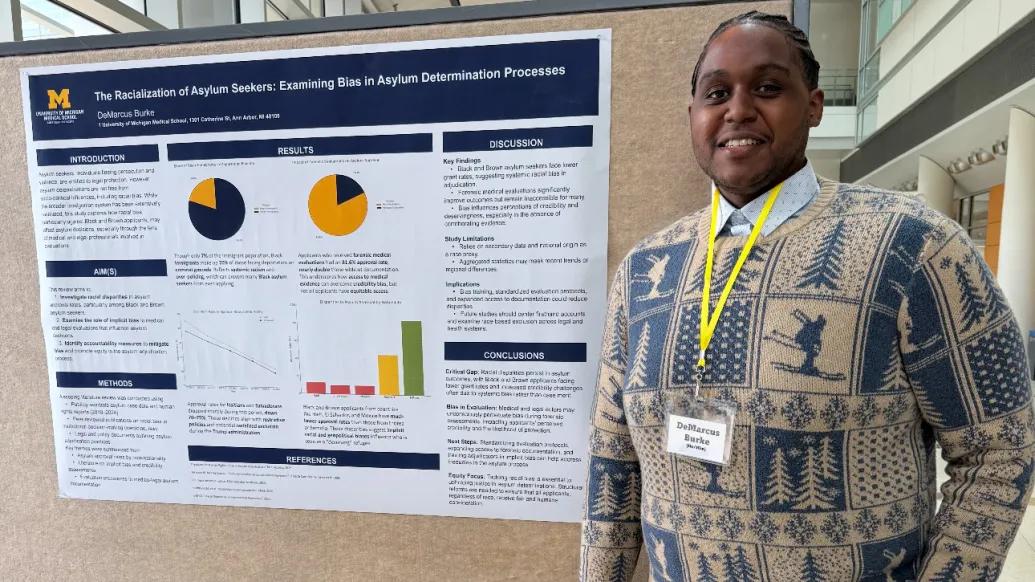
Most of my health equity work is through the University of Michigan Asylum Collaborative (UMAC), where we organize affidavit-writing and forensic medical evaluation sessions for people seeking asylum. Helping coordinate support for survivors of trauma has changed how I view medicine — it’s about safety, trust, and bearing witness. Our student teams also conduct research to expand the literature and raise awareness about asylee health, publishing and presenting work that highlights ongoing barriers to care.
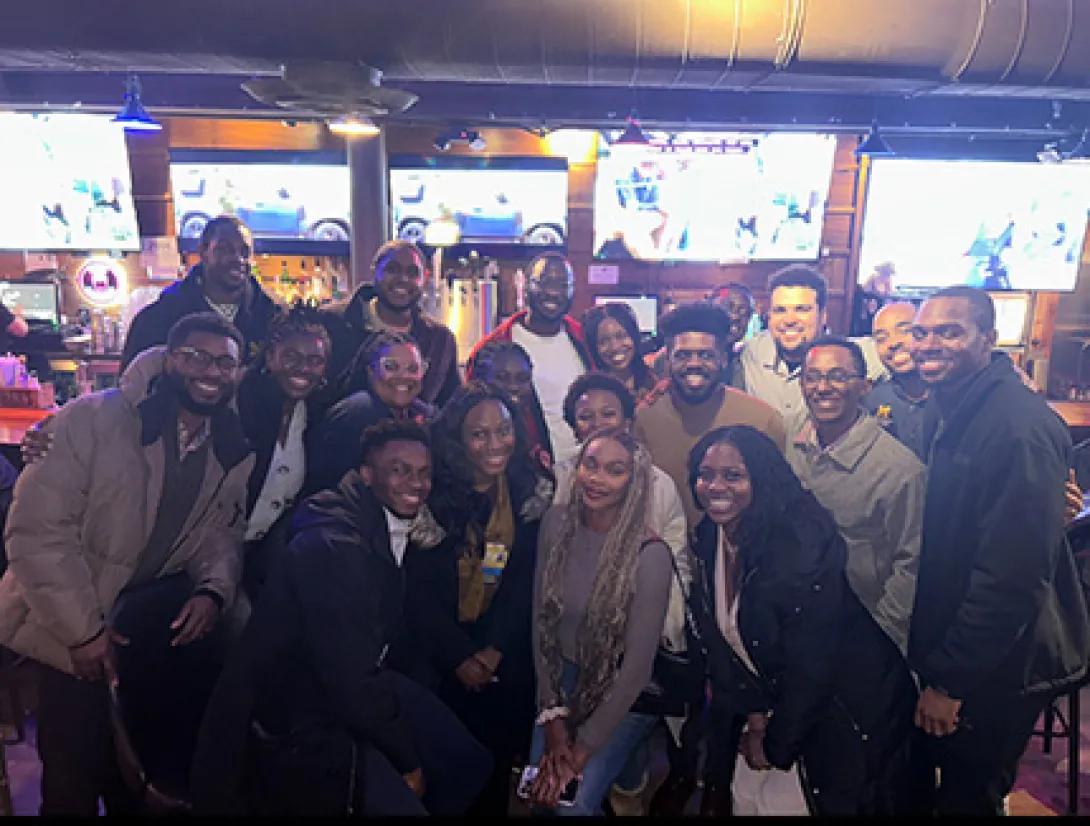
I also serve on the Student Diversity Council’s Activism Committee. Last academic year, I helped form the Diversity Coalition, which connects all identity-based and health equity groups across Michigan Medicine. I also began building a centralized document to help students find resources for reporting bias and discrimination. Through the Global Health Sustainable Partnership Program, our team is currently connecting Michigan faculty with needs statements from Dhulikhel Hospital in Nepal to build long-term collaboration. Being involved in this kind of work brings meaning to the medical journey for me. If there’s an interest of yours, Michigan definitely has it and plenty of people ready to help you grow it.
How have you been able to connect with faculty mentors and/or peer mentors and how has that been important to your med school journey?
One of the best things about Michigan is how approachable everyone is. I’ve stopped by the faculty and deans’ offices just to say hi (and maybe for the snacks), and they’re always happy to talk. That sense of access, from leadership to residents, makes the school feel small in the best way.
Additionally, I often grab lunch or work on projects with my mentor, and faculty regularly host students in their homes for dinners and events. As someone who didn’t grow up around medicine, that openness has meant a lot. Having mentors who truly care makes the difference between just getting through school and feeling like you belong.
How do you manage your personal well-being as a med student, or, how do you reset/recharge?
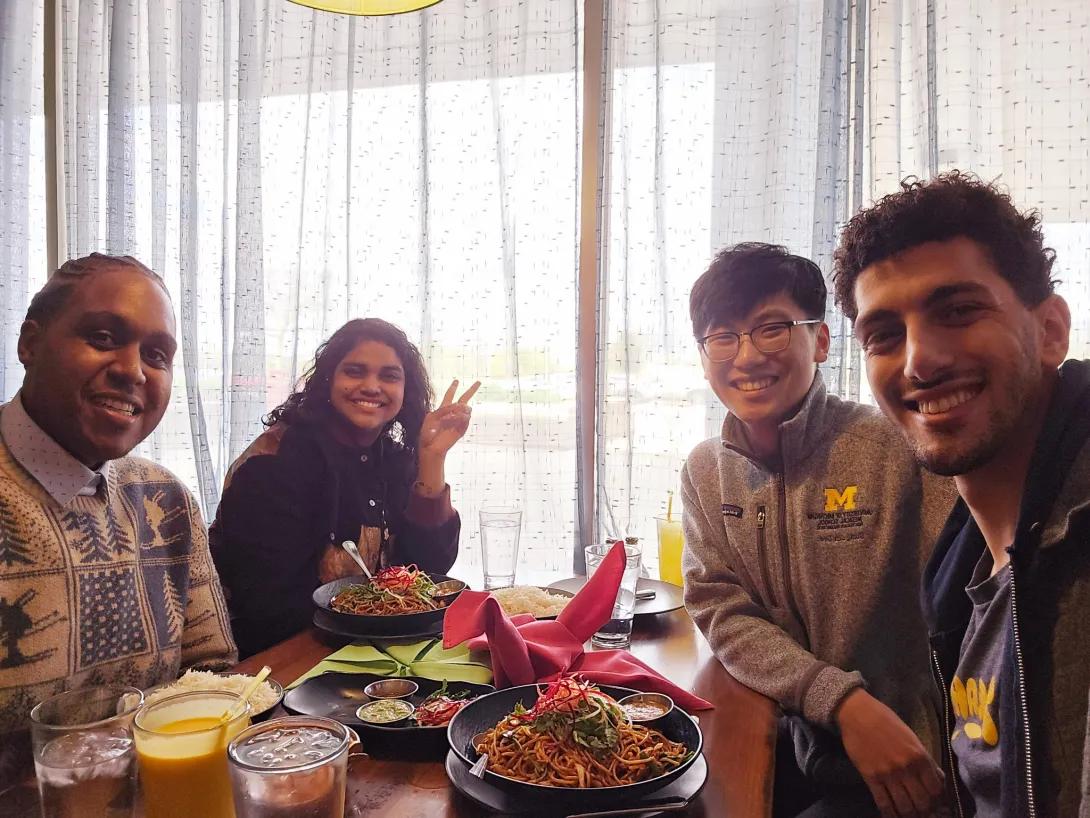
I write and journal outside, take nature walks, lift a few days a week, call my family and never miss NFL Sundays or a LeBron James game. Living in the Phi Rho Sigma house helps, too, as there's always something happening: cooking, dining out, catching a movie or late-night talks in the “war room,” our study lounge. We’ve hosted everything from coffee tastings to our annual Halloween party. Through it all, friends, food and laughter keep me grounded and remind me to enjoy the journey.
What would you say to a prospective student who is considering the University of Michigan Medical School for their medical education?
Stay true to yourself, believe in yourself and know that you’re worthy — Michigan would be lucky to have you. You’re coming to a place that gives you room to grow and make change. There’s an organization for almost every passion, and if something doesn’t exist, you can start it.
You’ll also appreciate the accelerated preclinical year, which gives you more time later in your journey to explore what matters most. If I’ve found space here for global health, anesthesiology, research, food and creative writing, you can too. If you’re looking for that balance outside of the classroom, Ann Arbor offers it. It’s peaceful and close-knit, yet big enough to slip away when you need quiet. It’s the best of both worlds — challenging, inspiring and a place where you can simply be yourself.
How have you found community and/or support at UMMS? What would be your advice for prospective students seeking community and/or support?
As a Black male from a marginalized community with no family in Michigan, I worried about feeling alone in medicine. But from the moment I arrived, I started finding community in ways that surprised me. Living in the Phi Rho Sigma Medical Society house has been the biggest part of that. Twenty-six medical students share one roof — we eat lunch and dinner together, host school events, study side by side, mentor each other, volunteer as a house and hold one another accountable. It’s truly become a home within the medical school.
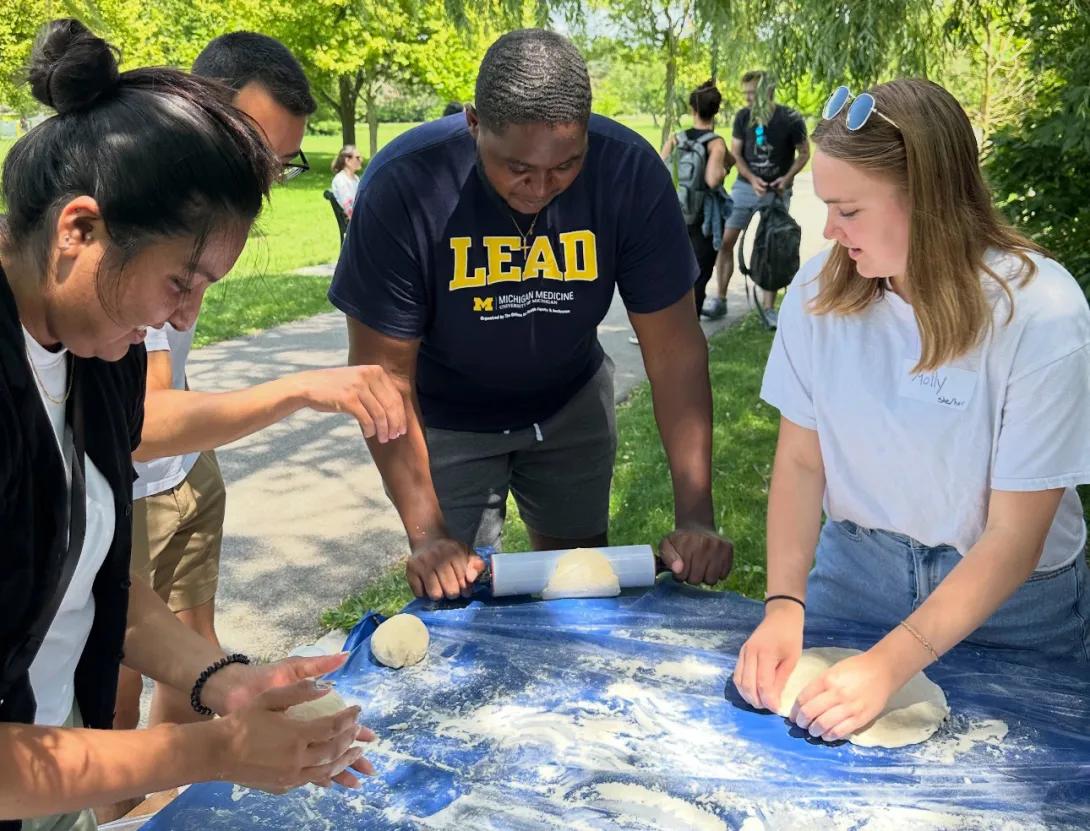
Before classes even began, I joined the LEAD program, which helped me build friendships early through leadership activities and shared experiences. I also found connection through the Black Medical Association, where I can talk about medicine and life with peers who understand my background. Outside of school, I attend a weekly fellowship hosted by a faculty member who welcomes students and community members for dinner and religious reflection.
My advice is simple: seek out spaces where you feel seen, but don’t wait for community to find you — create it wherever you go. Sometimes it starts with a simple hello.
Media Contact
MD Admissions
University of Michigan Medical School
Featured News & Stories
One Patient, Five Schools: Building Interprofessional Care at Michigan's Student-Run Free Clinic
Learning about the Life Loaf: My Experience Working in OBGYN Research
Medical students develop novel technological solutions for unmet patient needs
White Coat Ceremony marks start of medical school journey for incoming M1s
Get ready to welcome new medical students at White Coat Ceremony on July 26