
More articles about: Cancer Research

Health Lab
‘We might for the first time really be thinking of cures of cancer’
Founding Rogel Cancer Center Director reflects on how cancer evolved from ‘the least scientific discipline’ to a shining example of how basic research discoveries can change clinical care.

Health Lab
Everyone plays a role in improving cancer health equity
As guest editor for a themed journal issue, Lori Pierce helps highlight the multiple factors that can make cancer care and prevention more equitable and reduce the burden of this disease for all
Health Lab
Treating prostate cancer without major side effects
Recently approved by the Food and Drug Administration, Pluvicto is a radionuclide-labelled drug administered to patients showing promising results.

Health Lab
Metabolite tells cells whether to repair DNA
Findings from researchers at the University of Michigan Health Rogel Cancer Center, published in Cancer Discovery, show how a specific nucleotide metabolite called GTP controls responses to radiation and chemotherapy in an unexpected way.

Health Lab
Hungry for more
Metabolism pathways make tumors sensitive or resistant to treatments. A collaborative group leverages these avenues to explore the growing foundation of new potential therapies

Health Lab
Tumor-destroying soundwaves receive FDA approval for liver treatment in humans
Michigan Medicine has developed a new technique that provides a non-invasive alternative to surgery, chemotherapy and radiation treatments for cancer.

Health Lab
Early findings suggest clinical and lab-based approach critical to tracking head and neck cancer recurrence
Early findings of two studies from the University of Michigan Rogel Cancer Center shed light on new ways to anticipate recurrence in HPV-positive head and neck cancer sooner. The papers, published in Cancer and Oral Oncology, offer clinical and technological perspectives on how to measure if recurrence is happening earlier than current blood tests allow, and provide a framework for a new, more sensitive blood test that could help in this monitoring.
Health Lab
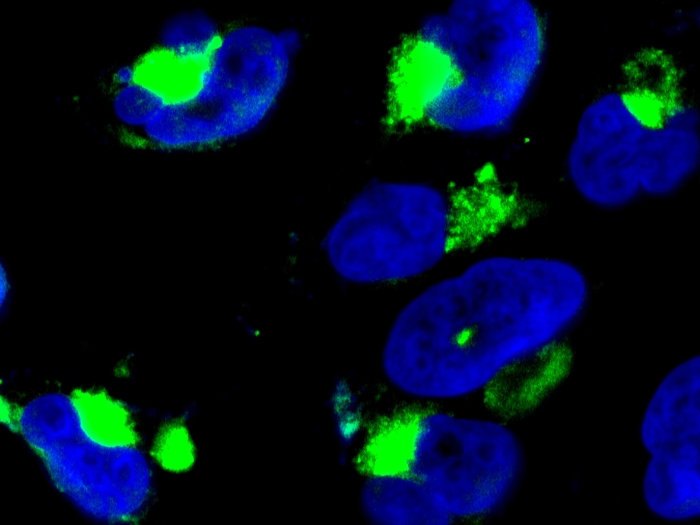
Gene therapy for brain tumor shows promising early results in humans
Research from the University of Michigan Department of Neurosurgery and Rogel Cancer Center shows promising early results that a therapy combining cell-killing and immune-stimulating drugs are safe and effective in extending survival for patients with gliomas, a highly aggressive form of brain cancer.
Health Lab
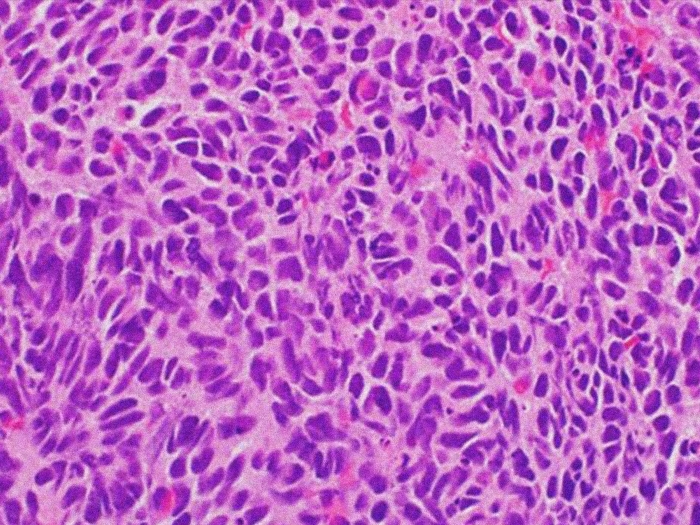
Study shows new approach to target deadly form of prostate cancer
A study from the University of Michigan Rogel Cancer Center uncovers a new mechanism to explain why some prostate tumors switch from a common, treatable form to a more rare and aggressive form of prostate cancer.

Health Lab
Study brings insight to kidney cancer with gene mutation
A study from clinicians and researchers at the University of Michigan Rogel Cancer Center reveals findings from over 800 clinical assays performed for kidney patients with MiTF family gene mutations.
Health Lab
Cancerous brain tumor cells may be at ‘critical point’ between order and disorder
Research, led by Michigan Medicine and the University of Michigan, suggests that glioblastoma cells are poised near a “critical point” of order and disorder — meaning, the cells possess some form of large-scale coordination throughout the whole tumor that allows them to respond in practical unison to attempts to kill tumor cells, such as chemotherapy or radiation.

Health Lab
Awake surgery for cancerous brain tumor brings referee back to the mat
After an awake surgery to remove a cancerous brain tumor, a Michigan man is living “more deliberately” than ever — officiating a high school wrestling state championship and participating in research for a potential cure.
Health Lab
Research sheds light on low rates of genetic testing for cancer
Research finds genetic testing for cancer can bring more knowledge to patients and their relatives, but not many people get it done.
Health Lab
You’ve got some nerve
Researchers at Michigan Medicine have identified a new metric to articulate the relationship between nerve density and oral cancer. The study investigated normalized nerve density to translate previous mechanistic studies into a context that could be used in the clinic.

Health Lab
Financial toxicity of cancer impacts partners’ quality of life
Financial toxicity of cancer impacts partners’ quality of life, with people reporting pain, fatigue and sleep issues tied to missed work and medical bills
