
More articles about: Cancer Research

Cancer Aware
University of Michigan’s Impact on the Future of Cancer Care
Four University of Michigan faculty members have served as president of the American Society of Clinical Oncology, a rare distinction that only two other institutions can claim. ASCO is the world's leading professional organization for physicians and oncology professionals caring for people with cancer.
In this episode, Nicole Fawcett, director of communications for the Rogel Cancer Center, sat down with four past ASCO Presidents and talked about the importance of the society, the impact it has had on cancer care and research as a whole and the impact here at U-M.
Participants:
Allen Lichter, MD, FASTRO
Doug Blayney, MD
Dan Hayes, MD
Lori Pierce, MD
Health Lab
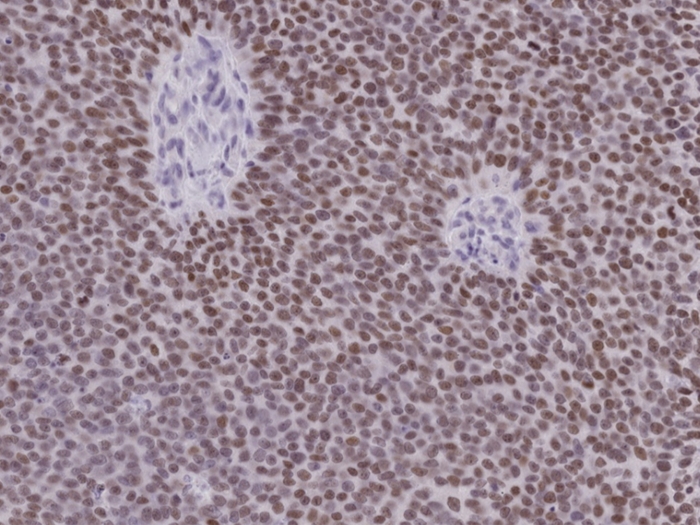
Researchers find early driver of prostate cancer aggressiveness
University of Michigan Health Rogel Cancer Center scientists identified a gene that plays a key role in prostate cancer cells that have transitioned to a more aggressive, treatment-resistant form. The gene can be indirectly targeted with an existing class of drugs, suggesting a potential treatment strategy for patients with aggressive subtypes of prostate cancer.

Health Lab
Interplay between key proteins could serve as a target for cancer treatment
University of Michigan researchers have identified that the balance between two proteins—STAT3 and STAT5—is important for making tumors vulnerable to immune checkpoint therapy, and targeting STAT3 degradation is a potential novel cancer immunotherapy strategy.

Philanthropy News
Dedicated football fans create professorship for life-saving research after wife’s glioblastoma treatment
U-M football fans Jim and Connie Achtenberg are turning their experience with glioblastoma into hope by funding research at Rogel Cancer Center.

Philanthropy News
Granger family supports prostate cancer research with dedicated fund
With the same high standards that drive their successful construction company, Glenn and Trish Granger approach philanthropy with a commitment to meaningful impact.

Health Lab Podcast
Using biolasers to improve cancer diagnostic tools
Lighting up cancer cells with biolasers. The technique overcomes the limitations of current cancer diagnostic tools.
For more on this story and for others like it, visit the Health Lab website where you can subscribe to our Health Lab newsletters to receive the latest in health research and information to your inbox each week. Health Lab is a part of the Michigan Medicine Podcast Network, and is produced by the Michigan Medicine Department of Communication. You can subscribe to Health Lab on Apple Podcasts, Spotify, or wherever you listen to podcasts.

Health Lab
How breast cancer cells survive in bone marrow after remission
A new study from researchers at the University of Michigan and the University of California San Diego has shed light on a previously poorly understood aspect of breast cancer recurrence: how cancer cells survive in bone marrow despite targeted therapies.

Health Lab
How race impacts patients’ response to cancer immunotherapy
The first large scale analysis finds immune checkpoint inhibitors are equally effective in Black and white patients, with Black patients having fewer side effects.

Health Lab
Enzyme identified as new therapeutic target for “cold” tumors
A study identifies an enzyme as a new therapeutic target for “cold” tumors.
Health Lab
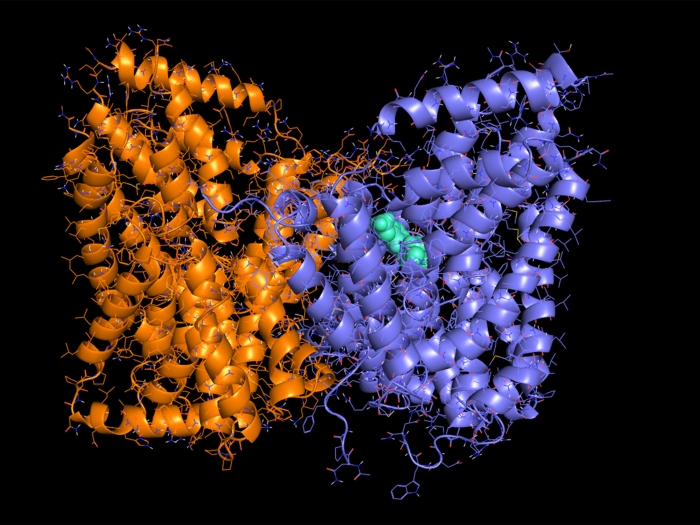
Researchers find metabolic mechanism that blocks immune response, immunotherapy in cancer
New research has discovered why some cancers don’t respond to immunotherapy treatment: A metabolite transporter within the tumor microenvironment blocks a key type of tumor cell death integral to immune response.

Health Lab
A collaborative approach to pancreatic cancer
The Rogel and Blondy Center for Pancreatic Cancer is a center of excellence in pancreatic cancer research, combining pioneering research with innovative clinical care and an array of clinical trials. Center co-director Marina Pasca di Magliano explains that the key to a robust research program and responsive care lies in collaboration.

News Release
Rogel Cancer Center receives $50M gift to revolutionize pancreatic cancer care, research
New Rogel and Blondy Center for Pancreatic Cancer will bring together researchers and clinicians to drive forward new treatments and improve outcomes

Health Lab
Research points to potential new treatment for aggressive prostate cancer subtype
In two separate papers, U-M researchers describe how a gene alteration drives prostate cancer and a potential degrader that stops it
Health Lab
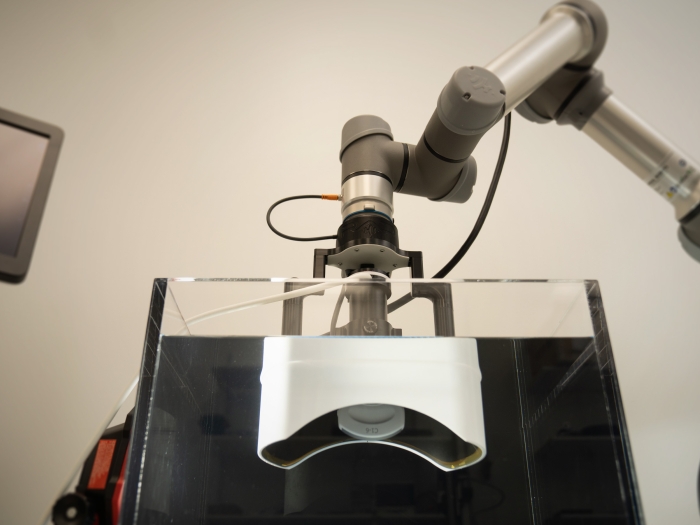
Histotripsy liver tumor trial successful, early clinical adoption recommended
The #HOPE4LIVER trials, testing the safety efficacy of histotripsy as a treatment for primary and metastatic liver tumors, met its goals for technical success and safety. An expert explains more about it in this article.
Health Lab
Organoid model predicts bladder cancer treatment response
Researchers have developed a new model to help predict treatment response in patients with bladder cancer.
