Dr. Sanjay Gupta to serve as 2026 Medical School Commencement speaker
A University of Michigan and Medical School alumnus, he is the multiple award-winning chief medical correspondent for CNN and host of the CNN podcast Chasing Life
Author |
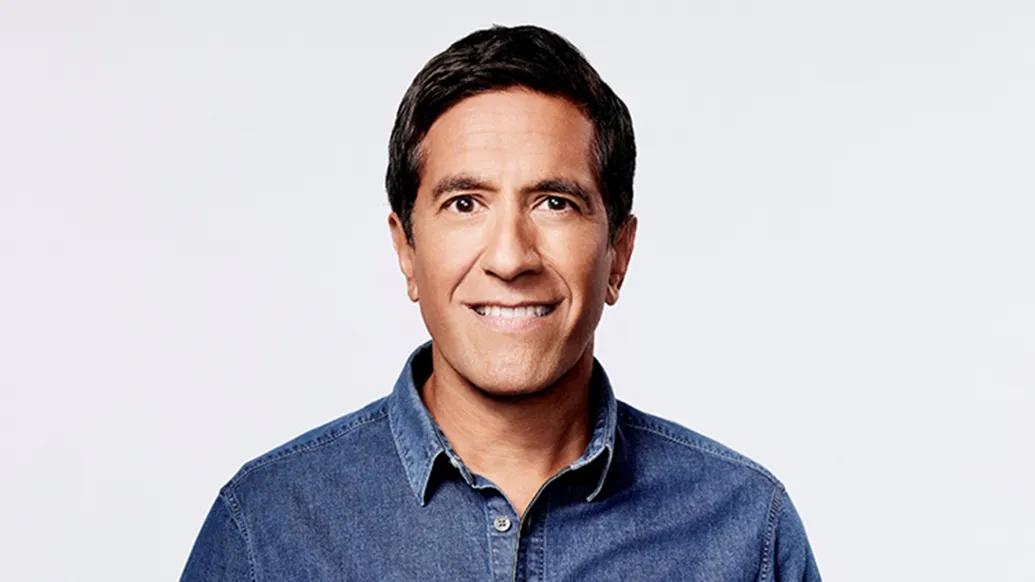
University of Michigan and Medical School alumnus and CNN Chief Medical Correspondent Sanjay Gupta, M.D., will deliver the 2026 Commencement address. The ceremony will be 3-5 p.m. on May 15 in Hill Auditorium.
Gupta is the multiple award-winning chief medical correspondent for CNN and host of the CNN podcast Chasing Life. A practicing neurosurgeon and #1 New York Times best-selling author, he plays an integral role in CNN’s reporting on health and medical news for all of CNN’s shows, networks and platforms. He has increasingly focused on long-form documentary reporting and over the last 25 years has hosted or produced more than 100 films. His enterprise reporting on medical marijuana has led to seven documentary films, “Weed,” which were awarded the Alfred I. DuPont-Columbia University Award. He hosted the CNN Original Series “Chasing Life with Dr. Sanjay Gupta,” which followed his travels around the world in search of the secret to living longer, healthier and happier.
Since 2001, Gupta has covered some of the most important health stories in the United States and around the world, including conflicts, natural disasters and outbreaks. During many of these reporting assignments, he has been asked to perform emergency lifesaving brain surgery, as he has done on desert battlefields, field hospitals and military ships. The U.S. Navy awarded him their “In the Midst of Heroes” award. Throughout the COVID-19 pandemic, he reaffirmed his role as a trusted guide to viewers worldwide on navigating between facts and fiction. A few months after joining CNN, he reported from New York following the 9/11 terror attacks. In 2004, he was sent to Sri Lanka to cover the tsunami that claimed more than 155,000 lives in Southeast Asia, contributing to the 2005 Alfred I. duPont-Columbia University Award for CNN. In 2005, he contributed to CNN’s Peabody Award-winning coverage of Hurricane Katrina. His “Charity Hospital” coverage resulted in a 2006 News & Documentary Emmy for Outstanding Feature Story. His 2010 coverage of the earthquake in Haiti resulted in two more Emmy awards. He extensively covered the Flint, Mich., water crisis. In 2018, he co-hosted “Finding Hope: Battling America’s Suicide Crisis,” for which he won another Emmy Award.
In addition to his work for CNN, Gupta is an associate professor of neurosurgery at Emory University Hospital and associate chief of neurosurgery at Grady Memorial Hospital in Atlanta. He serves as a diplomate of the American Board of Neurosurgery and is a member of the American Academy of Arts and Sciences. In 2019, he was elected to the prestigious National Academy of Medicine, considered one of the highest honors in the medical field.
Gupta has won several awards for his humanitarian efforts and the John F. Kennedy University Laureate Award. He has received numerous honorary degrees and delivered the 2012 Spring Commencement address in the “Big House” at his alma mater. He earned his undergraduate degree from the University of Michigan and Doctor of Medicine degree from the U-M Medical School, and completed his neurosurgery residency here. He is the proud father of three daughters, one of whom — no surprise — is now a Wolverine.
Featured News & Stories
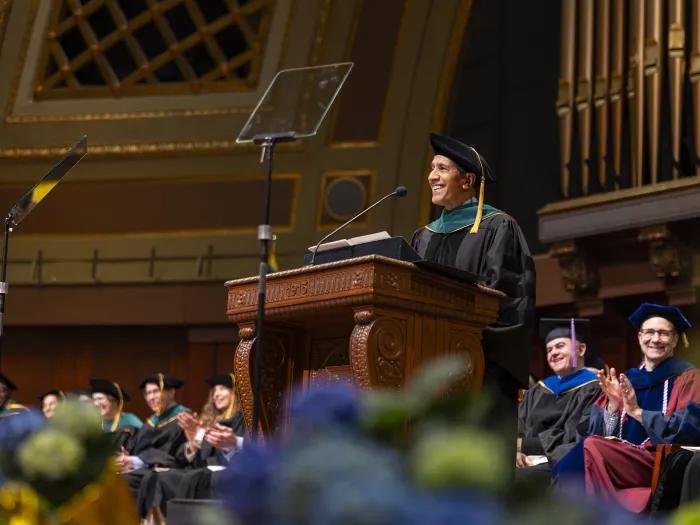
Human connection takes center stage at Medical School Commencement
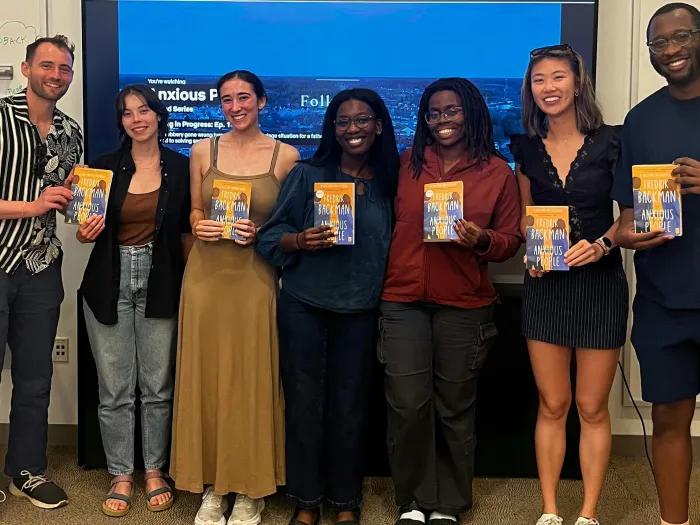
Reading as an Empathy and Community Practice: Building a Medical Student Book Club
Jacob Mack: Helping Trainees Take the Next Step

From Uganda to Ecuador: A Journey of Adaptability
One Patient, Five Schools: Building Interprofessional Care at Michigan's Student-Run Free Clinic