Phase 1 trial of alrizomadlin shows promise in targeting metastatic salivary gland cancers
Drug developed in U-M labs suggests potential new treatment options for this rare cancer
5:00 AM
Author |

Salivary gland cancers are a rare type of tumor, affecting approximately 2500 patients in the United States each year.
The most common type of salivary gland cancer is adenoid cystic carcinoma, which affects the glands that release saliva, tears and sweat.
Tumors typically grow slowly, and it may take years for symptoms to appear.
Symptoms can include painless lumps in the mouth or throat, weakened muscles in the face or numbness in the face or neck.
Although many patients are cured with a combination of surgery and radiation, recurrence is common for which there is no treatment.
University of Michigan researchers, in partnership with Ascentage Pharma, developed a drug known as alrizomadlin, or APG-115, to target metastatic salivary gland cancers.
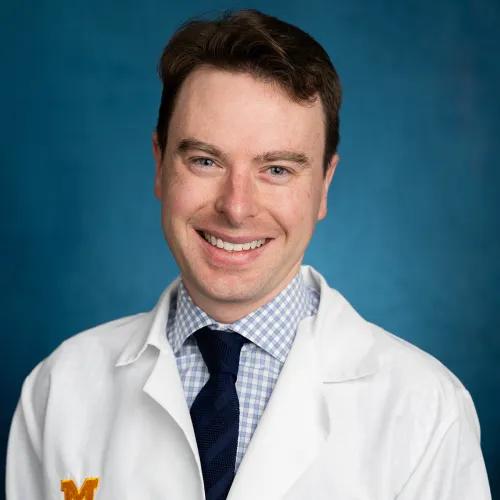
Paul Swiecicki, M.D., Clinical Associate Professor of Internal Medicine-Hematology/Oncology and member of the Rogel Cancer Center, was principal investigator on a phase 1 trial testing alrizomadlin in salivary gland tumors.
Here, he answers questions about the current therapeutic approaches, how the drug was developed at the University of Michigan, results of the recently completed clinical trial and what they mean for future treatment regimens.
What are the challenges for treating salivary gland cancers?
Swiecicki: There are more than 26 types of salivary gland cancers, including adenoid cystic carcinoma and salivary ductal carcinoma, and they’re all rare, so there haven’t been many clinical trials.
One of the challenges is we have to consider each type of cancer separately with respect to how fast they grow and spread in the body.
Due to the rarity of these tumors, there are no FDA-approved treatments for recurrent or metastatic salivary gland cancers.
Occasionally, we can use targeted treatments based on genetic testing, but those are uncommon.
How did University of Michigan researchers develop a new drug for adenoid cystic carcinoma?
Swiecicki: The University of Michigan has been a leader in novel targeted drugs.
Additionally, our researchers have been pioneers in discovering what makes adenoid cystic cancer grow and are national leaders in conducting clinical trials for recurrent or metastatic salivary gland cancers.
Due to the efforts of Jacques Nor’s group, we have been able to develop some of the first adenoid cystic cell lines.
Although a small step, this has been a game changer to better understand how tumors grow and identify potential drugs for future clinical trials.
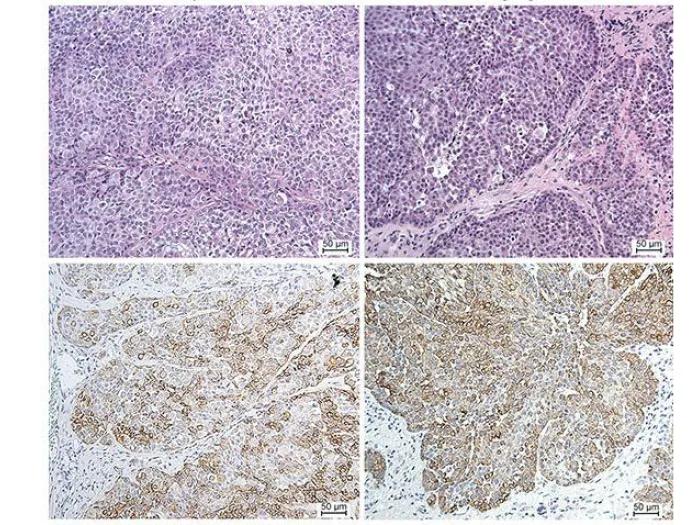
Researchers found that lack of P53 control is often a key step in developing cancer. This occurs through the protein MDM2, which directly binds to P53, stopping it from controlling issues in the cell.
Although we cannot directly target P53, a class of drugs called MDM2 inhibitors can potentially restore the normal balance of cell growth.
Shaomeng Wang’s group has developed many MDM2 inhibitors and together with Ascentage Pharma, they developed alrizomadlin.
Based on work from previous studies, we worked with Ascentage Pharma to develop a multi-institutional phase 1 clinical trial.
What were the results of phase 1 trials?
Swiecicki: This was the first time an MDM2 inhibitor was tested for adenoid cystic carcinoma.
Overall, the study showed that alrizomadlin decreased the size of salivary gland cancers and stopped the tumor growth for a meaningful amount of time.
This was especially important in adenoid cystic carcinoma where 20% of patients had tumor shrinkage and on average, the drug stopped tumor growth for 10 months.
In comparison, commonly used treatments in clinics control cancer for approximately 7 months.
The side effects were well tolerated by our patients and were on par with what we typically see with our standard treatments.
We hope that our results will pave the way for future evaluation of MDM2 inhibitors as treatment options for adenoid cystic carcinoma.
Michigan Research Core(s): University of Michigan Medical School Central Biorepository Core Facility and University of Michigan Digital Pathology Core Facility.
Paper cited: “MDM2 Inhibition with Alrizomadlin (APG-115) in TP53 wild-type salivary gland cancers: a phase I clinical trial,” Nature Communications. DOI: 10.1038/s41467-026-70653-3
Sign up for Health Lab newsletters today. Get medical tips from top experts and learn about new scientific discoveries every week.
Sign up for the Health Lab Podcast. Add us wherever you listen to your favorite shows.

Health Lab
Explore thousands of health news & research stories by visiting the Health Lab homepage for more.
Media Contact
Public Relations
Department of Communication at Michigan Medicine
In This Story
Paul Sweicicki, MD
Clinical Associate Professor
Related
P53 could be key to therapies for salivary gland cancer

Targeted drug shows promising ability in treating rare head and neck cancers
Stay Informed
Want top health & research news weekly? Sign up for Health Lab’s newsletters today!
Featured News & Stories

What’s the latest on 7-OH and kratom availability and addiction care?

Jodi Ehrmann, MD: Shaping Growth, One Day at a Time

Many young adults may not be ready to manage their own health care
Helping Hands: Ibtissam Gad Is Rethinking How Clinicians Learn to Feel Disease

Scientists discover that bacteria use an understudied polymer found in all life to protect cell functions during stress