
The first letters I ever had after my name were "RYT," which stands for Registered Yoga Teacher. Before medical school, teaching yoga was a significant part of my life, with classes catered to groups ranging from third grade students to the football team at my university. After starting school at UMMS, I still found time for my personal practice and even teaching a weekly class at the CCRB through UM Recreational Sports, but my identities as a medical student and as a yoga teacher seemed to exist in two separate worlds.
Until the M1 Musculoskeletal (MSK) sequence, that is. As we dissected the muscles of the human body and discussed their attachments, actions, vasculature and innervations, I found myself returning to a familiar language from yoga teacher training and my subsequent studies as a Kinesiology major at Wayne State. When it came time to memorize this wealth of information for the exam and anatomy practical, a fellow yogi-classmate and I rolled out our yoga mats, cracked open a book on the key muscles of yoga (which, incidentally, was written by a UMMS alum!), and literally moved our way through the list of structures. Our yoga-based studying proved to be helpful (or at least wasn't an impediment), and, beyond that, it was fun.
It made sense to me that movement-based education could supplement the traditional musculoskeletal anatomy curriculum, so I proposed the idea of an anatomy through yoga workshop to the MSK sequence directors, Dr. Hearn and Dr. Alsup. They were incredibly supportive. Over the following months I drew upon my knowledge and experience both as a yoga instructor and as a medical student to design the curriculum for a session that reviewed the key muscles of the upper and lower extremities along with their attachments and actions. The session goals, in my mind, were not only to create a structured space for review of important content, but also offer participants a new way of engaging with anatomy and a chance to bring wellness practices into the classroom.
During my M2 year in the Clinical Trunk, the M1 MSK sequence fortuitously fell in line with the Intensive week for clerkship students, giving me the availability to lead the MSK "Anatomy through Yoga" sessions multiple times. With the support of the MSK sequence directors and the Division of Anatomical Sciences, the sessions were well-advertised and attended by over half of the first-year class. I was even listed alongside the faculty lecturers as an "MSK course instructor"!
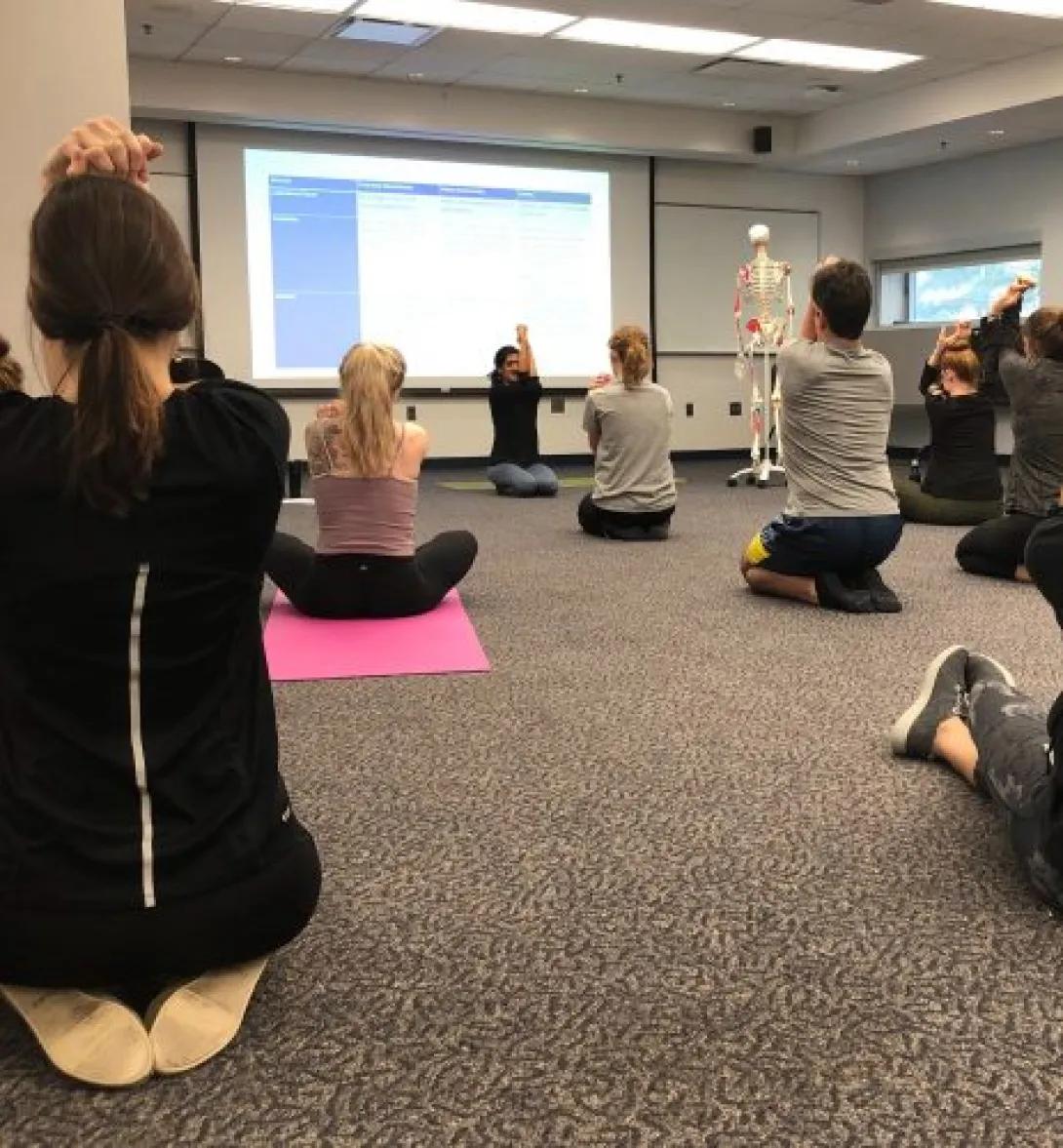
In the spirit of self-assessment, we administered a short, anonymous quiz before and after the session, as well as a post-session survey, to understand the value and impact of the workshop. The results demonstrated that the session significantly improved participants' objective knowledge of the content and subjective comfort with the material. Students found the session valuable and overall left the class in a better mental state than when they arrived.
As an M3 in the Branches, I had the flexibility to ensure that I could offer these sessions to this year's M1 class as well, and under the auspice of the Capstone for Impact program, I am working on developing this into a resource for the MSK anatomy curriculum that exists beyond my graduation. Exactly how that will happen? Still to be determined. But as I look forward to the next steps for this project, I am confident in its success largely because of the immense support from UMMS faculty and the extent of resources made available for students to turn their ideas into tangible impact.
Media Contact

Public Relations
Department of Communication at Michigan Medicine
Stay Informed
Want top health & research news weekly? Sign up for Health Lab’s newsletters today!
Featured News & Stories
FDA-approved drug offers hope for patients with polycythemia vera, a rare bone marrow disorder
Announcing CCMB/DCMB Fall 2026 Seminar Series
Pediatric patient treated for rare kidney cancer
Jacob Mack: Helping Trainees Take the Next Step
AI, Well-Being and the Human Connection

