
Seeing the Forest and the Trees: Rediscovering Forestry in Medical School
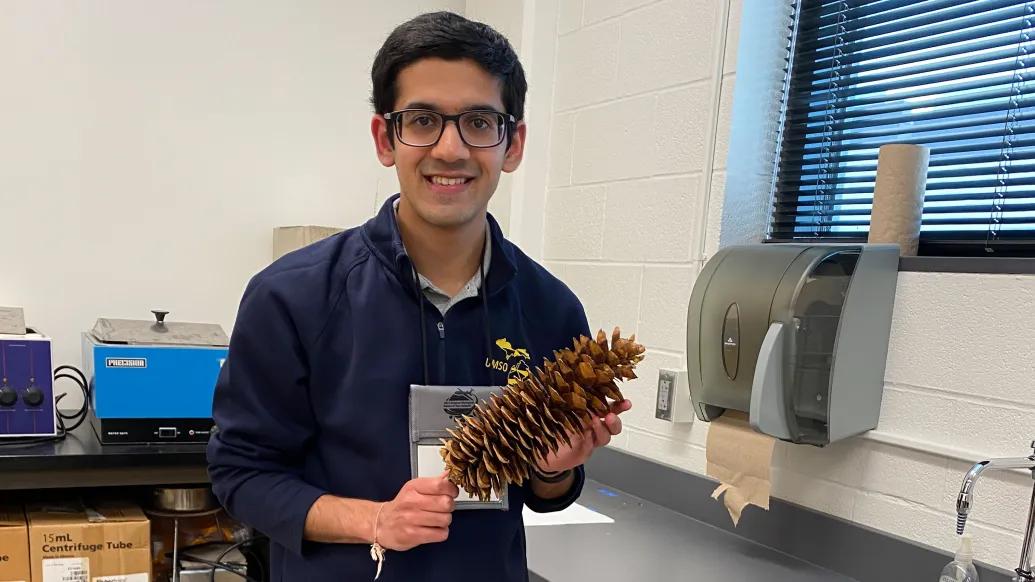
I usually get some pretty perplexed looks when I tell people that I like writing exams in my free time. After all, don’t I see enough exams in medical school? Perhaps they have a point — there are certainly less intense hobbies to have than scouring textbooks to craft the perfect multiple-choice question. However, this process never feels like work because it helps me reconnect with one of my favorite pastimes: identifying trees and learning forestry.
My journey with forestry began as a young, impressionable 6th grader, when I joined my middle school’s Science Olympiad team. Science Olympiad is a team-based science competition where 15 students compete in 23 events encompassing all fields of STEM, from anatomy & physiology to thermodynamics to building balsa wood towers. I was immediately hooked - I could learn science AND get my competitive juices flowing? That sounded like an ideal Saturday morning to me.
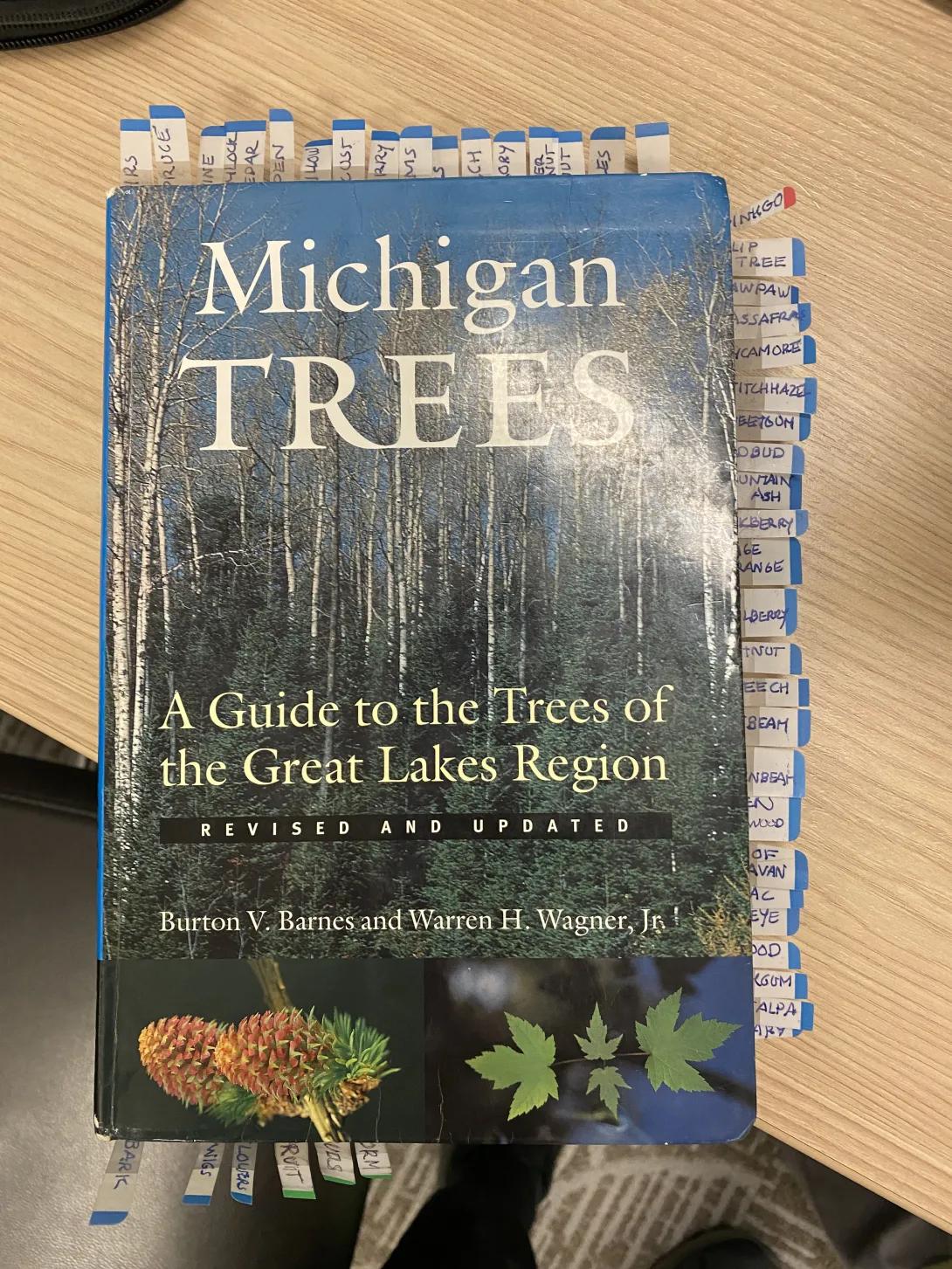
I signed up for the Forestry event, mainly because my mom and I liked to visit the local arboretum when I was homeschooled as a child. In Forestry, students are tasked with identifying trees and answering general questions about the tree’s structure and ecology. Each week, my mom and I would drive around my hometown of Northville, MI searching for new trees to practice my skills on. We bought a field guide, "Michigan Trees," and stuffed it full of tabs and annotations. We collected specimens of leaves, flowers, acorns and more and carefully preserved them between newspaper prints (remember those?). As the year progressed, I felt more comfortable differentiating elms from birches, hickories from walnuts and white oaks from red oaks. My school unexpectedly won the state championship that year, which meant my teammate and I had two weeks to frantically learn a hundred more trees from all over the country before the national tournament! The following year, we dove deeper into learning as many trees as we could, and we even had the honor of being national runners-up. I loved every minute of it.
After my 7th grade year in 2013, Forestry cycled out of the rotation of events and wouldn’t return for another 10 years. From 8th to 12th grade, I set aside the field guides and focused on other disciplines like anatomy and physiology, epidemiology and materials science. Looking back, I was blessed to be on a fantastic team that helped me grow as an independent learner and learn the value of teamwork at a young age. I stayed involved in Science Olympiad in undergrad at Michigan as one of the directors of the University of Michigan Science Olympiad Invitational. This was my first experience running a tournament, including writing exams, setting up chemistry labs, and scariest of all, herding 900 rambunctious middle schoolers into an auditorium.
In 2023, like chunky sneakers and Polaroids, Forestry was finally making a comeback. I knew I wanted to write exams again, so I reached out to Jenny Kopach, the CEO of Science Olympiad and Michigan alum. I asked if I could write the upcoming national exam, 10 years after I had last competed in Forestry. I dusted off my field guides and the same specimens my mom and I had collected together, and after writing a few practice exams, I was given the job!
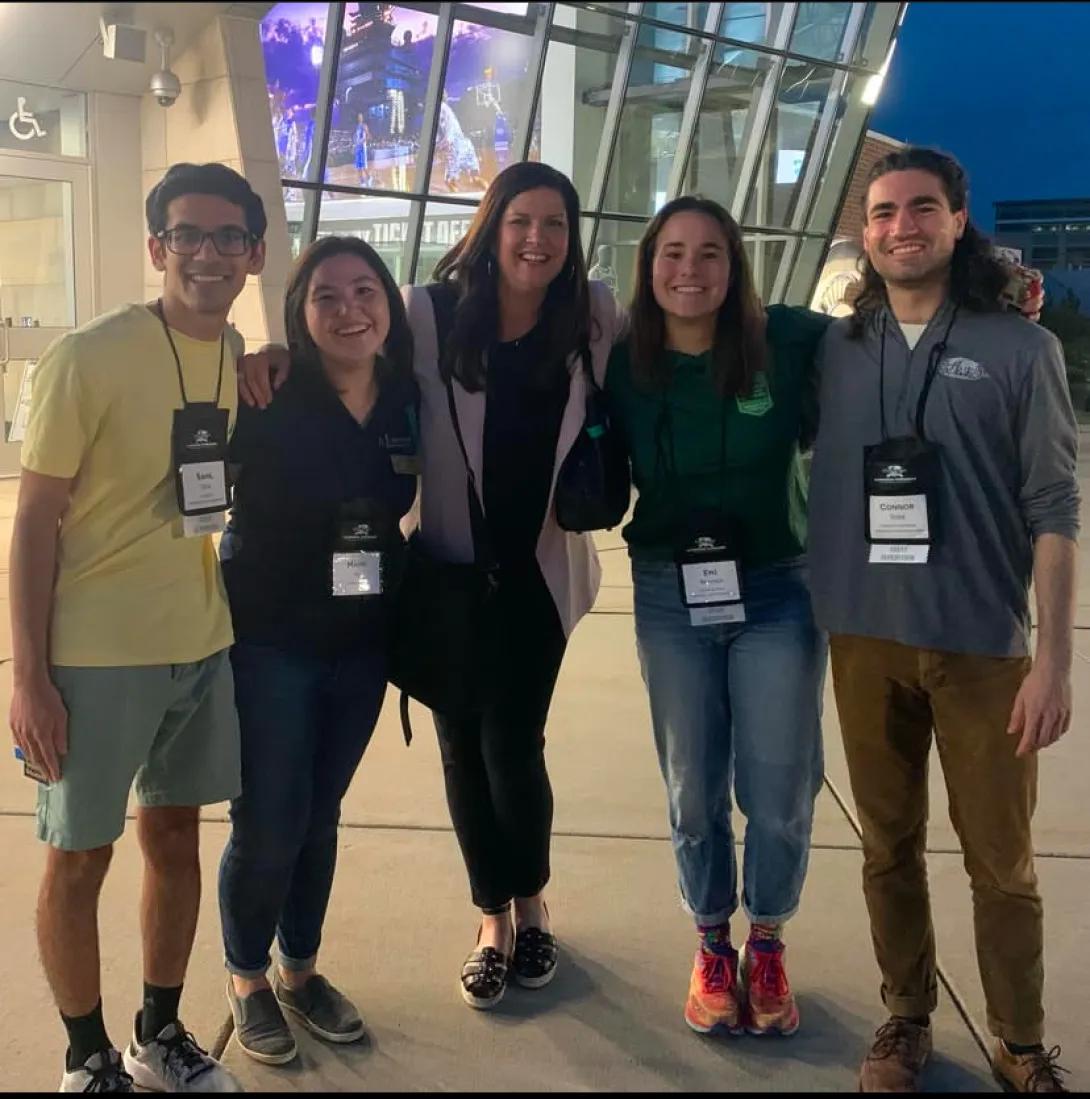
The flexible schedule in M1 year gave me plenty of time to dive back into forestry. Since most of our lectures are prerecorded, I could frontload most of my lectures at the beginning of the week. This gave me time to brush up on my tree ID skills and collect specimens in Ann Arbor on the weekends! The preclinical year can be really difficult, and there were plenty of times when I had to prioritize studying hematology over honey locusts. However, finding time for hobbies like forestry provided balance throughout a year of transition and reenergized me before I returned to studying!
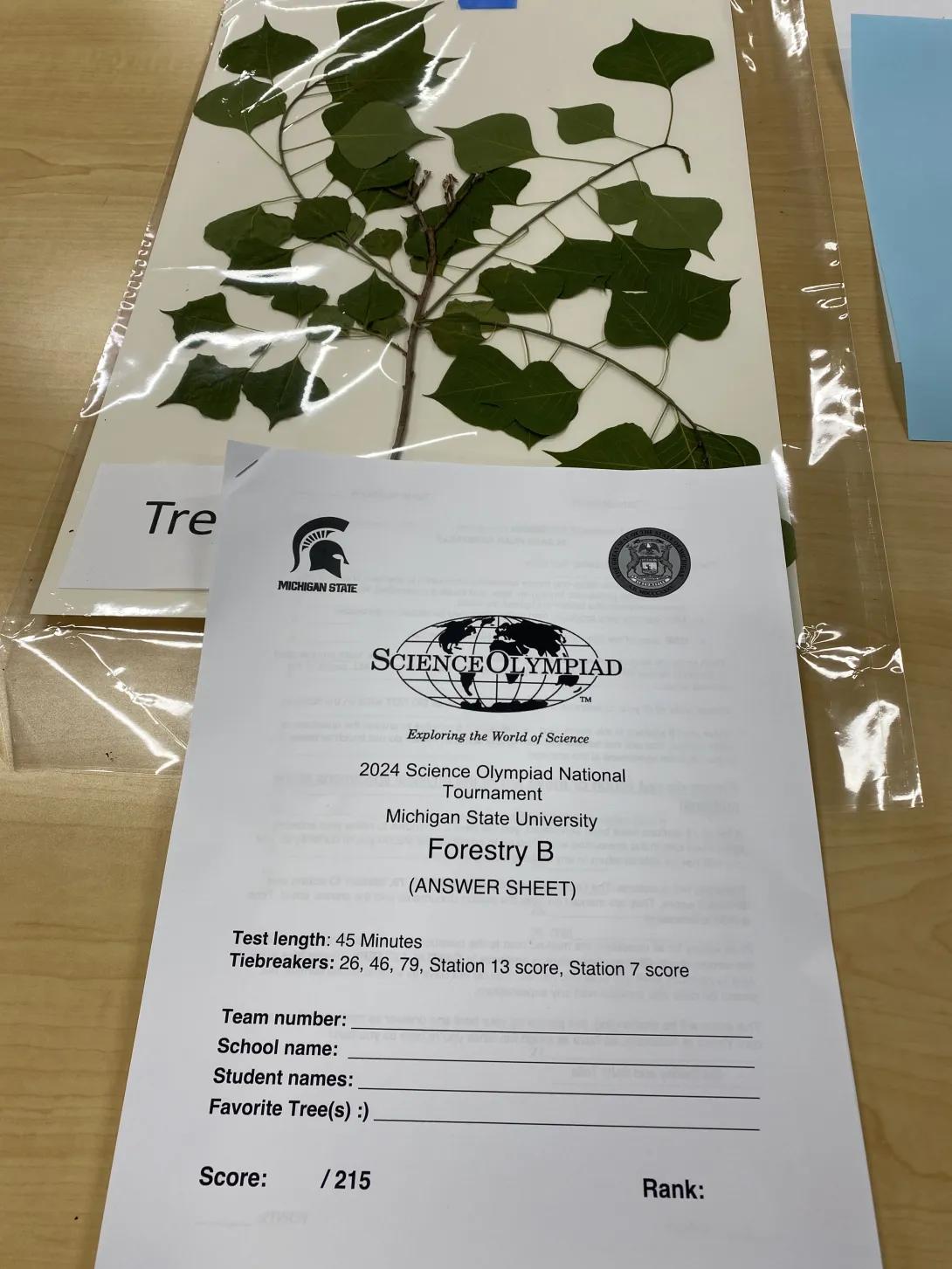
In May of my M1 year, I wrote the Forestry exam for the national tournament held at Michigan State University. I spent a few months carefully selecting testable topics with my co-supervisor Cal Oakley, a U.S. Forest Service researcher in Georgia. I wrote questions on CAM photosynthesis, ecological succession, tree diseases and pathogens and even which Pacific yew (Taxus brevifolia) compound is used for chemotherapy (paclitaxel). It was thrilling to re-engage in Forestry as a med student and appreciate how much the field had grown since I was in middle school!
It was super fun to have students identify the same tree samples I had practiced with 10 years ago! Plus, I got to add to my existing collection. On my winter break trip to Arizona, I gathered ponderosa pine (Pinus ponderosa), desert willow (Chilopsis linearis) and honey mesquite (Prosopis glandulosa) samples near the Grand Canyon. I found out there was a rare sweet acacia (Vachellia farnesiana) on Arizona State’s campus, so my family and I split up to track down the tree until we found it! As you can see, this exam was truly a team effort.
On tournament day, Cal and I set up our exam in my favorite format: stations. We had 142 questions and 16 trees to identify over 18 stations. Each team of two students had 2.5 minutes to complete the questions at each station. This would require students to communicate, be adaptable and efficiently draw upon their knowledge. In a way, that’s not too different from presenting your patient on rounds as a medical student!
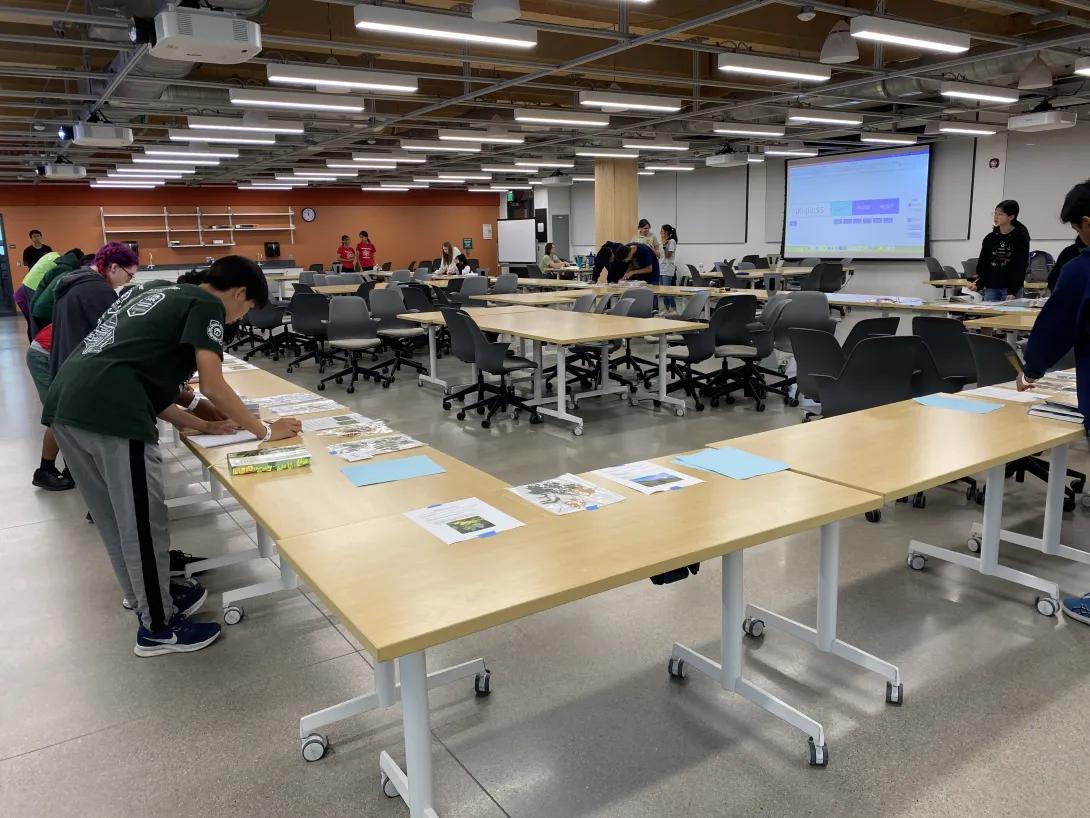
The exam was challenging, but I was so impressed by how the students worked together to apply their skills. I could see their grasp of forestry went far beyond simple tree identification - they thought critically about how humans and trees impact each other. Above all, seeing the excitement on every student’s face reminded me of how I felt 10 years ago when I first started in Science Olympiad. This competition helped me foster a love for learning and teaching that ultimately led me to medicine, and I’m so excited for those students to chart their own path through science!
Forestry has once again cycled out of the event rotation, and I’m currently on a hiatus from test writing as I navigate clinical rotations. In the meantime, I’ve enjoyed becoming the unofficial “tree guy” at UMMS. Armed with my trusted field guide, I’ve gone on “tree identification walks” around campus with my classmates Claire, Carly and Ali. Their curiosity and excitement to learn is an embodiment of the wonderful community here at UMMS.
Learning how to identify trees is hard. It requires attention to detail and a holistic review of each element of a tree — from the stump to the canopy. And just like in medicine, there’s always more to learn! What excites me the most about tree identification is that it brings me closer to the natural world. In the fast-paced world of medicine, it never hurts to stop, smell the roses and identify that tree in your backyard!
Special acknowledgment to my colleagues at the National Science Olympiad (Jenny Kopach, Cal Oakley, John Loehr, and Dan Nichols) and to my mom for being my #1 Forestry coach!

Sahil Tolia is a second-year medical student at the University of Michigan Medical School. Outside of medicine, he can be found playing pool, performing in the Galen’s Smoker musical theater show and cheering the Detroit Lions to glory. His favorite tree is the pawpaw. He enjoys learning about climate change education and how physicians can address the health impacts of climate change.
Media Contact
MD Admissions
University of Michigan Medical School
Featured News & Stories

Human connection takes center stage at Medical School Commencement

Uzochi Nwoko, MD student: Advocating for patients through medicine, policy and education

Sanjay Gupta recounts his U-M years and shares life lessons for medical school commencement
The Couples Match: A Journey Through Compromise and Choosing Each Other
Backpropagating to Better Patient Care: My Experiences in an AI Neurosurgery Lab

