Health Equity Scholars Program: Nutrition Lessons with the Detroit Food Academy
10:48 PM
Author |
The Health Equity Scholars Program (HESP) is a student organization here at the University of Michigan Medical School with the primary goals of building collaborative community partnerships, addressing health inequity, and providing educational opportunities for students. We hope to create sustainable change, meaningful partnerships, and prepare future leaders to work in the health equity space. Our main community partners are Peace Neighborhood Center (PNC) located here in Ann Arbor and Detroit Food Academy (DFA) in Detroit. Under the guidance of our faculty mentor Dr. Brent Williams, our leadership team is filled with M1s working to arrange educational seminars for our peers, create new community partnerships, and foster existing ones. Pictured below is our phenomenal leadership team (on Zoom of course)!
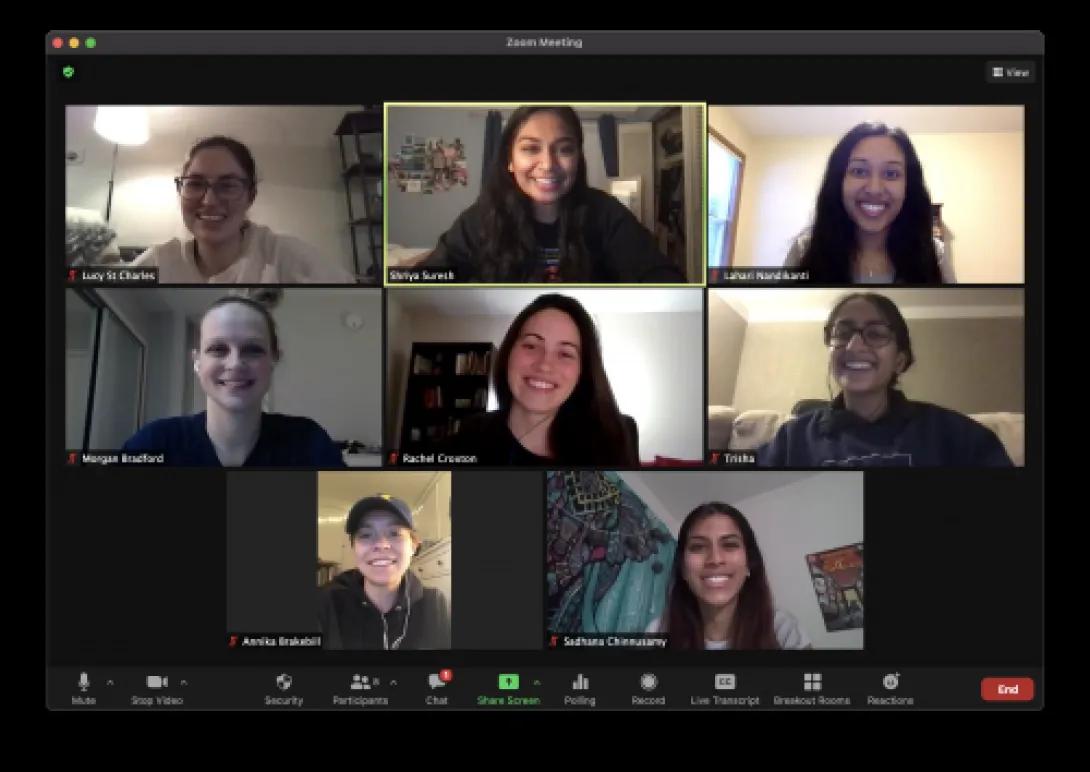
HESP 2020-21 Leadership Team: Lucy St. Charles, Shriya Suresh, Lahari Nandikanti, Morgan Bradford, Rachel Croxton, Trisha Gupte, Annika Brakebill, and Sadhana Chinnusamy
Recently, in collaboration with Detroit Food Academy (DFA), we hosted seminars on nutrition for students in DFA's after-school cohorts. DFA was founded in 2012 and is a 501(c) non-profit organization dedicated to inspiring young Detroiters to explore the culinary arts and food entrepreneurship. HESP's long standing relationship with DFA has historically involved UMMS medical students running annual health education days for DFA students each summer. In July 2020, these health educational sessions were adapted to a virtual setting for the first time. Upon receiving positive feedback from students on this virtual experience, our incoming leadership team was eager to expand upon our relationship with DFA and explore opportunities to deliver a session to students during the school year for the first time.
Through administering a survey to the after-school cohorts at DFA, we learned that students were extremely interested in learning more about the nutritional contents of the foods they cook with each week. To address students' interests, we created an interactive educational session on nutrition for the virtual setting. We held three of these lessons in the month of January, and with each one, cultivated an immense amount of gratitude for the conversations we had with the incredible students of DFA!
Every DFA session begins with a check-in; music selected by the teachers and students plays in the background to ease the awkwardness often associated with the beginnings of Zoom calls. For our first nutrition session, we couldn't help but sway along to the beat of an already personal favorite of ours, "Do It" by Chloe x Halle, alongside the DFA students and facilitators. Next, we each described how we were feeling that day and then answered the question, "What are positive and negative ways in which you cope with stress?"
Following this check-in, we kicked off the lesson by asking students to come up with their own definitions of nutrition. In just a few short minutes, our conversation centered around what the foods we eat do for us. To delve deeper into how different nutrients work to nourish our bodies, we covered examples of macro- and micronutrients. For each nutrient, we talked both about how it works in our bodies and about what types of foods the nutrient can be found in.
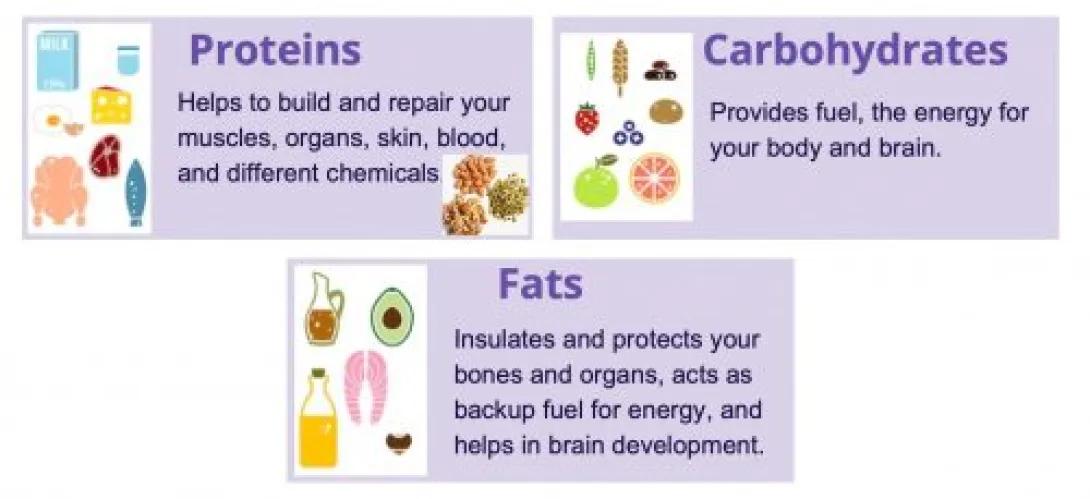
A slide taken from our nutrition presentation highlighting the macro nutrients
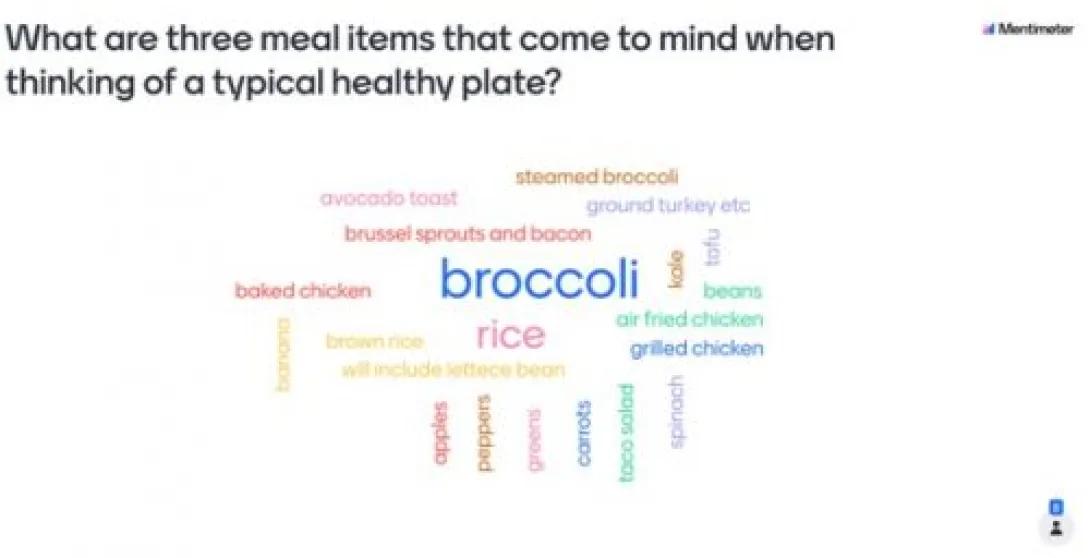
Perhaps the most engaging and exciting part of our lesson was the portion covering what variety in nutrition can look like. We asked students to think about three meal items they would include in a healthy plate and created a word cloud with all of the foods they came up with. Here is an example from one of our sessions included below!
Word cloud created by DFA students when asked to about a healthy plate
After reflecting on the word cloud in each lesson, we found that Western foods like grilled chicken, steamed broccoli, and roasted carrots tended to take up the most space. With each lesson we discussed how there could always be more room for variety in the ways we envision what a healthy plate looks like. To explore this topic further, we asked students to identify differences in nutrition guidelines from around the world. We also shared a resource we came across called The Institute for Family Health, which showcases a series of healthy plates from different countries.
To wrap up our lesson, we asked students to reflect on what nutrition looks like in their lives. This part of the lesson was especially exciting as we greatly enjoyed hearing about the different types of foods students have been loving recently. In thinking about the different macro- and micronutrients included in these foods, we helped students apply topics from the lesson into their everyday lives. Additionally, we also gained inspiration for many new foods we now want to try!
Media Contact
MD Admissions
University of Michigan Medical School
Featured News & Stories
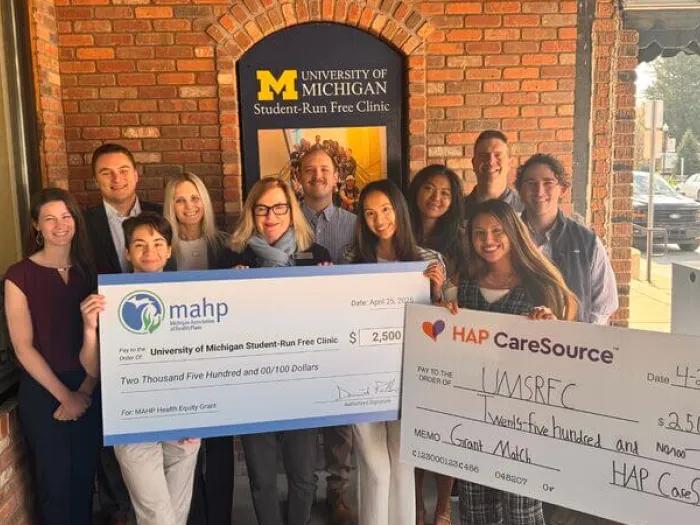
One Patient, Five Schools: Building Interprofessional Care at Michigan's Student-Run Free Clinic
Beyond the White Coat: The Med Student Tradition Behind Michigan’s Smoker
From the Executive Director’s Desk: August 2026
Beyond the White Coat: Global & Local Health Experiences
LGBTQ+ Aging in America