Backpropagating to Better Patient Care: My Experiences in an AI Neurosurgery Lab
The Data Collection Phase
Handed a microphone and presentation clicker, I stepped to the front of the stage and looked out over a room filled with investors in tailored suits, their attention fixed on the life-sized slides behind me. They were searching for Ann Arbor’s next breakthrough in life sciences. This moment marked the culmination of a semester-long internship with a biopharmaceutical company preparing for a Series B raise around a novel small-molecule therapy.
Selected to help present the company’s pitch deck, I was energized by the realization that what we were discussing was not just theoretical but rather the potential blueprint for a treatment that could impact real patients. It was my first exposure to translational research, and my first glimpse of innovation from the other side of the microscope.
“What is your projected compound annual growth rate?”
“What are your comparables?”
“Convince me you’ll make it to Phase II trials.”
As questions came in rapid succession, I leaned on the preparation from a week of intensive sessions with our team — a highly experienced group spanning a former Wall Street banker turned MBA student to a pharmacology student. Over the prior three months, I had watched a well-oiled machine in action: one teammate dissecting biochemical pathways while another built detailed financial models to derive a company valuation.
That experience reshaped my understanding that collaboration was not just a feature of innovation but foundational.
While this experience sparked my fascination with business and innovation, it also confirmed my journey toward medical school. With each additional question about 10-year forecasts and risk-adjusted projections, I felt something missing in the conversation: the patients. Along with the excitement of working on an idea that could scale to thousands of people, I knew that I also needed to be at the bedside to see the fruitions of that idea on the individual.
The Pre-Training Phase
Shortly after matriculating at UMMS, I was introduced to an institutional ethos grounded in the belief that clinical care and research are not separate pursuits, but deeply intertwined. As a M1, I encountered this philosophy while reading about the Machine Learning in Neurosurgery (MLiNS) Lab, which had developed a model capable of intraoperative tumor diagnosis on fresh unprocessed surgical tissue using stimulated Raman histology (a line of work the lab has continued to build on in more recent publications).
The lab’s mission — to apply the latest techniques in AI and computer science to advance patient care — was shaped by its principal investigator, neurosurgeon-scientist Dr. Todd Hollon.
When I first met Dr. Hollon, I was struck not only by his vision, but by his ability to bridge two seemingly disparate worlds as a computer scientist and surgeon. Just as quickly as I became fascinated by his work, I was confronted with a sobering reality — I had no background in coding, and only a vague understanding of what “machine learning” meant.
Expecting to be told this path might not be for me, I instead received the opposite advice. Dr. Hollon encouraged me to learn, emphasizing how accessible these skills had become in the modern educational world. I left that meeting with something even more valuable than direction: a belief that this space was within reach.
The months that followed were defined by dual immersion with medical school during the day and self-taught AI coursework at night. From free online lectures on YouTube to subscription-based tutorials, concepts that once felt inaccessible slowly became familiar. Over the next year and a half, I applied these skills to my first computational projects in spine imaging, gradually learning the full pipeline of developing deep learning models.
The Fine-Tuning Phase
As the MLiNS Lab expanded its work in neuroimaging, I had the opportunity to dedicate two full years to research and fully immerse myself in its mission. One of our most ambitious efforts was to develop a general-purpose vision-language model for neuroimaging. To do so, the lab partnered with the university to aggregate brain MRI data spanning over two decades — amounting to hundreds of thousands of studies.
This was a bold undertaking, as it was an open question whether a dataset of this scale could even be assembled, let alone whether a robust model could be trained on heterogeneous, real-world clinical data. But through this process, I witnessed firsthand from the lab a defining principle of translational research: meaningful progress requires the willingness to take big swings.
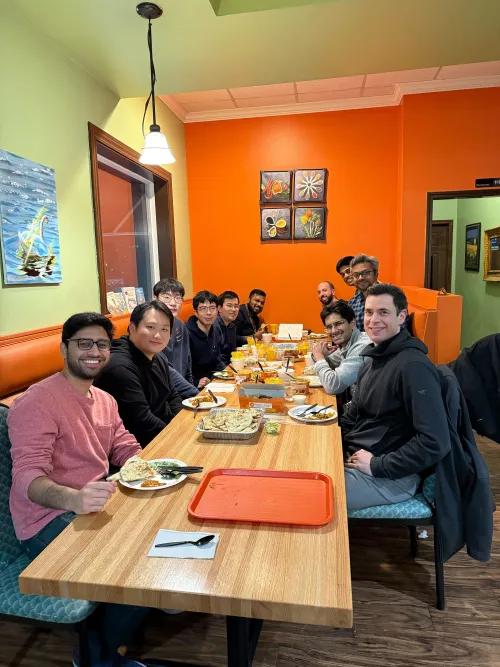
Along with the invigorating research question, what made this experience formative was the people. Our team brought together perspectives from computer science, bioinformatics, and medicine, merging their unique interests in service of the belief that we were working on something that would move the needle on the quality of care for patients. Whether having brainstorming sessions at the white board or code reviews followed by lab dinners, I was constantly reminded that just as important as the ideas are the individuals coming together to bring them to life.
The Human Feedback Phase
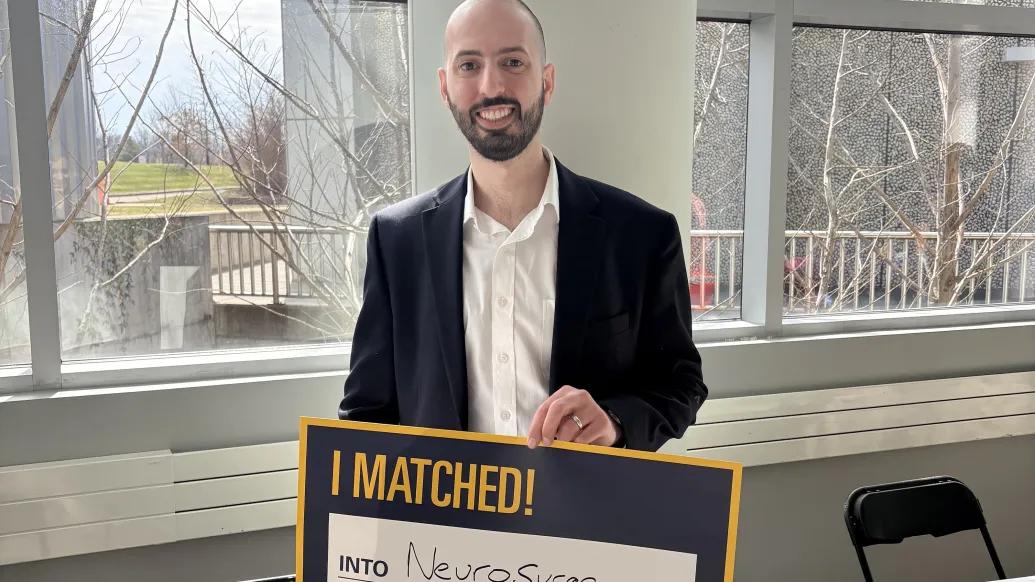
It was these same people with whom I was eager to share the news when I ultimately opened my envelope on Match Day. Learning that I’d be staying at the University of Michigan for neurosurgery residency felt less like the conclusion of my courses but instead the exciting continuation of the mentorship and camaraderie that defined my academic journey.
While the surgical mechanics that I will learn in residency will differ from the computational skills acquired during my research time, the ultimate purpose is shared. From cases performed in the operating room to the models we build in lab, at the intersection of this humanity and science remains a single point: the patient.
Samir Harake is a fourth-year medical student and recently matched into neurosurgery at the University of Michigan. He is a former NIH T32 Predoctoral Fellow and is interested in the development of machine learning tools to advance neurosurgical care. Outside of academics, he enjoys spending time outdoors with his wife and daughter, playing pickup basketball and cheering on the Detroit Pistons.
Media Contact
MD Admissions
University of Michigan Medical School
In This Story
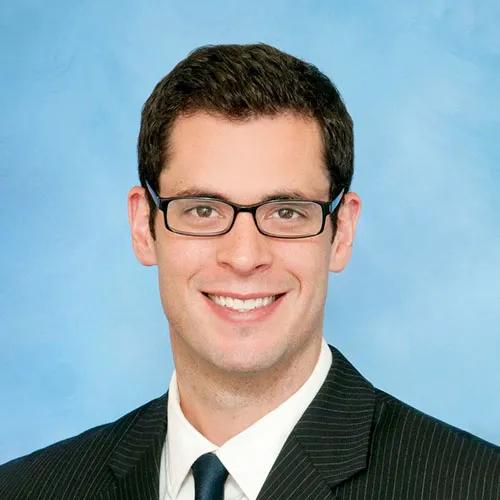
Todd C Hollon, MD
Associate Professor
Featured News & Stories
Noah Carey, MD/MPH student: Connecting medicine, public health and purpose
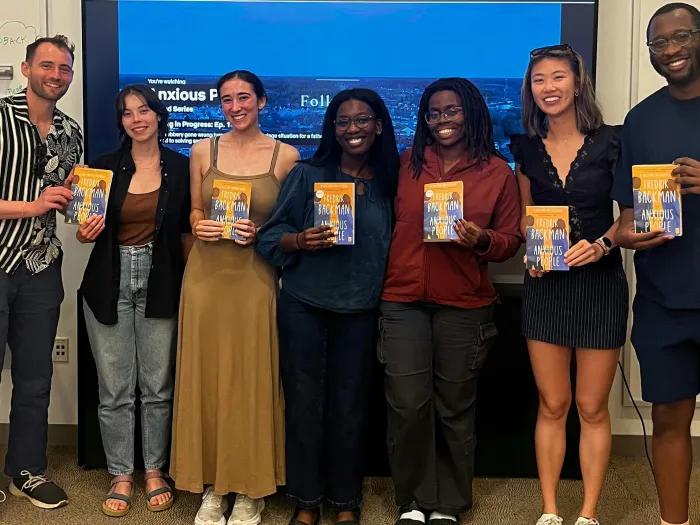
Reading as an Empathy and Community Practice: Building a Medical Student Book Club
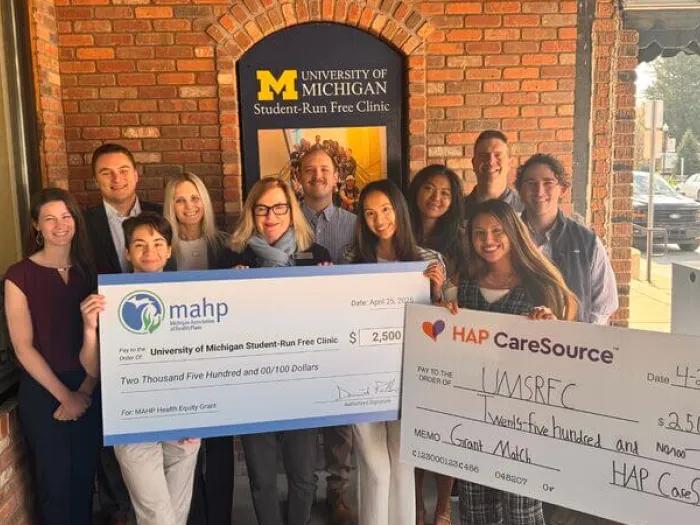
One Patient, Five Schools: Building Interprofessional Care at Michigan's Student-Run Free Clinic
Learning about the Life Loaf: My Experience Working in OBGYN Research
Medical students develop novel technological solutions for unmet patient needs