U-M Emergency Medicine Helps Bring Pre-Hospital Blood Transfusions to Genesee County EMS
Author |
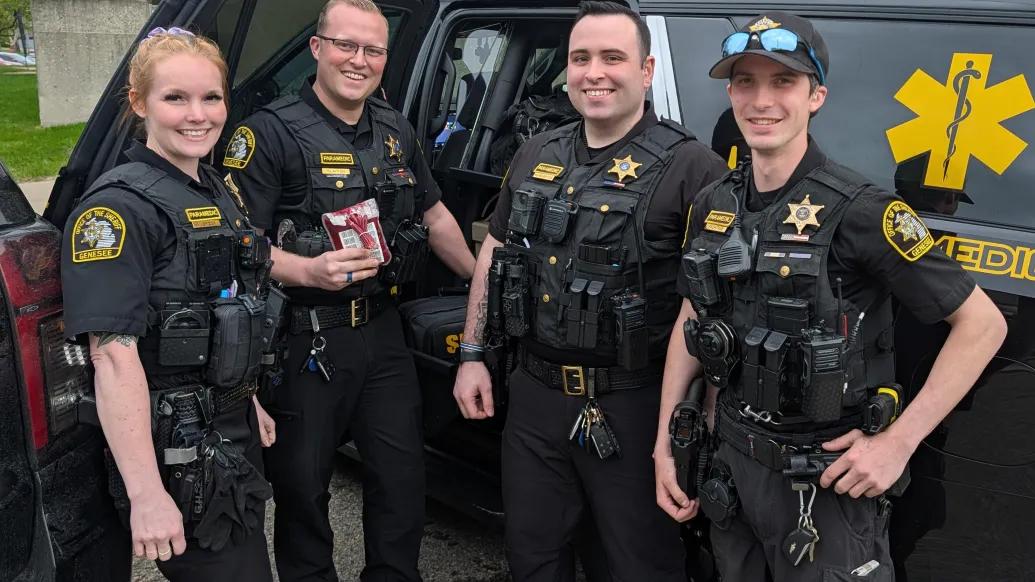
In trauma care, minutes matter, and in Genesee County, a new initiative aims to use those minutes to save lives.
Emergency medical services (EMS) teams in the county are now prepared to administer blood transfusions in the field, a capability currently available in only about 1–2% of EMS agencies nationwide. The effort, led in part by University of Michigan Department of Emergency Medicine faculty and residents, launched on May 1, 2026.
“Most people that end up dying from traumatic injuries, end up dying very, very soon after their injuries,” said Florian Schmitzberger, MD, MS, Clinical Assistant Professor of Emergency Medicine and medical director of the Genesee County Sheriff’s Office (GCSO) paramedic program. “Meaning, basically, if you don't start treatment early on, those patients might expire before you get them to the hospital.”
Closing a critical gap
Severe blood loss is one of the leading causes of preventable death after traumatic injury. While hospitals routinely provide transfusions, the time between injury and hospital arrival can be deadly, especially in regions with longer transport times.
“You really need to replace that blood,” Dr. Schmitzberger said. “Something that most hospitals are able to do, no problem. However, in the pre-hospital field, you may be a half an hour from time of injury until you get to the emergency department.”
The Genesee County program is designed to bridge that gap by equipping trained paramedics to administer blood products before patients arrive at the hospital.
“There’s lots of lessons learned from the military in terms of early administration of blood, which has a significant effect on mortality,” Dr. Schmitzberger said. “The earlier you receive blood, and the only way to get that blood out there fast is by having it done pre-hospital.”
A countywide collaboration
The initiative has been nearly a year in the making and required coordination across multiple agencies. Dr. Schmitzberger and Ryan Reece, MD, FACEP, FAEMS, Clinical Assistant Professor of Emergency Medicine, Chair of the EMS protocol committee, and prior GCSO Medical Director, both staff the emergency department at Hurley Medical Center, the region’s Level I Trauma Center in Flint.
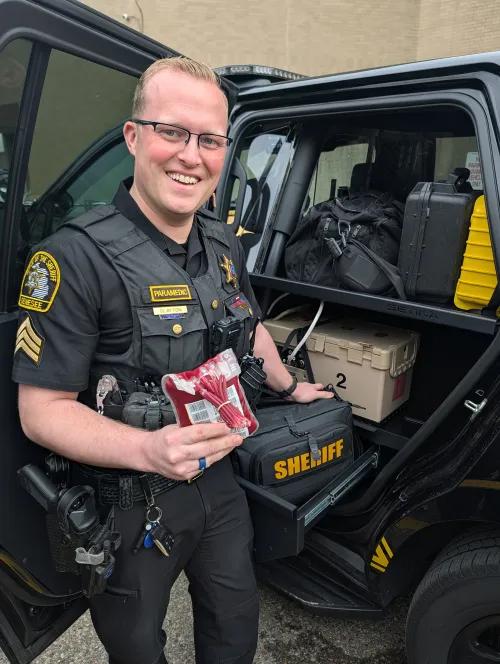
They worked alongside emergency medicine resident physicians Charles Ryan, MD, and Maia Dinsmore, MD, who is also an incoming Emergency Medical Services (EMS) fellow, and partners across Genesee County to secure funding, update protocols, and build the necessary training infrastructure.
Key partners include, but are not limited to, the Genesee County Sheriff’s Office; Genesee County Board of Commissioners; MedStar Ambulance; Mobile Medical Response (MMR); the State of Michigan EMS office; Jon Krohmer, MD, of the Prehospital Blood Transfusion Coalition; Hurley Medical Center; the Genesee County Medical Control Authority; and the American Red Cross, which will serve as the blood supplier.
Dr. Schmitzberger said he encourages other counties to start offering pre-hospital blood as well.
“Start building that coalition, find all the key folks involved,” he said. “You need to have a blood supplier. You need to have the buy-in from the EMS agencies. You need to have the buy-in from your medical control. You need to have the buy-in from the hospitals, the blood banks, and also the trauma services.”
Training the field
Under the new protocol, paramedics across the county will be eligible to administer blood once they complete specialized training led by physician teams. The Genesee County Sheriff’s Office paramedic “fly cars” will be the first units equipped to carry blood.
“We’re implementing trainings for our medics, and once they're signed off, they're actually going to be able to administer blood,” Schmitzberger said.
Genesee County is the third EMS system—after Saginaw and Macomb Counties—in Michigan to implement pre-hospital blood transfusion capability.
High impact where it’s needed most
The program is expected to have a particular impact in Flint and surrounding communities, where trauma volumes are significantly higher than in nearby regions.
“We see very few traumas in Ann Arbor,” Dr. Schmitzberger said. “And there are dozens a month in Flint, so it's very much a different kind of environment.”
While traumatic injuries are a primary focus, the intervention may also benefit patients with severe gastrointestinal bleeding, obstetric emergencies, and other critical conditions. The protocol applies to both adult and pediatric patients.
“I spent some time in the pre-hospital field, and I can think of specific patients that would have benefited from this life-saving intervention,” he said. “And knowing that going forward, patients will have a higher chance at a good outcome makes me very excited.”
Looking ahead
As more EMS systems nationwide explore pre-hospital blood programs, Genesee County’s experience may serve as a model.
“It’s very much becoming a standard of care,” Schmitzberger said. “It's encouraging to see that a very underserved county can be at the forefront of something like this. It’s undoubtedly going to save lives over the years.”
In This Story
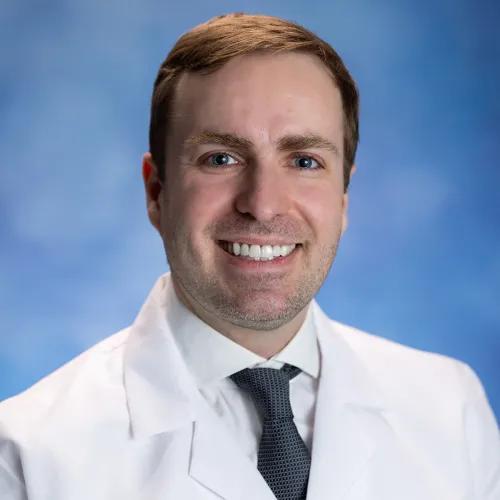
Florian F Schmitzberger, MD, MS
Clinical Assistant Professor
Ryan J Reece, MD, FACEP
Clinical Assistant Professor
Maia Dinsmore, MD
Emergency Medical Services (EMS) Fellow
Department of Emergency Medicine
Featured News & Stories
Meet Our New Emergency Medicine Fellows and Faculty
From walk-in clinic to national leader: How Michigan Medicine’s Pediatric Emergency Division was built
The Long Road to Emergency Medicine: How Michigan Built a New Specialty
Miracle Man: Saved in a High-Risk Winter Flight, 24 Years Later, a Family Still Gives Thanks

Finding Joy in Leadership: Brian Zink, MD, on Coaching, Purpose and the Next Phase of Academic Medicine