Podiatry Faculty Spotlight - Dr. Gary Rothenberg
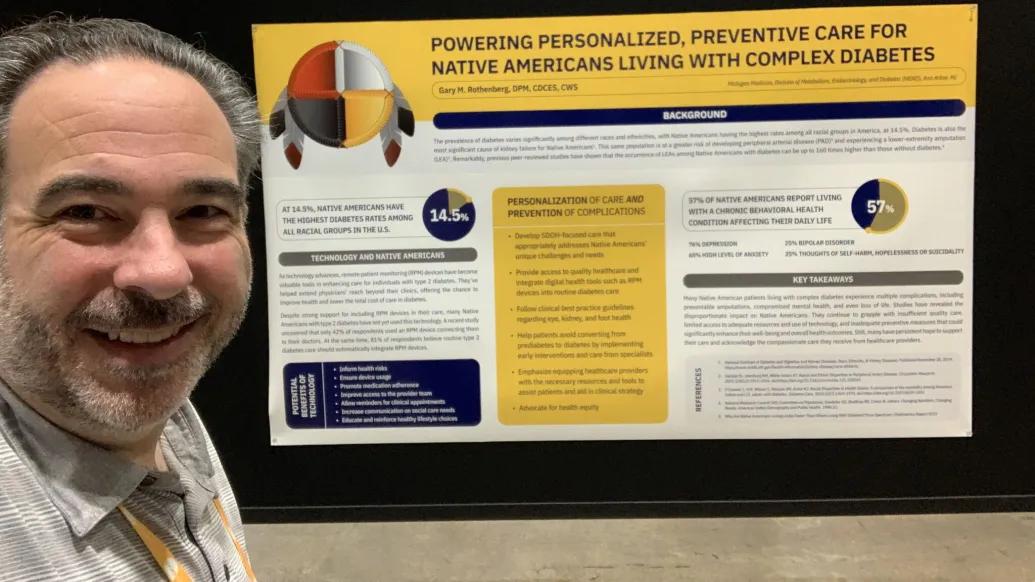
Dr. Gary Rothenberg is a podiatrist and Adjunct Clinical Associate Professor of Internal Medicine in the Division of Metabolism, Endocrinology, and Diabetes. After graduating from the Ohio College of Podiatric Medicine, Dr. Rothenberg completed his primary podiatry medical residency training and podiatric surgical residency at the University of Texas Health Science Center in 2000. Before joining the University of Michigan in 2015, he spent time in private practice and within the VA Healthcare System. Dr. Rothenberg has served as the Director of the Podiatry Research Fellowship Training Program for nearly two years.
Dr. Rothenberg's passion is teaching and has dedicated his career to training the next generation of podiatrists. Read on to learn why he loves teaching, what he's excited about in health care, and where his clinical and research interests lie.
What are your clinical and research interests and how did you become interested in these areas?
My clinical and research areas of interest are more in the psychosocial aspect of diabetes, as well as the prevention of diabetes-related lower extremity complications. My interest in these areas began during my residency at the University of Texas Health Science Center in San Antonio. My mentor and Residency Director, Dr. Larry Harkless, was famous for insisting we “park at the bedside” to get to know our patients – their hopes, dreams, and fears – because he knew that the emotional and social health of people has a strong influence on their physical health and outcomes.
That was a progressive concept 25 years ago – today we formally study those areas defined as Social Determinants of Health (SDOH). I am particularly interested in SDOH issues related to diabetic foot ulcer healing and amputation outcomes. Some of my work has tried to understand the impact of SDOH, health care disparities, and the bidirectional relationship between diabetes and depression, as I have witnessed these issues for my entire career.
The other focus of my research is complication prevention. There are many advances in the field of wound treatment, for example, but I support a paradigm shift away from research on treatment options to support more effective prevention.
The literature frequently states that up to 75% of diabetic foot ulcers can be prevented yet further research shows that we continue to perform amputations at alarming rates, especially among underrepresented minority populations. Prevention yields better quality of life outcomes for our patients and is more cost-effective for our health care systems.
What are you excited about in health care?
Like many people, I am excited about what artificial intelligence (AI) can bring to health care. There is such an important buzz around AI and the current generation of students is already ahead of many of us because they are using AI routinely. Oldtimers like me need to learn and catch up with the younger generation!
I don’t think that health care providers need AI to help us diagnose or treat patients. We go to school and do residency programs to learn those important diagnostic tools. I think I am most optimistic about AI helping with the mundane tasks in health care – like charting. I know there are great programs already being used by providers where with the keystroke of their computer, a comprehensive note can be generated immediately upon completion of a clinic visit. Furthermore, great patient education materials can be provided as well. AI can be a huge game-changer in terms of time-saving for providers.
Along with AI, the use of technology advances to help connect patients, providers, and data excites me. Technology, such as remote patient monitoring, can be used as an extension of health care into the patient’s daily life. Even simple technology, such as patient portals, can help patients have increased access to their health care team. I have seen the important role that technology and telemedicine have played in helping me triage patients. I am optimistic that technology will help us see the right patient, at the right time, for the right reason.
What is your favorite quote?
It’s a thrill to fulfill your own childhood dreams, but as you get older, you may find that enabling the dreams of others is even more fun."
Randy Pausch
My mother would like to tell the story that in kindergarten, I declared that I wanted to be a “baby doctor.” I did contemplate becoming a pediatrician for much of my childhood but ultimately chose to pursue podiatry, for which I could not be happier.
I have always loved the mix that podiatry has to offer – every day is different for a podiatrist. In the same clinic session, a podiatrist might help an athlete with running shoe selection, remove a painful ingrown toenail, schedule a patient for a fracture repair, and biopsy a dermatologic skin lesion. The variety of things I see has always kept me academically curious, but dedicating my career to teaching has really kept me on my toes (pun intended)!
Doing my residency at a large, urban teaching hospital inspired me to pursue a career in academic medicine. While I have no formal training in education, I believe I am a teacher at heart. Every day, I have the pleasure of teaching patients, colleagues, students, residents, and fellows. I have taught in classrooms, at the bedside, on podiums, and commonly these days, virtually.
I have helped many patients over my career manage their podiatric problems, but today, my biggest joy is watching those that I have helped train become successful in their own practices. I am most proud of our trainees who are now deans at podiatric colleges, serve America’s heroes in the VA, and have become successful private practitioners. I believe the biggest gift I can give to my profession is an investment into the next generation of podiatrists through education.
The Michigan Medicine Podiatry Research Fellowship Training Program provides clinical training in several different areas of related medical specialties, with an emphasis on research and patient populations at risk for limb loss. Learn more.
In This Story
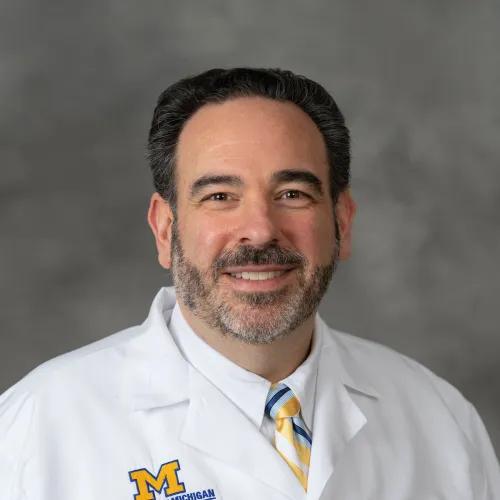
Gary M Rothenberg, DPM, CDCES, CWS
Program Director
Featured News & Stories

Researchers create new path to target hard-to-drug prostate cancer protein

Doctors in the house: History of medical interns and residents at Michigan Medicine
Welcome Incoming Urology Fellows
How new care models, within a new building launch, is helping optimize patient care

7 things to know about Medicare’s new GLP-1 coverage