After time at UMMS, visiting scholar publishes call for more leadership training in China
Author |
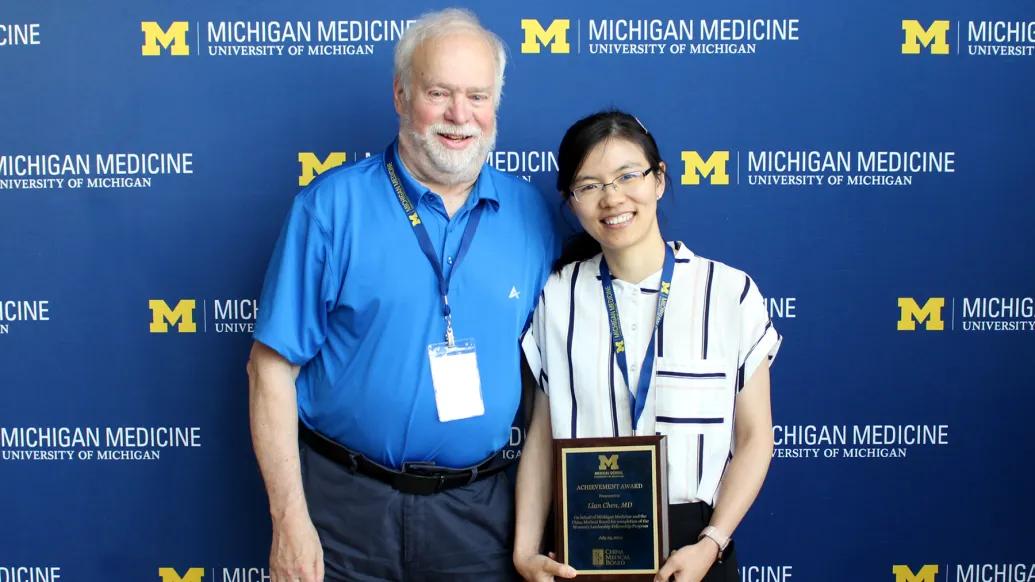
After completing a UMMS leadership program, a visiting doctor from China is encouraging healthcare leaders in her home country to launch similar training initiatives. Lian Chen, one of the first participants in Michigan Medicine’s Program to Advance Leadership in the Health Sciences (PALHS), has documented her experience in a recent publication.
“In China, there is a lack of systematic and intentional leadership training programs or courses specifically for maternal-fetal medicine doctors. PALHS strives to create a network of leaders who recognize this need and cultivate relationships with existing leaders,” writes Chen, an Associate Professor of Obstetrics and Gynecology at Peking University Third Hospital and a member of the inaugural 2023–24 PALHS cohort.
Her commentary was published in a recent issue of Maternal Fetal Medicine, a peer-reviewed journal of the Chinese Medical Association (CMA). In it, Chen describes the pressing need for leadership development within her own institution and across Chinese healthcare more broadly, as well as her personal journey overcoming doubts about her own leadership potential.
“As a young department leader, I have many doubts and uncertainties about becoming a good leader. In academic medical institutions like ours, leadership roles often develop without clear planning or preparation,” she writes. “With these questions in mind, I came to the University of Michigan for a one-year leadership training program.”
In a follow-up commentary in the same journal, Chen's primary U-M mentors, Professor of Obstetrics and Gynecology Tim Johnson and Professor of Learning Health Sciences and Obstetrics and Gynecology Cheryl Moyer, emphasize the need for leadership training programs like PALHS across academic medicine.
"Academic faculty are often appointed to leadership roles having had little to no formal training in leadership, and they often have never considered themselves as leaders," they write. "Leadership in medicine is important for more than just those with a formal leadership position. It is equally important for faculty to be able to provide effective leadership for their research, clinical, and educational teams."
PALHS is facilitated by Global REACH in partnership with the Department of Learning Health Sciences and funded by the China Medical Board, a U.S.-based foundation that supports health advancement across Asia. The program offers a unique combination of leadership training, clinical observation, executive coaching, and dedicated time for participants to pursue research projects in their field—applying lessons and insights gained from the fellowship.
In her article, Chen describes learning about the U-M Michigan Expectations Model for leadership development, as well as Lean project management principles and quality improvement methodologies. She also emphasizes the need for more such programs across China.
“PALHS seeks to sow the seeds of broader transformation, aiming to shift the very culture of academic medicine. Given the current lack of leadership education in Chinese academic medical institutions, the program serves as a strategic starting point to support leadership development,” she writes. “While initiatives like PALHS have made significant progress, localized leadership training programs tailored to China’s unique context are essential to meet growing demands.”
Featured News & Stories

Kelly M. Malloy, MD, MBA Elected to AAO-HNS Board of Directors
Congratulations to the 2026 Pharmacology Colloquium oral presentation and poster awardees!

Adrian Palumbo chosen for a position in the Pharmacological Sciences Training Program
Weight loss and surgery restore patient’s throat after near-death brush with likely COVID

Congratulations to Kate Bowman on receiving the 2026 Predoctoral Fellowship in Drug Discovery from the PhRMA Foundation