
More articles about: Mental Health

Health Lab
LGBTQ+ people over 50 face more aging-related challenges
Lesbian, gay, bisexual, transgender, queer and other sexual and gender minority adults over 50 have higher rates of mental health, disability, social isolation and health care access issues, though they also may have more connections than before to non-LGBTQ+ people in their age group.

Health Lab
AI chatbots spark mental health concerns, including psychosis risk
Artificial intelligence-driven AI chatbots have been linked to cases of suicide, delusions, psychosis and mental health issues. Three experts from Michigan Medicine explain what’s known and how to respond.
Health Lab
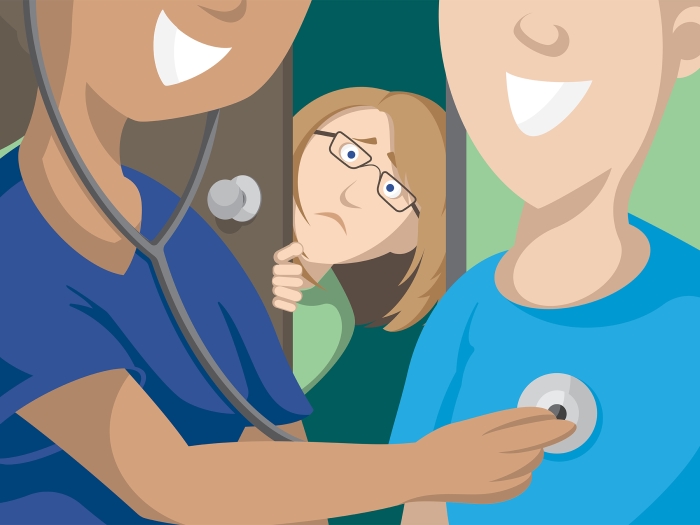
Teens need private time with doctors, but many aren’t getting it
While most parents say it’s important for health care providers to speak privately with teenagers during their medical visits, far fewer are putting that belief into practice, according to a new University of Michigan Health C.S. Mott Children’s Hospital National Poll on Children’s Health.

Health Lab
To reduce chronic pain, a new digital program could help
A new study tested a program called Promoting Resilience with Innovative Self-Management, which combines traditional cognitive behavioral therapy skills for pain with additional activities intended to promote resilience and positive emotion.
Well-Being at Michigan Medicine
Permission to Flourish: Well-Being for High Performers with Shigehiro Oishi
In this special live episode, Dr. Elizabeth Harry hosts Dr. Shigehiro Oishi of the University of Chicago for a compelling, audience-engaged conversation recorded at U-M’s Rackham Building.
Drawing on cutting-edge research, Oishi challenges conventional notions of happiness, examining the tension between achievement and meaning. With practical insights for high performers, this energizing discussion invites listeners to rethink success and intentionally cultivate a more expansive, sustainable path to well-being.

Minding Memory
Convoys of Caregiving: Arab American Families Living with Dementia
In this episode, Matt & Lauren speak with Kristine Ajrouch, PhD - a new member of our CAPRA leadership team. Kristine is a Research Professor at the Institute for Social Research whose work focuses on aging, health, immigration and family in the United Statues and the Middle East; social networks over the life course; and Arab American identity and well-being.
Kristine discusses a recent article that examined an intervention to improve outcomes among Arab American caregivers who provide care to a family member living with dementia. She also shares what this work teaches us about caregiving as a family system rather than the responsibility of a single individual.

Health Lab
What’s the equivalent of a wheelchair for a person with schizophrenia?
Three experts, including a Michigan Medicine physician, talks about what psychiatric rehabilitation looks like in the community and for patients.

Health Lab
How to improve mental health safety on social media – not just for young people
With social media companies losing or settling court cases about their products' impact on young peoples' mental health, experts offer tips for reducing impacts for those who use the platforms.

Minding Memory
Neighborhood Income and Cognitive Health
Welcome back to Minding Memory! In today’s episode, Lauren & Matt speak with Dr. Laura Zahodne – a professor of psychology at the University of Michigan and an affiliate of the Institute for Social Research. She's a clinical neuropsychologist by training and studies how psychosocial experiences shape late life, cognitive health, and risk of neurodegenerative disease. Also, a new member of our CAPRA leadership team!
In this episode, we’ll get to know Laura a little better and talk with her about one of her research studies, the Neighborhood Racial Income Inequality in Cognitive Health, which looks at the association between racial income differences and a variety of cognitive measures.

Health Lab
A new way to close the pediatric mental health gap
Innovative model successfully improves access to pediatric psychiatric health care, while training future pediatricians to manage common mental health conditions, new data suggests.
Health Lab
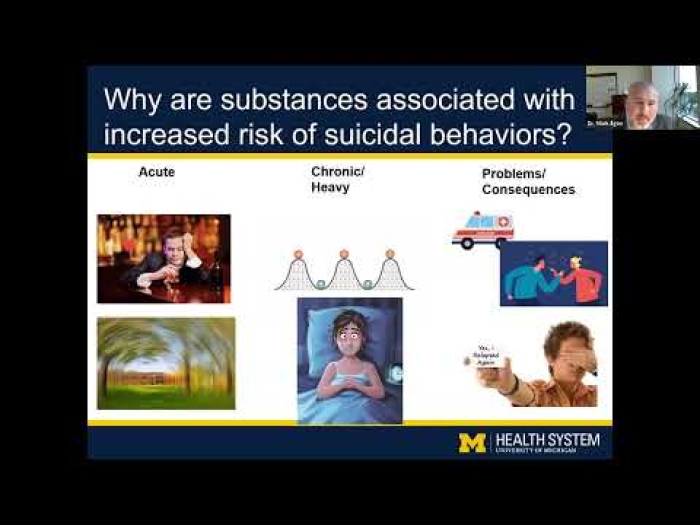
Complex connections among bipolar disorder, substance use and suicide
Discover how bipolar disorder, substance use and suicide risk intersect. Research, clinical and lived experience experts at Michigan Medicine share findings, treatment strategies, and personal insights.

Health Lab
Thoughts don’t kill people, but study suggests options for keeping guns from doing so
Firearm-related thoughts, and the potential for action to prevent people from acting on those thoughts impulsively, are the subject of a new nationally representative study.
Well-Being at Michigan Medicine
Credentialing: Supporting Clinicians, Protecting Patients
Credentialing plays a critical role in patient safety — but it can also affect whether clinicians feel safe seeking mental health care. In this episode, leaders from Michigan Medicine and the Dr. Lorna Breen Heroes Foundation discuss evolving credentialing practices, reducing stigma and supporting clinician well-being while protecting patients. The conversation highlights how thoughtful policy changes can help create a healthier, more compassionate health care system.
Learn more:
Dr. Lorna Breen Heroes’ Foundation

Health Lab
For rural firearm owners, Store Safely program offers options to enhance secure firearm storage
Because firearm ownership is common across northern Michigan communities, Cynthia Ewell Foster, a University of Michigan clinical Professor of Psychiatry, began piloting a program to encourage secure storage of firearms several years ago in partnership with Sarah Derwin of the Marquette County Health Department.

Health Lab
When an eating disorder becomes a medical emergency
Eating disorders are sometimes diagnosed only after causing physical issues leading to hospitalization. But many hospitals don’t have specialized ED care; a Michigan-created guide for clinicians and families can help.
