
More articles about: All Research Topics

Health Lab
Health plays a role in older adults' vulnerability to scams
Most older adults have faced an attempted scam, and some have been defrauded, but rates were higher among those with health problems or disabilities.
Health Lab
Monitoring program flags cancer patients at risk of highly toxic chemotherapy side effects
Researchers from the University of Michigan Health Rogel Cancer Center have developed a monitoring system using a research genetics program to trigger alerts about cancer patients suspected to have the DPYD gene variant.

Health Lab
Child care centers aren’t a likely source of COVID-19 spread, study says
Research published from experts at Michigan Medicine, the University of Pittsburgh School of Medicine, and UPMC Children’s Hospital of Pittsburgh shows that children in daycare centers were not significant spreaders of COVID-19

Health Lab
Spread of drug resistant bacteria linked to patient hand contamination and antibiotic use within nursing homes
A Michigan Medicine research team seeks to identify characteristics of patients within nursing homes, as well as the nursing home environment itself, that are associated with contamination by vancomycin-resistant enterococci.

Health Lab
Measuring skin water loss predicts anaphylaxis during food allergy tests
Measuring skin water loss during food allergy tests may help predict anaphylaxis and keep patients safe. The method aims to detect the life threatening reaction before epinephrine injections are necessary

Health Lab
Mouse model of gender-affirming testosterone treatment and fertility finds decrease in egg yield but not quality
The current IVF recommendation is for transgender patients to stop taking gender-affirming hormones before the procedure, which can be costly and life changing. Now, a team of researchers are diving in further to investigate what the best recommendations should be based on more evidence.
Health Lab
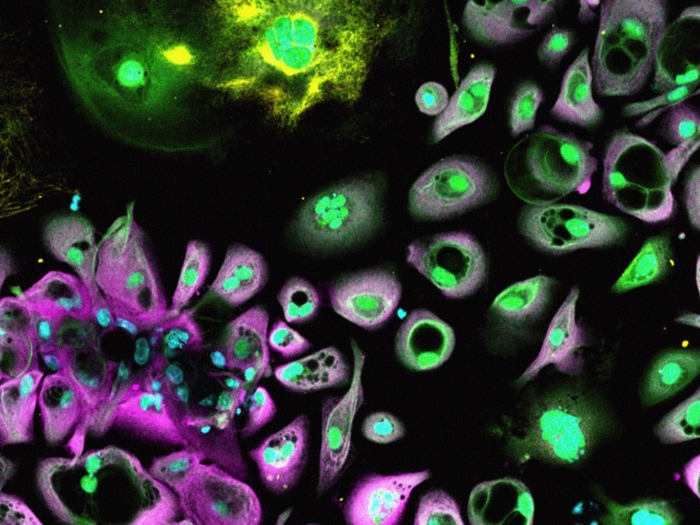
Tiny model organs detect liver toxicity of new drugs
A University of Michigan-led study provided evidence of the efficacy of a new drug-induced liver injury screening platform using human liver organoids, or tiny 3D models of organs developed from patients’ stem cells that grow in petri dishes.

Health Lab
Drawing a tube of blood could assess ALS risk from environmental toxin exposure
Investigators have developed an environmental risk score that assesses a person’s risk for developing ALS, as well as for survival after diagnosis, using a blood sample.

Health Lab
What's the impact of predictive AI in the health care setting?
Models built on machine learning in health care can be victims of their own success, according to researchers at the Icahn School of Medicine and the University of Michigan.

Health Lab
Examining sexual health equity in emergency care
Research from experts at Michigan Medicine is highlighting the potential for additional at-home assistance for partners of those who are treated in the emergency department for a sexually transmitted infection.

Health Lab
Oral steroid usage increased across U.S., Taiwan and Denmark in past decade
Research from the University of Michigan finds that over the past decade, there has been a steady increase of oral steroids prescriptions not only in the United States, but in Taiwan and Denmark as well.

Health Lab
Dementia’s financial and family impact
Dementia has far more impact on a person’s finances and their family members’ caregiving demands, compared with other health conditions in older adults, study suggests.
Health Lab
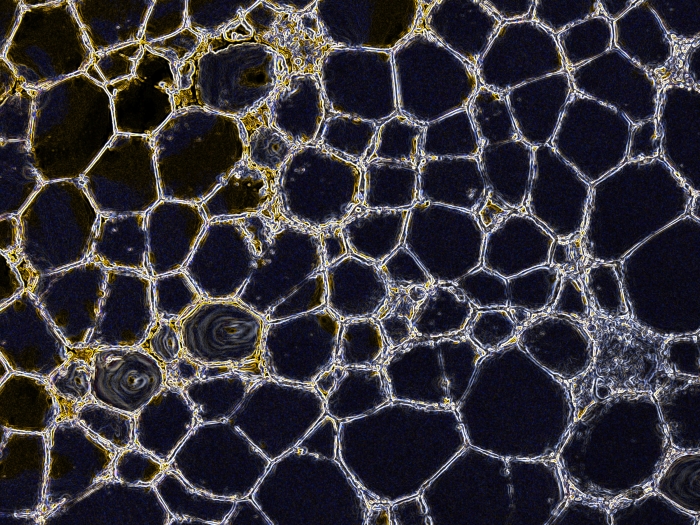
Obesity leads to a complex inflammatory response inside fat tissue
A Michigan Medicine study uses single cell analysis of gene expression combined with spatial transcriptomics to reveal previous unrecognized immune cell types and interactions within adipose tissue. Spatial transcriptomics is a newer technology that captures all gene expression in small spots across an entire thin section of tissue.

Health Lab
Could ginger help treat autoimmune disease symptoms?
Michigan Medicine researchers are examining whether ginger supplements could help treat symptoms in autoimmune diseases
Health Lab
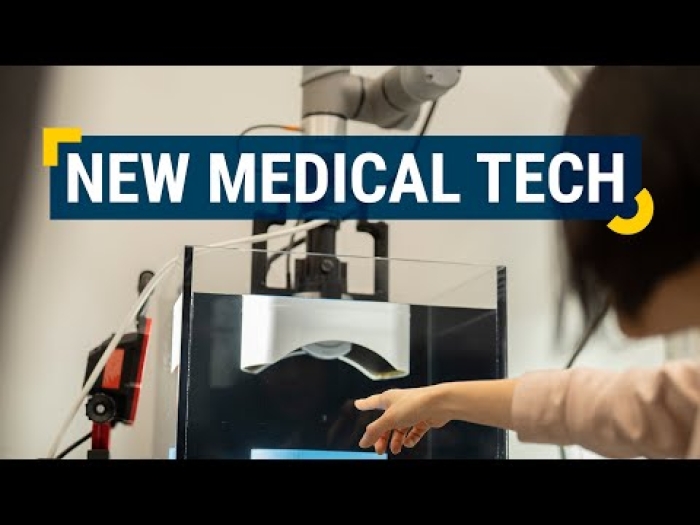
Tumor-destroying soundwaves receive FDA approval for liver treatment in humans
Michigan Medicine has developed a new technique that provides a non-invasive alternative to surgery, chemotherapy and radiation treatments for cancer.
