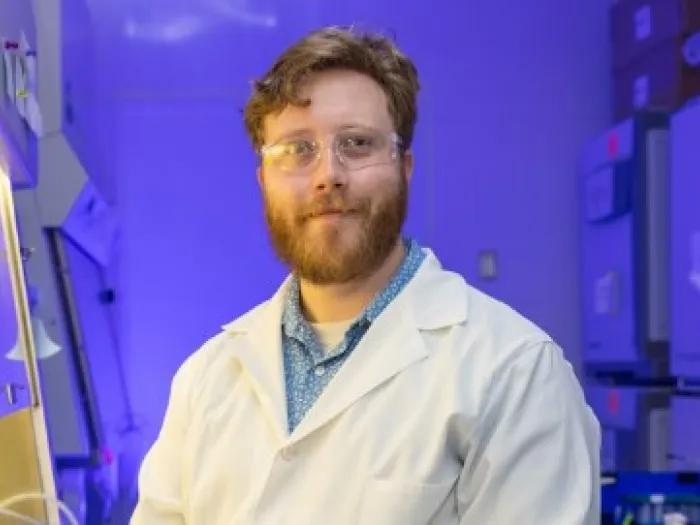
U-M Medical School student Caleb Ernst explores career paths with MDisability training
The Disability Health Elective brings him in touch with many Michigan Medicine experts
Author |
Throughout his time as a University of Michigan medical student, Caleb R. D. Ernst has used his networking capabilities and self-reflection to identify opportunities to pursue his passion in helping those with Intellectual and Developmental Disabilities (IDD).
His interest in the practice area originated within his own family and, through his own efforts, picked up momentum during his time as a data analyst intern with a Washington, D.C., based non-profit that investigates cases of neglect, abuse and exploitation against people with IDD.
His networking and resourcefulness are also what led him to participate in MDisability’s two-week Disability Health Elective. He says the elective has helped him clarify how he might best use his passions for helping people with IDD, whether that’s through the practice of psychiatry or family medicine.
“With this elective, I certainly got what I was looking for in terms of processing my experiences exploring a range of careers, and engaging with patients’ lived experiences,” he said. “There was a required home visit on the elective where I got to sit with a family and discuss all of their interactions with the medical field, what went well, and what needed improvement.
“It was really incredible to get out of the hospital and into the community, and to hear how impactful (positively and negatively) different doctors had been in the family’s life.”
Ernst said he also gained vital interprofessional knowledge by sitting in on some wheelchair evaluations at a multidisciplinary clinic, specifically how to tie specific physical impairments to adaptive device needs, along with important considerations for equipment referrals and replacement.
“More personal to my career was seeing some of the overlaps between specialties such as autism spectrum disorder evaluations in developmental-behavioral pediatrics versus psychiatry, and behavioral health in family medicine versus psychiatry.
Ernst interacted with many Michigan Medicine specialists during the Disability Health Elective, including those in physical medicine & rehabilitation, psychiatry, developmental behavioral pediatrics, and memorably so, with Family Medicine Professor Michael M. McKee, MD, Ph.D., director of MDisability.
“Dr. McKee has been an excellent role model as someone deeply committed to his communities, working to provide a broad range of services,” Ernst said. “On an individual level, he has been incredible, checking in throughout the elective, and connecting me with other people in family medicine as I’ve been exploring that field.”
Ernst said he also appreciates Dr. McKee’s inclusion of him during home visits to patients at the St. Louis Center, a residential community in Chelsea for people with IDD.
“It’s become the closest experience I’ve had to a longitudinal clinic,” Ernst said. “Meeting people where they reside allows us to work directly with care providers and staff and allows a much better understanding of people’s everyday experiences. It’s been grounding to come back each month.”
Ernst is now at a crossroads as to where his medical training and career will lead. He has applied for dual board residencies in psychiatry and family medicine, but knows that there will be a common denominator, wherever his career takes him.
“The focus of the work remains the same – making sure that people with IDD have access to well-funded services, home and community-based supports, and well-informed, longitudinal medical care,” he said.
In This Story
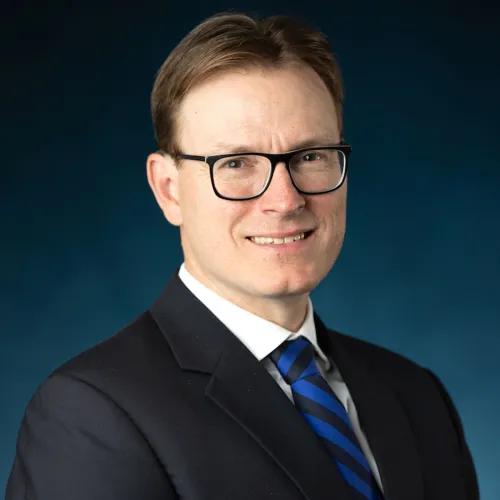
Michael M McKee
Professor
Related
MDisability faculty, former interns, trainees discuss disability-inclusive health care curriculum
MDisability’s Disability Health Elective bolsters medical students’ knowledge of proper care
Featured News & Stories

Michigan’s aging brains need more protection, poll shows
Gifts advance colon cancer prevention and early detection

ASCO 2026 Rogel Recap
What is looksmaxxing?
Check out The Pulse, Psychiatry's e-newsletter, with news, events, and more for this summer