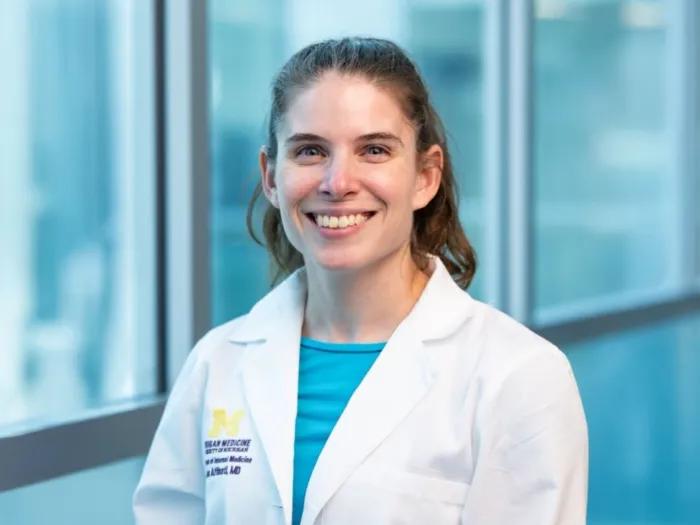
Dr. Virginia Sheffield is a clinician educator whose impact spans bedside teaching, residency training, and educational innovation.
Whether leading residents, teaching on the wards, or caring for patients at the VA Ann Arbor Healthcare System, Sheffield is known for creating rigorous and engaging learning environments. Learners consistently describe her as a transformative educator who turns everyday clinical encounters into meaningful teaching opportunities. Her contributions have earned numerous honors, including the Richard D. Judge Award for Medical Student Education, the Faculty Award for Outstanding Commitment to Inpatient Education, and the Senior Award, which recognizes the educator who best exemplifies the ideals of medical education as selected by the graduating medical student class.
Sheffield’s interest in teaching began before medicine. While serving as a high school science teacher in the Peace Corps, she discovered how much she enjoyed helping learners work through complex concepts. Later, as a medical student at the University of Michigan, she was inspired by faculty who made learning both effective and enjoyable.
“I first got hooked on teaching as a high school science teacher in the Peace Corps,” Sheffield said. “I loved the mix of problem-solving, energy, and trying to make hard things click for people. Then, in medical school here, I trained with attendings who made learning genuinely fun and engaging, and I pretty quickly realized I wanted to do the same thing.”
As associate program director for Inpatient Services within the Internal Medicine Residency Program, Sheffield also plays a key role in shaping resident education. Her work has focused on improving learner assessment, particularly by making evaluations more meaningful, timely, and equitable. Through presentations, workshops, and scholarship, she has helped advance conversations around bias in assessment and fair evaluation practices.
Sheffield has also become a national leader in the integration of artificial intelligence into health professions education. She has helped guide institutional efforts related to AI in teaching and assessment and serves in leadership roles with the AI in Medical Education Consortium and the Millennium Conference 2025 Task Force on artificial intelligence in health professions education.
For Sheffield, the most rewarding teaching days are those that foster collaboration and growth. “A great teaching day is one where rounds are full of curiosity, good questions, a lot of laughter, and solid patient care,” she said. “If the team is thinking hard, having fun together, and the learners leave feeling a little more confident than they started, that’s a good day.”
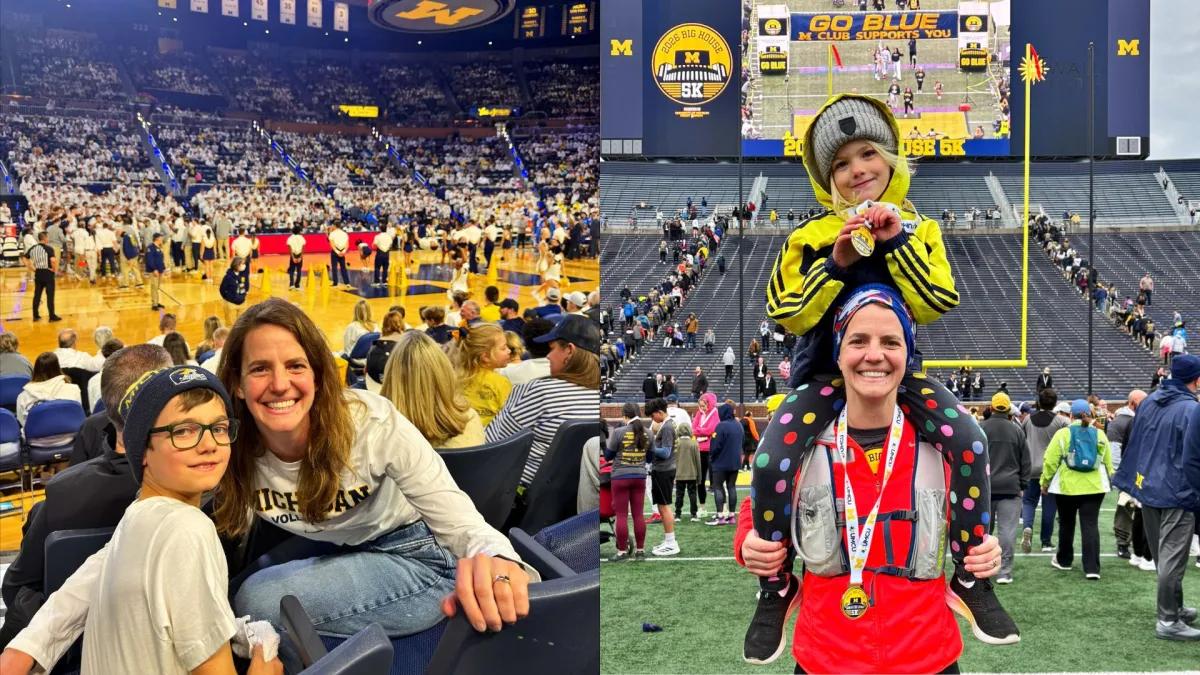
Outside of work, Sheffield enjoys attending sporting events with her children, especially Michigan basketball games.
Through her teaching, mentorship, and educational leadership, Sheffield continues to shape the future of medical education while helping learners build the skills and confidence they need to succeed.
Stay up to date on the latest innovations in medical education at U-M with the RISE monthly newsletter.
In This Story
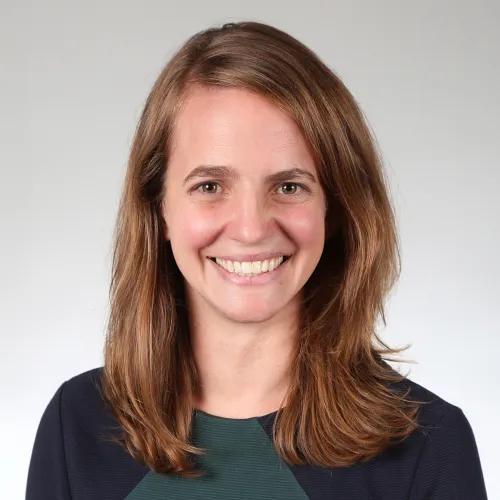
Virginia Morris Sheffield
Clinical Assistant Professor
Featured News & Stories
From the Executive Director’s Desk: June 2026
From the Executive Director’s Desk: May 2026
Sanjay Gupta recounts his U-M years and shares life lessons for medical school commencement

Phase 1 trial of alrizomadlin shows promise in targeting metastatic salivary gland cancers
Facing Your Own Fears First: Training Clinicians to Deliver the Anxiety Treatment They've Been Avoiding