Akwaaba Readers!
Five weeks have passed since I first stepped off the plane in Kumasi—I've met many Kofi's and Akua's and have learned that my Ghanaian day name is Abinah (since I was born on a Tuesday), I've drawn blood and set a line (finally I have one or two practical skills after finishing a year of med school?), I've learned enough Twi phrases to make people laugh at my attempts, and today in the midst of the chaotic central market —which with its colorful fabrics and winding alleys and stands that sell everything (nails, large bells, locks, and soap for skin rashes—all at one stand) reminds me so much of India—I felt that I am beginning to settle in and enjoy my life here. And yet, we are leaving in just two weeks. So here are more glimpses of med school hostel life, Kumasi, and global mental health research:
What is med school hostel life like here? The med students live in a couple of different buildings, all featuring quads or doubles with side rooms for a do-it-yourself-kitchen (students stuff refrigerators, hot plates, jars of peanut butter, and so on in these side rooms). Food is abundant here compared to Michigan's med school—just down the hall is a general store that sells fresh bread in the mornings. Walk outside the hostel building and there is the "Medicock Pub" which features everything from my favorite Joloff rice to pizza and fries and Star beer. And just further down through a tree-lined walkway is an outdoor canteen and more stands that sell fresh pineapple and mango, piping hot egg sandwiches…I know I will miss this abundance of food when Angelo's is closed after 4 pm during the frigid Ann Arbor winters…
We live in the Getfund hostel (photo in previous blog), but my favorite hostel building is Valco, the all-boys hostel featuring boys and my three German friends who are girls. I can't imagine a med school dorm like Valco existing in the US—the boys crank up Kanye and Jay-Z around 7 am, saunter about in their professional clothes singing out loud to the music, and the pattern repeats itself late into the night (maybe pajamas instead of professional clothes). On Sunday mornings, my friends Alex and Hagan turn up the music most students danced to the night before and sit down together in the sunshine and wash their clothes with their three colorful buckets, singing the whole time.
Aside from our explorations of the social scene and Kumasi culture, we've spent the bulk of our five weeks working on three studies examining providers' views of post-partum depression and mental health care, providers' experiences in coping with stillbirth/infant death, and mothers' mental health within one year of giving birth. Through working with two incredible medical students (who are now officially doctors after they passed their final exams!), we spent most of our time traveling to the homes of and interviewing approximately 50 of the women who were interviewed last summer in the neonatal unit (known here as the "Mother and Baby" unit). Sitting in patients' homes and meeting their families and witnessing their environments have been some of my richest experiences here—these glimpses have been vital for understanding our interviewees' narratives.
And there are some stories I will never forget—the severely malnourished 13-month-old baby who could not even hold his own neck up, much less crawl, largely because his mother did not know that she should breastfeed him at least eight times a day, not three. Or the woman who still grieved for her dead baby and was severely depressed, possibly suicidal, lived with a family who didn't support her, and ran an alcohol shop where she was frequently threatened by drunk customers. We are documenting their stories and the doctors we have worked with have provided counseling and the necessary referrals and follow-ups. A fellow researcher expressed her frustration with our efforts—we are gathering data and researching and writing, but not doing much to directly and immediately help the women we are interviewing. While the referrals in these extreme cases I described are not only helpful, but crucial, and certain results from this research can offer some insight on mental health understanding and care, it's true that research is not the same as service. Listening to these mothers' stories and observing the poverty that many of them have experienced their whole lives, it's difficult to navigate the line between the two.
If you'd like to see or hear more stories about our experiences here, check out: www.theviewfromgetfund.wordpress.com
Media Contact
Public Relations
Department of Communication at Michigan Medicine
Stay Informed
Want top health & research news weekly? Sign up for Health Lab’s newsletters today!
Featured News & Stories

Voting victories: Medical School Vice Dean Edje enjoys election wins at AMA meeting
Explore the Department of Human Genetics Annual Newsletter
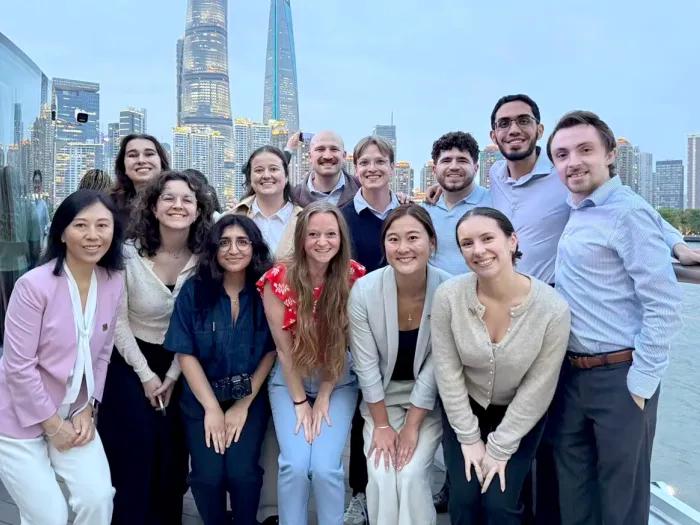
Students ponder differences, shared challenges during visit to China

Scholars from Taiwan mark completion of two-year research experience at UMMS
How AI is helping emergency physicians learn from their patients