The O'Brien lab publishes a research article in PNAS
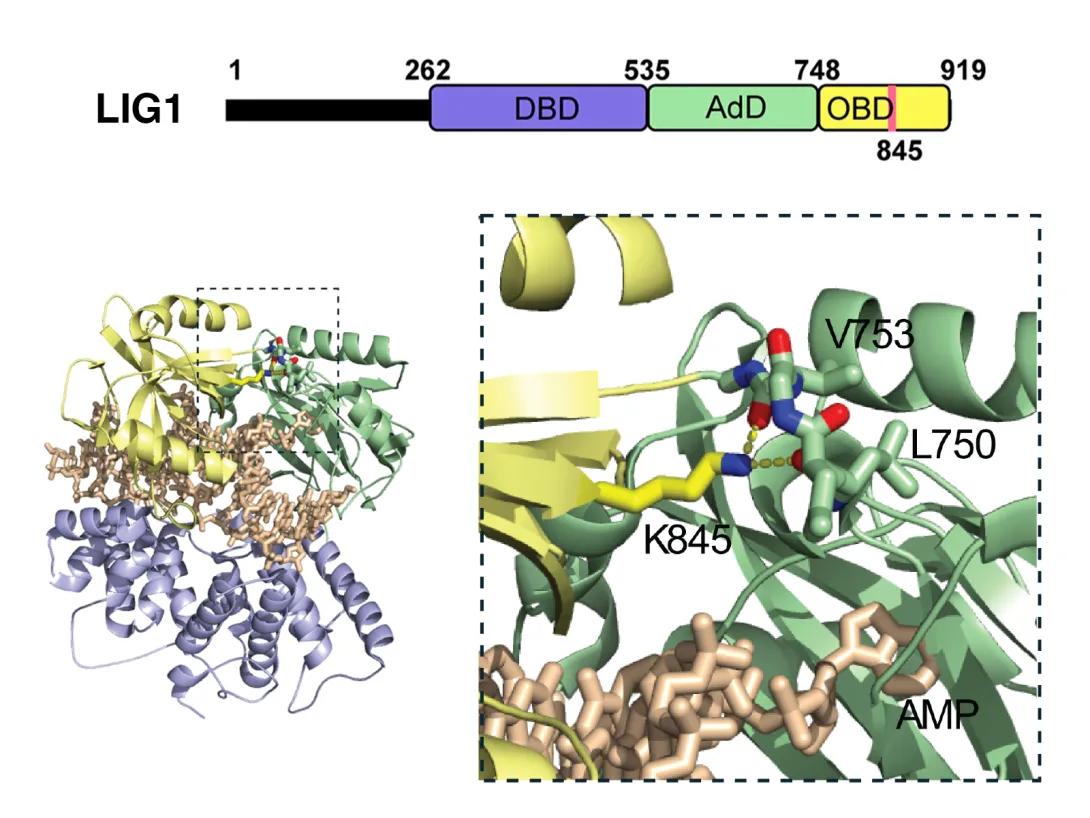
Huntington’s disease LIG1 modifier variant increases ligase fidelity and suppresses somatic CAG repeat expansion
A research team led by Dr. Patrick O'Brien (U-M Biological Chemistry), Dr. Vanessa Wheeler (MGH, Harvard, Broad Institute) and Dr. Ihn Sik Seong (MGH, Harvard) investigated a missense variant in DNA Ligase 1 (K845N) that is associated with a profound delay in the onset of Huntington’s disease (HD). Using in vitro ligase assays, human cell-based studies, and a mouse model of HD, they discovered that K845N ligase enhances substrate discrimination against mismatched substrates, thus increasing DNA repair fidelity, conferring protection against oxidative stress and slowing somatic expansion of the HD CAG repeat. Their results provide a mechanistic foundation for considering DNA ligase fidelity as a therapeutic target in HD and potentially in other trinucleotide repeat disorders. Biological Chemistry PhD student David Beier shares first authorship of the paper with Eunhye Lee from the Seong lab and Wonju Kim from the Wheeler lab.
For more U-M Biological Chemistry news, please visit our News & Stories page. Send questions or comments to [email protected].
In This Story

Patrick O'Brien
Professor

David Beier
PhD Student, Biological Chemistry | Patrick O'Brien Lab
Featured News & Stories

Gifts advance colon cancer prevention and early detection

ASCO 2026 Rogel Recap
Check out The Pulse, Psychiatry's e-newsletter, with news, events, and more for this summer

A method to prevent falls before they happen
Dr. Ben Clements is ASPET's Journal of Pharmacology and Experimental Therapeutics Highlighted Trainee Author for June 2026