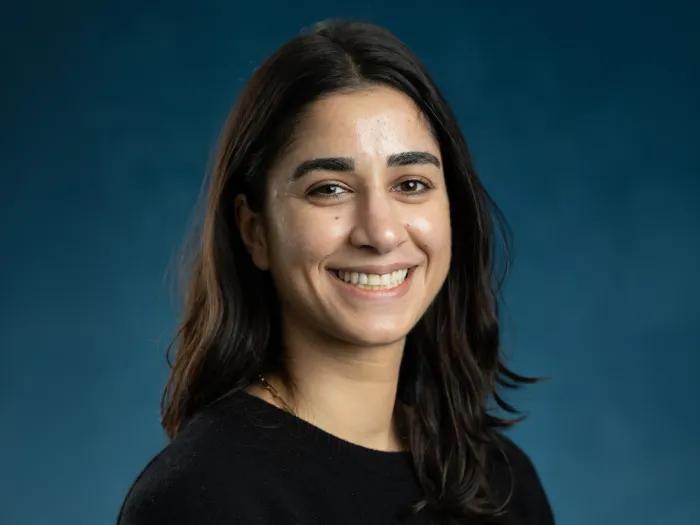
Growing up on the beaches of Ensenada, in Baja California, Mexico, Dulce Guillén Matus dreamed of becoming a marine biologist to find a cure for sharks dying from cancer. That middle-school dream became the passion that carried her through high school and then to the Autonomous University of Baja California where she received a broad education in oceanography with a combination of lectures, lab work and field trips. She graduated with a B.S. and a Master’s degree in Marine Science.
Her interest for sharks turned into a great curiosity about the ability of bacteria to create metabolites that can cure cancer and other diseases while they are not, themselves, susceptible to these diseases.
“It fascinates me that small organisms are so important in all forms of life,” —Dulce Guillén Matus, Ph.D.

For her doctorate, she attended the University of California - San Diego Scripps Institution of Oceanography. In Paul Jensen’s lab, she studied ecological evolution and phylogeny of Salinispora, a bacteria that resides in ocean sediments and that is one of the first bacterium of its type to require seawater for growth. Her 2022 doctoral dissertation was titled “From nucleotide to gene cluster: Differences driving the specialized metabolism of the marine actinomycete Salinispora.”
Photo: Salinispora under the microscope
“Everytime I do an experiment, I just have more questions about what’s happening.”
Now a U-M postdoctoral fellow in the Balunas lab, Dulce is expanding her doctoral interest in phylogenetics to include more applicable research. She is studying microbiome interactions and bacteria communication in marine organisms. She is researching metabolites that can communicate with the host cells to understand why some host cells let particular bacteria colonize them. In the Hawaiian bobtail squid, she is observing and sequencing six strains of bacteria that have different reactions to a fungal pathogen.
“Dulce is a fantastic postdoctoral fellow, developing new methodology and continuously pushing her research forward. Her research is collaborative and interdisciplinary, including host-microbe interactions, genomics, metabolomics, and marine natural products. Not only does Dulce provide important research advances but she’s also a true leader, both within the lab as she mentors junior trainees, as well as in her role as part of MAVS and broader administration. We are truly lucky to have her!" –Marcy J. Balunas, Ph.D., Associate Professor, Department of Microbiology and Immunology and of Medicinal Chemistry
Dulce is also interested in ecology and the interactions between organisms and their environment. For this research, she studies tunicates, commonly called sea-squirts. These primitive marine animals spend most of their life attached to docks, rocks, or the undersides of boats. They are an invasive species in the U.S, and can be found on both coasts.

Dulce collects tunicates off a pier in Avery Point, Connecticut
She particularly enjoys field work and one of the highlights of her recent research has been to collect tunicate specimens in Connecticut. “Tunicates grow very well in polluted waters with trace metals. You don’t want to get into this water, and it can get pretty acrobatic to climb under the docks to pull ropes that are covered with tunicates,” she said. “These organisms are quite fascinating because their bacteria can accumulate metals in the host cells. But very little is known about their ecology and we’re creating a baseline to understand them better.” She plans to compare microbiome and metabolite exchanges in tunicates from the East and West coasts.
Dulce also finds great satisfaction in training undergraduate students in the lab. She enjoys their enthusiasm and curiosity for lab work, watching colorful micro organisms through the microscope and asking many questions. She would like to pursue a career in academia, training the next generation of marine microbiologists.
“I love to infuse the love for science,” she said. “Curiosity is what pushes me to study science, and I want to share and nurture this passion in undergraduates.”
She is also very engaged in the life of the Department of Microbiology and Immunology. She is a co-leader of the postdoc organization that offers social activities and provides support and resources for postdocs. “It is rewarding to create a sense of community,” she said. In this role, she is a liaison between M&I leadership and the postdocs, and represents them at the faculty meetings. In addition to social networking, she is interested in understanding how a department is run and what the challenges are in leading and administering a department. “This participation is very valuable to me since I’d like to become a faculty,” she said.
Dulce is also a co-lead of the M&I Analysis, Visualization, and Statistics (MAVS) group that provides a friendly environment for solving problems in biological data analysis, including reproducibility, statistics, visualization, and any computational or data challenges. “It’s a lot of fun to help students and peers with data analysis. I’ve a strong background in statistics and data visualization, and with this group, I learn more about coding. It’s rewarding helping others in a friendly environment where we all share skills,” she said.
She was recognized for her contributions to the department with the 2024 AdMIration award.
When Dulce has free time, she enjoys being outdoors, especially hiking and running, although she is still getting used to being out in Michigan cold weather. Dulce also enjoys movies, “going to the theater is the best way of watching a good movie!” she said. She also likes going to concerts, from classical to contemporary music, and really enjoys dancing. At home, she enjoys reading, cooking and baking for her lab mates.

Dulce hikes the Garnet Peak Trail in CA
Featured News & Stories
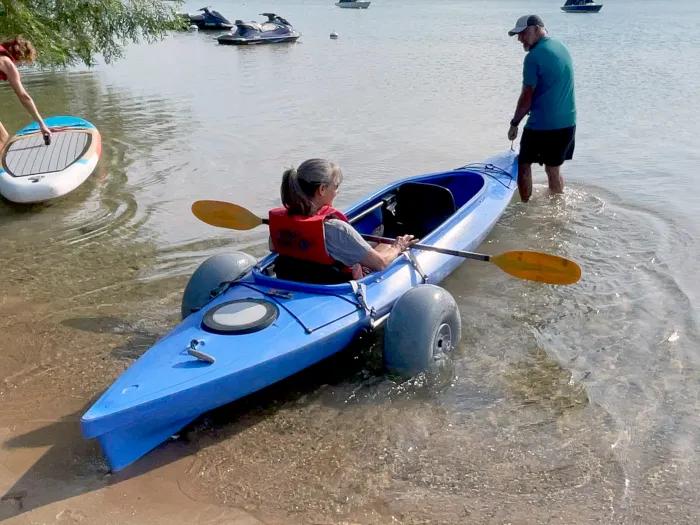
Expanding camp adventure for all

The Future of Cell and Gene Therapies
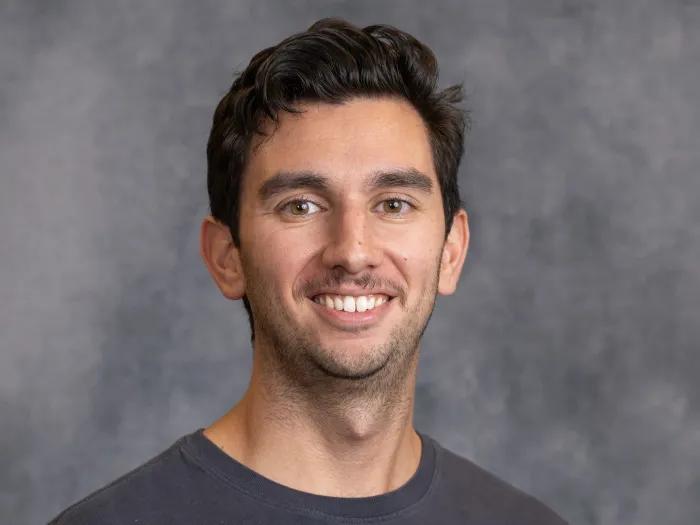
John Larson chosen for a position in the Genetics Training Program
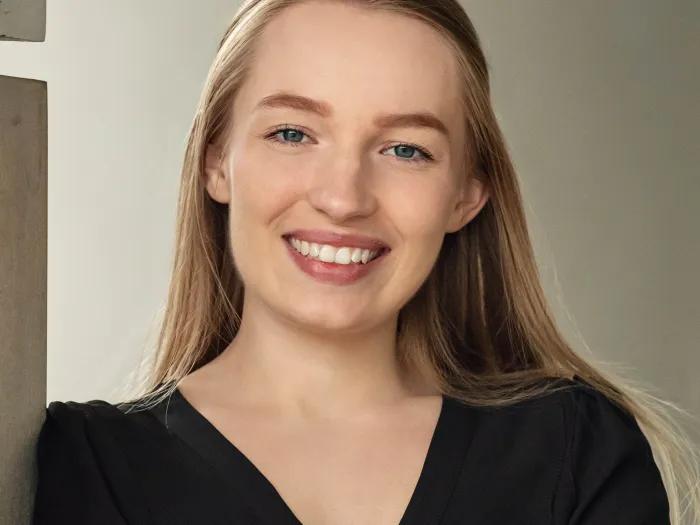
Congratulations to Kaitlyn Digsby on being awarded an NRSA grant!
Katerina Atallah-Yunes chosen for a position in the Molecular Biophysics Training Program