Dr. Byrd and Dr. Spencer-Segal Named Research Scouts for 2025

The Medical School Office of Research recently announced the 2025 Research Scouts cohort, which includes 17 faculty members from 13 Medical School departments.
The Department of Internal Medicine is proud to have two faculty members named to this distinguished list of researchers: J. Brian Byrd, MD, MS, Assistant Professor in the Division of Cardiovascular Medicine, and Joanna Spencer-Segal, MD, PhD, Assistant Professor in the Division of Metabolism, Endocrinology, and Diabetes and Research Assistant Professor at the Michigan Neuroscience Institute.
The Medical School Office of Research launched the Research Scouts Program in 2023 to catalyze new, exciting lines of investigation and make bold, creative ideas possible. The inaugural program was a resounding success, bringing together 24 Research Scouts who supported 51 University of Michigan researchers across 46 innovative projects. These projects spanned 11 basic science and 12 clinical departments, with a total investment of $3.2 million.
Research Scouts are outstanding scientists from diverse backgrounds and various career stages who demonstrate immense curiosity, creativity, and calculated risk-taking. Scouts have an innate tendency to support the success of others.” – Medical School Office of Research
About Dr. Byrd's research and what excites him about the Research Scouts Program
The Byrd Lab focuses on improving the diagnosis and treatment of high blood pressure through the identification of novel biomarkers of mineralocorticoid receptor activation. The lab's approach includes measuring the contents of extracellular vesicles, nanosized membrane-bound particles released by all known cell types, including cells expressing mineralocorticoid receptors.
"Researchers have many ideas that never get funded. I’m no exception, and I value the opportunity to help some researchers get something off the ground that otherwise wouldn’t come to be. I agree with Albert Szent-Györgyi, who wrote in a letter to Science in 1972: ‘the present methods of distributing grants unduly favor the Apollonian,' who 'tends to develop established lines to perfection, while the Dionysian rather relies on intuition and is more likely to open new, unexpected alleys for research.’ I’m excited to identify a Dionysian or two with a brilliant scientific intuition about the direction in which to head out into the unknown!"
About Dr. Spencer-Segal's research and why she thinks the Research Scouts Program is important
Research in the Spencer-Segal Lab focuses on how systemic hormones modulate the neural circuitry controlling behaviors such as emotion, memory, and motivation. The lab's ultimate goal is to discover mechanisms that can be used to guide new brain- and endocrine-based treatments for patients suffering from stress-related disorders.
"I was a recipient of Research Scout funding, which gave me the confidence and resources to pursue a bold project. Now, I want to pay this forward and find other innovative ideas to fund. Michigan is such a large place, it often feels impossible to meet everyone or keep up with all the groundbreaking science. I’m excited to use this opportunity to connect with scientists I might otherwise never meet. Sticking with ‘safe’ science slows progress, and I’m grateful to Michigan Medicine leadership for creating a program that invests in potentially transformative, out-of-the-box ideas."
As Research Scouts, Dr. Byrd and Dr. Spencer-Segal will each receive $150,000 and one year to invest in early-stage scientific ideas, technologies, methods, and tools from other Medical School researchers that they deem disruptive, novel, and visionary.
In This Story
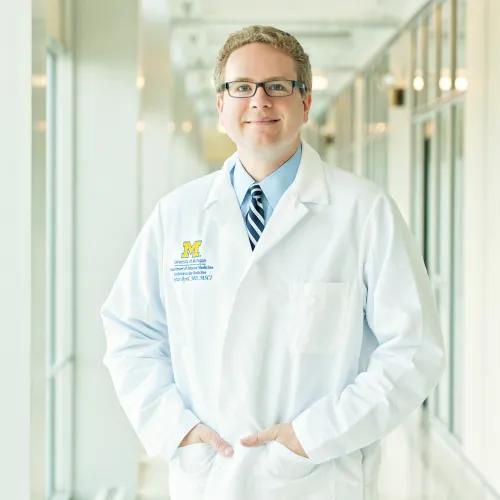
J Brian Byrd, MD, MS
Associate Professor
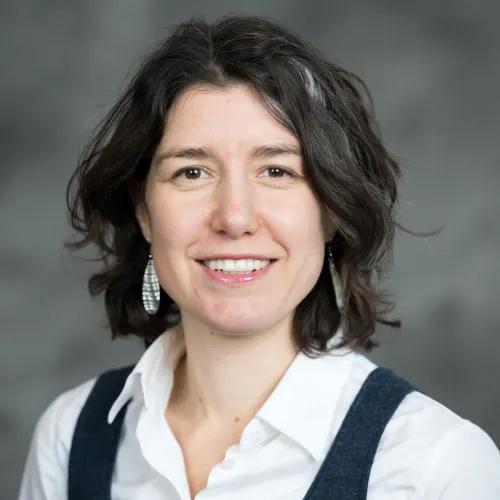
Joanna Spencer-Segal, MD, PhD
Associate Professor
Featured News & Stories
MyVoice poll finds youth have mixed perceptions of oral nicotine pouches
Inaugural RISE Prize Recognizes Innovation in Health Sciences Education
12-year-old shares journey with sickle cell anemia on Capitol Hill

LGBTQ+ Aging in America

Michigan’s aging brains need more protection, poll shows