
Raymond L Yung
Manage Your Profile
About
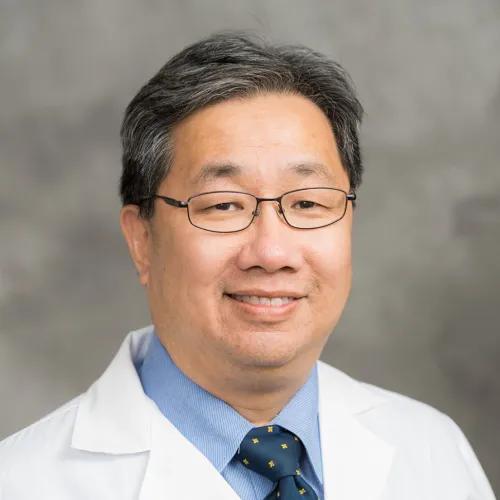
Dr. Yung received his medical degree from the University of Liverpool, England. He completed an internal medicine residency at Sinai Hospital in Detroit, and fellowship training in rheumatology (1994) and geriatric medicine (1996) at the University of Michigan. He is board-certified in Internal Medicine, Geriatric Medicine, and Rheumatology. Dr. Yung’s clinical interests include the management of arthritis in older adults. He is the editor of two textbooks, including Geriatric Rheumatology A Comprehensive Approach. He is a recipient of the NIH Individual National Research Service Award (1994-1996) and Clinical Investigator Award (1997-2002), and the Paul Beeson Physical Faculty Scholars in Aging Research Award (1998-2001). In addition, he has received the American College of Rheumatology Senior Rheumatology Scholar Award (1994). He has been continuously funded by the NIH since 1994. He is the principal investigator of the Michigan Claude D. Pepper Older Americans Independence Center P30 award. His research interest focuses on the gene-environment interaction in chronic inflammation in aging. He is currently funded by the NIH in his research effort on the effects of aging on the gut microbiome. Dr. Yung was chief of the Division of Geriatric and Palliative Medicine (2011-2022), and is director of the Institute of Gerontology, and director of the Geriatrics Center at the University of Michigan. He held the interim chair of the Department of Internal Medicine (2023-2024). Dr. Yung became the Chief Clinical Officer of Ambulatory Care in October (2024).
Center Memberships
-
Center MemberSamuel and Jean Frankel Cardiovascular Center
-
Center MemberCaswell Diabetes Institute
Research Overview
Dr. Yung's research focuses on understanding both the origins and the effects of low level chronic inflammation in the onset and progression of age-related diseases and conditions. Aging represents a state of chronic low grade inflammation. Throughout his career, Dr. Yung has been interested in the relationship between “epigenetic drift”, autoimmunity and age-related inflammation (“inflamm-aging”). The chemokine system is critical to initiating and sustaining inflammation. Dr. Yung was the first to report that T cell DNA hypomethylation in aging is associated with increased T cell pro-inflammatory chemokine and simultaneously impaired T cell homeostatic chemokine responses. These observations help explained the observed low level chronic inflammation in aging. Epigenetics is the key that links genes and environment. He believes the origin of late-life inflammation diseases is in part determined by early-life environmental factors that act on the immune system through epigenetic mechanisms, consistent with the “Developmental Origins of Adult Disease (Barker) Hypothesis. His research group recently reported that pre-natal supplementation with key “methyl-donors” can ameliorate the pro-inflammatory T cell chemokine response in aging, which in turn reduces the burden of late-life cardiovascular disease.
Recent Publications
-
Kumar A, Yung R. Immun Ageing, 2026 Jul 10;Journal ArticleVirtual memory CD8⁺ T cells in aging: heterogeneity, bystander protection, inflammatory potential, and inhibitory regulation.
DOI:10.1186/s12979-026-00582-8 PMID: 42432776 -
Zhu K, Liu S, Knights AJ, Pan T, Downie CH, Peng X, Huang Y, Ginder JP, Kajimura S, Xu XZS, Wu J. 2023 Jun 2;Journal ArticleNicotinic acetylcholine receptor signaling activates beige adipocyte and mediate systemic metabolism
-
Kumar A, Nguyen NN, O'Brien M, Vendrov K, Standke A, Ruppel H, Earl I, Bergin IL, Young VB, Yung R. bioRxiv, 2026 Jan 5;Journal ArticleHigh-fat diet rewires gut host-microbiota relationship to derive worse outcomes following Clostridioides difficile infection.
DOI:10.64898/2026.01.05.697779 PMID: PMC12803074 -
Kumar A, O'Brien M, Young VB, Yung R. Aging Cell, 2025 Jan 1;Journal ArticleSingle-Cell RNA Sequencing Identifies Accumulation of Fcgr2b + Virtual Memory-Like CD8 T Cells With Cytotoxic and Inflammatory Potential in Aged Mouse White Adipose Tissue
DOI:10.1111/acel.70278 -
Misra D, Buehring B, Yung R, Makris UE. Lancet Rheumatol, 2024 Dec; 6 (12): e817 - e819.Journal ArticleAgeism and rheumatic diseases.
DOI:10.1016/S2665-9913(24)00239-X PMID: 39542000 -
Lieber SB, Wysham KD, Sattui SE, Yung R, Misra D. Lancet Rheumatol, 2024 Dec; 6 (12): e881 - e891.Journal ArticleFrailty and rheumatic diseases: evidence to date and lessons learned.
DOI:10.1016/S2665-9913(24)00191-7 PMID: 39542001 -
Noppert G, Wragg K, Li C, Duchowny K, Mody L, Aiello AE, Nyquist L, O'Brien M, Yung R, Goldstein D. Open Forum Infect Dis, 2024 Dec; 11 (12): ofae693Journal ArticleHerpesvirus Antibodies Are Correlated With Greater Expression of p16 in the T Cells of Humans.
DOI:10.1093/ofid/ofae693 PMID: PMC11656339 -
Buehring B, Tay SH, Manu E, Yung R. Lancet Rheumatol, 2024 Dec; 6 (12): e819 - e821.Journal ArticlePalliative care in patients with rheumatic diseases.
DOI:10.1016/S2665-9913(24)00238-8 PMID: 39541999
