Alexey I Nesvizhskii, PhD

Manage Your Profile
About
Alexey Nesvizhskii, Ph.D., is the Godfrey Dorr Stobbe Professor of Bioinformatics. He received his M.S. degree (with honors) from St. Petersburg State Technical University, Department of Physics and Technology, St. Petersburg, Russia in 1995 and Ph.D. degree in Physics from the University of Washington, Seattle, USA, in 2001. He then completed post-doctoral training in the area of bioinformatics and proteomics in Ruedi Aebersold Lab at the Institute for Systems Biology in Seattle, Washington from 2001-2003, and joined the staff as a Research Scientist upon completion of training. He joined the faculty at the University of Michigan in November of 2005.
Dr. Nesvizhskii has published more than 120 manuscripts in international scientific journals. In 2007, he was named a "Rising Young Investigator" by Genome Technology magazine (USA). Dr. Nesvizhskii serves as Senior Editor in the area of bioinformatics and biostatistics for international journals Proteomics and Proteomics-Clinical Applications, as Section Editor in the area of proteomics for BMC Bioinformatics, and on the Editorial Boards of Molecular and Cellular Proteomics. Dr. Nesvizhskii also serves on the Scientific Advisory Board for the Swiss Institute of Bioinformatics and on the Board of Directors for the US Human Proteome Organization. He is frequently invited to present his research at seminars and conferences in the United States and internationally, and to serve on grant review panels.
As an enthusiastic educator, Dr. Nesvizhskii directs the NIH funded T32 Proteome Informatics of Cancer Training Program at the University of Michigan, and teaches graduate-level courses in the area of bioinformatics, proteomics, and systems biology. In addition, he has developed and taught several internationally recognized hands-on workshops and tutorials. His educational efforts have been recognized by several awards, including induction in the League of Educational Excellence at the University of Michigan Medical School.
Links
https://www.nesvilab.org/
Qualifications
-
Postdoctoral FellowInstitute for Systems Biology, Seattle, United States
Center Memberships
-
Center MemberRogel Cancer Center
Research Overview
Dr. Nesvizhskii's research laboratory is working in the area of bioinformatics, proteomics, and systems biology. The computational tools previously developed by Dr. Nesvizhskii and his colleagues, such as Trans-Proteomic Pipeline (including PeptideProphet and ProteinProphet), PeptideAtlas, SAINT, CRAPome, and DIA-Umpire are among the most cited proteome bioinformatics tools and used by hundreds of laboratories worldwide. Over the past several years, he has extended his studies to other omics data such as RNA-Seq transcriptomics, with a focus on alternative splicing and sense-antisense transcription. His lab actively collaborates with technology developers, biologists, and clinical scientists on a variety of projects, including analysis protein interaction networks and complexes, label-free proteome quantification, integrative modeling of multi-omics data to reconstruct targetable pathways in cancer, and biomarker discovery. Dr. Nesvizhskii directs the Proteomics Resource Facility in the Department of Pathology which aims to provide cutting-edge proteomics capability to investigators at the University of Michigan.
Recent Publications
-
Chang HY, Deng Y, Li R, Avtonomov D, Wen B, Haynes SE, da Veiga Leprevost F, Zhang B, Yu F, Nesvizhskii AI. Nature Communications, 2026 Dec 1; 17 (1):Journal ArticleAnalysis of isobaric quantitative proteomic data using TMT-Integrator and FragPipe computational platform
DOI:10.1038/s41467-026-70118-7 PMID: 41771895 -
Bathini M, Bocaniciu D, Johnson FD, de Jong RCP, Yu F, Aloi VD, Kuiken MC, Mors JR, Giebel L, Champagne J, Bleijerveld O, Agami R, Dijkstra KK, Thommen DS, Nesvizhskii AI, Lindeboom RGH. Communications Biology, 2026 Dec 1; 9 (1):Journal ArticleMHC1-TIP enables single-tube multimodal immunopeptidome profiling and uncovers intratumoral heterogeneity in antigen presentation
DOI:10.1038/s42003-026-09570-6 PMID: 41571884 -
Mehta S, Wagner R, Do KT, Johnson JE, Yu F, Jubenville T, Richards K, Coleman S, Popescu FE, Nesvizhskii AI, Largaespada DA, Jagtap PD, Griffin TJ. Genome Biology, 2026 Dec 1; 27 (1):Journal ArticleiPepGen: a modular, immunopeptidogenomic analysis pipeline for discovery, verification, and prioritization of cancer peptide neoantigen candidates
DOI:10.1186/s13059-026-04012-2 PMID: 41742304 -
Denstaedt S, McBean B, Boyle A, Arenberg B, Mack M, Moore B, Newstead M, Deng Y, Nesvizhskii A, Singer B, Cano J, Prescott H, Zemans R. JCI Insight, 2025 Dec 16;Journal ArticleLong-term immune reprogramming of classical monocytes with altered ontogeny mediates enhanced lung injury in sepsis survivors
-
Van Pelt KM, Deng Y, Nesvizhskii AI, Paulson HL, do Carmo Costa M, Truttmann MC. 2026 Aug 12; bioRxiv,PreprintFicd loss rescues motor impairments and reverses oligodendrocyte maturation deficits in a mouse model of spinocerebellar ataxia type 3
DOI:10.64898/2026.08.07.743629 -
Yue L, Jiang W, Li S, Luo M, Fan N, Zhan X, Sun R, Cheng H, Xue Z, Liu T, Zhou Q, Chen K, Lu T, Guo F, Li D, Ge W, Nie Z, Lyu M, Jun A, Wang Y, Chen Y, Fu Z, Xiang N, Li L, Yu F, Teo GC, Nesvizhskii AI, Wang M, Snyder MP, Collins BC, Xiao Q, Aebersold R, Xu F, Yang H, Zhang S, Han Y, Zhu Y, Ji Y, Li Y, Guo T. Nature, 2026 Aug 6; 656 (8126): 227 - 236.Journal ArticleSpatial distribution of the proteome in the human body and in cancers
DOI:10.1038/s41586-026-10660-y PMID: 42310461 -
Ngo C, Takechi S, Sivakumar A, Villanueva M, Yu F, Ball AB, Rubio J, Biletch E, Burton NR, Boatner LM, Kim P, Turmon AC, Perumal N, Liesa M, Divakaruni AS, Nesvizhskii AI, Backus KM. Nature Chemistry, 2026 Aug 1; 18 (8): 1431 - 1442.Journal ArticleSmall-molecule binding-site discovery using silyl ether-enabled chemoproteomics
DOI:10.1038/s41557-026-02127-4 PMID: 42045653 -
Levin N, Polasky DA, Li K, Nesvizhskii AI, Mohammed S. Analytical Chemistry, 2026 Jul 14; 98 (27): 20043 - 20054.Journal ArticleEvaluating the Performance of Photon- and Electron-Based Fragmentation Methods in Omnitrap-LCMS Analysis of N-Glycopeptides
DOI:10.1021/acs.analchem.6c00435
Featured News & Stories
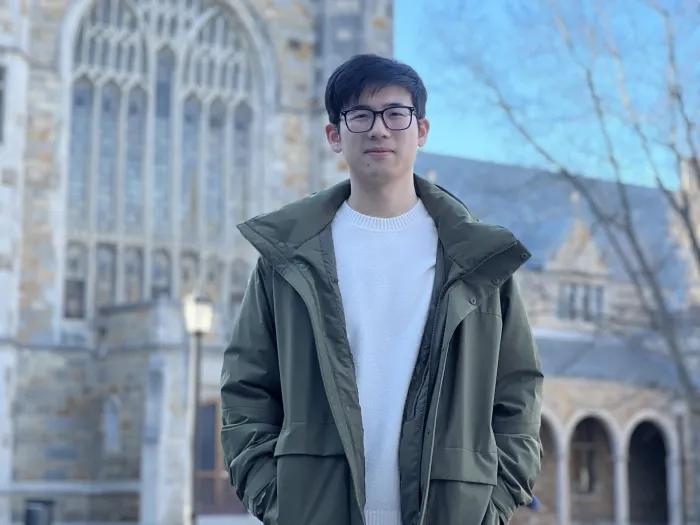
Advancing proteomics through computational innovation: Kai Li successfully defends dissertation
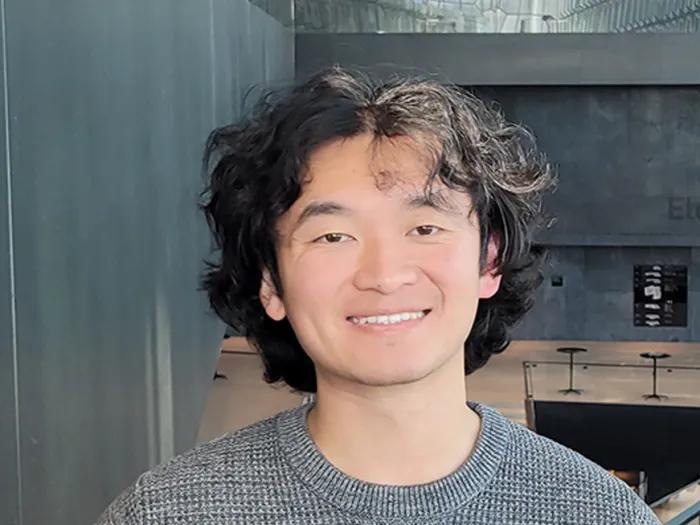
Kevin Yang, Ph.D., developed new computational methods for protein studies
K. Yang is first author in "Nature Communications"