Wolverine Street Medicine (WSM) is a catchy title for a student group with an even catchier logo (shout out to the M2s who designed it), but what is it really? What is street medicine and why should we - the future doctors of America - care about it?
Beautiful WSM Logo designed by students!! Our goal with branding is to become a recognizable and consistent entity within the communities we serve.
Having majored in Global Health in college and worked as a case manager at a health care clinic for individuals experiencing homelessness prior to medical school, I arrived at the University of Michigan Medical School knowing I wanted to work with underserved populations. But I wasn't sure what opportunities would be available to a first-year medical student, and on top of that, I wasn't sure how best to balance a personal passion with a rigorous medical school curriculum. During my first year of medical school, I had moments when I felt bogged down by schoolwork and really missed the rewarding relationships I built during my time as a case manager. I questioned my decision to leave a job I loved so much, and at times even found myself feeling distant from my "why" behind attending medical school.
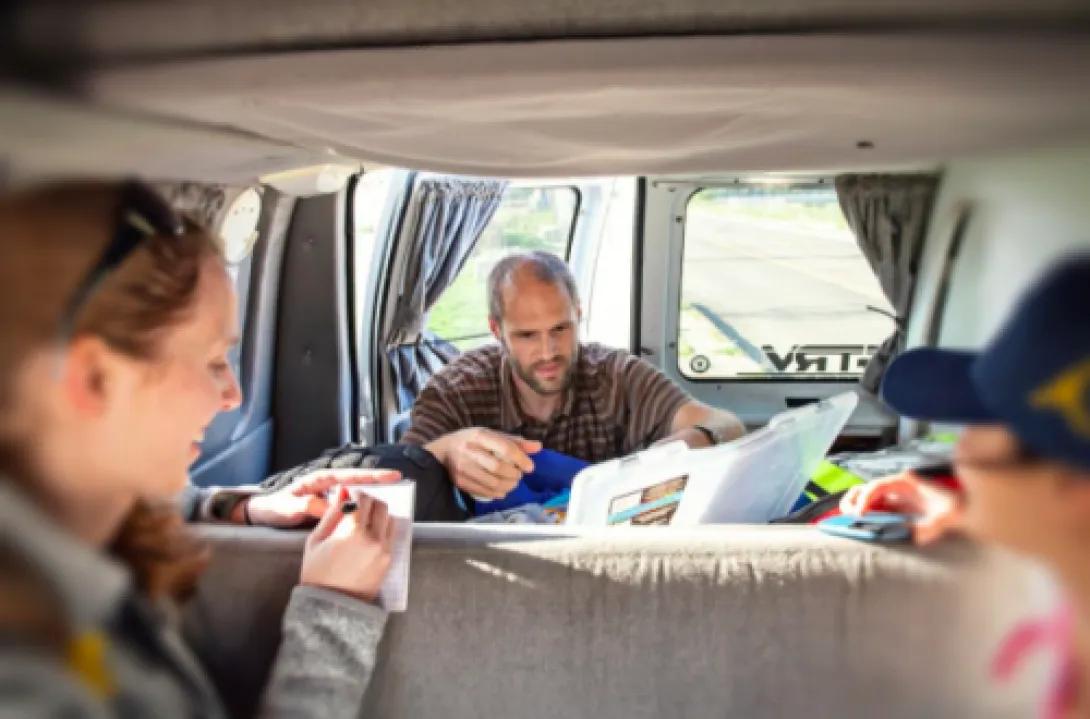
The infamous, well-stocked van we work out of on our street runs, with our awesome provider, Dr. Pajewski, front and center!
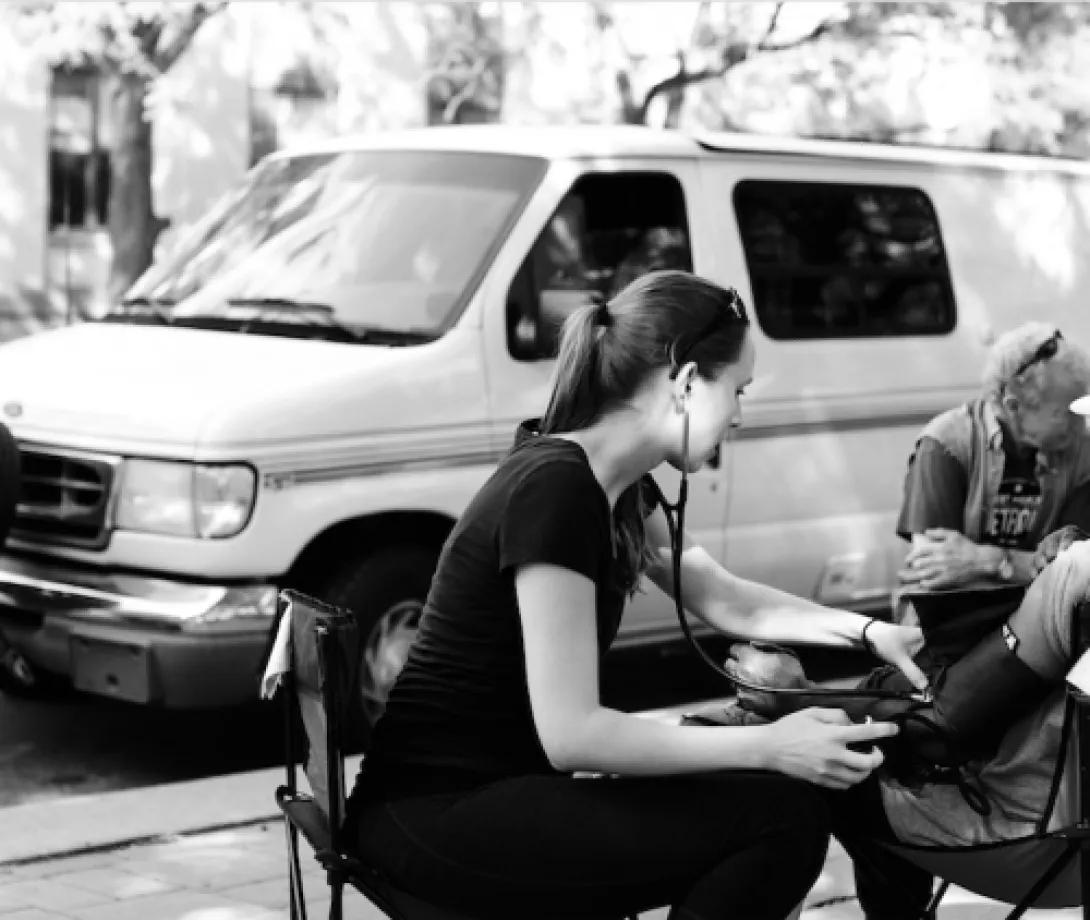
I first heard about Wolverine Street Medicine toward the end of my first year of medical school. It was a brand-new student group at that time, with a different name, but after my first "street run," I was immediately hooked. I knew that I had found my people, united by a shared sense of purpose and joy in serving those who need it most. Street Medicine is the practice of providing health care and other social supports directly, by meeting unhoused individuals in their own environment. We practice medicine on street corners, under bridges, outside tents and on park benches, in order to break down barriers to accessing health care, meet people where they are, and provide a full spectrum of care to our neighbors in need. Medical students, regardless of future specialty or career interest, can learn so much from working on a street medicine team, from both the providers and patients alike.
On my first street run, I was especially struck by the community created between the street medicine team and the patients they served. I loved working and conversing with Jim, an outreach nurse who has led street teams for more than 20 years. I valued hearing people's stories and discussing with them the unique health care needs of people living on the street. I was impressed by the trusting relationships Jim and other team members had built with their patients. I am grateful for the flexibility built into the UMMS curriculum that allowed me to get out of the classroom to be a small part of this incredible team.
Since that first run, my involvement with Wolverine Street Medicine has only grown. With this, my resolve that medical school was the right decision for me has strengthened, and I now have a clearer vision for where my future career might take me. I am now an M4 and serving as one of the co-directors of operations for WSM, where I get to hone my leadership skills and practice my clinical skills by spending more time than ever before on street runs. I have gotten to know our regular patients better and begun to build those relationships that so struck me during my early runs. I recently finished a month-long "Health care for the Homeless" elective, which consisted of regular street runs supplemented by online learning. The opportunity to spend a whole month dedicated to this work is a unique aspect of the UMMS Branches curriculum that I have come to greatly value.
I am excited to watch WSM continue to grow this year, and I look forward to many more street runs throughout my final year of medical school. I am even more excited, though, to take what I learned from WSM, Jim, our providers, and most importantly, our patients, with me into my future career as a physician.
To learn more about Wolverine Street Medicine, please visit: https://www.wolverinestreetmedicine.org/
Learn more about our work during the COVID-19 pandemic, visit: https://news.umich.edu/u-m-med-students-support-homeless-shelters-with-critical-supplies/
Media Contact
MD Admissions
University of Michigan Medical School
Stay Informed
Want top health & research news weekly? Sign up for Health Lab’s newsletters today!
Featured News & Stories
One Patient, Five Schools: Building Interprofessional Care at Michigan's Student-Run Free Clinic
Beyond the White Coat: The Med Student Tradition Behind Michigan’s Smoker
From the Executive Director’s Desk: August 2026
Beyond the White Coat: Global & Local Health Experiences

LGBTQ+ Aging in America