Anukul Shenoy, PhD

Microbiology and Immunology
1150 West Medical Center Drive, 6704A Med Sci II,
Ann Arbor, MI 48109
Manage Your Profile
About
Dr. Anukul Shenoy completed his BS and MS in Biotechnology from Ruia College (University of Mumbai, India) before moving to USA and starting his doctoral training with Dr. Carlos Orihuela at Univ. of Texas Health Center at San Antonio in 2014. In 2015, he moved with Dr. Orihuela to the Dept. of Microbiology at University of Alabama at Birmingham (UAB) where he went on to complete his PhD in 2017. His doctoral work was focused on understanding host-pathogen interactions involved in pneumococcal infections. In 2018, he joined Dr. Jay Mizgerd’s lab at the Pulmonary Center, Boston University School of Medicine where his work focused on elucidating the cellular and molecular mechanisms underlying lung epithelial and resident CD4 T cell communication in context of pulmonary immunity during health and disease. Dr. Shenoy started as an Assistant Professor in the Department of Microbiology and Immunology, and the Division of Pulmonary and Critical Care Medicine at the University of Michigan Medical School at Ann Arbor in April 2023 where he leads the Shenoy Lab of Barrier Immunobiology (SLOBI).
Links
Dept. Directory Shenoy Lab of Barrier Immunobiology My google scholar twitter
Qualifications
-
Instructor of MedicineBoston University School of Medicine, Pulmonary Center, Boston, United States
2022 - 2023
Other
-
Post-Doctoral AssociateBoston University School of Medicine, Pulmonary Center, Boston, United States
2018 - 2022
Postdoctoral Fellowship
-
PhDUniversity of Alabama at Birmingham, Birmingham, United States
2015 - 2017
-
MSRamnarain Ruia College, The University of Mumbai, Mumbai, India
2012 - 2014
-
BSRamnarain Ruia College, The University of Mumbai, Mumbai, India
2009 - 2012
Research Overview
Effective tissue immunity requires effective clearance of noxious agents coupled with timely resolution of inflammation to allow tissue repair and regeneration, ability to remember the initial transgressor, and then prompt, apt responsiveness to subsequent re-encounter. All these processes need finely regulated, intimate crosstalk between the barrier epithelial cells and the noxious stimuli (microbes, allergens, cancer cells), innate immune cells (like macrophages, neutrophils, etc.), and adaptive immune cells (like T cells). A prime example of such a malleable and effective barrier tissue system is the lung and their epithelial cells. An average human adult breathes in ~11,000 liters of air on a daily basis wherein each breath is distributed over an epithelial surface area equivalent to a tennis court and each bout of this "life-giving" gas exchange happens across an alveolar epithelial-capillary barrier which is less than 1micron thick. Thus, lung epithelial cells have to eliminate airborne agents as they pass down the airway tree to ensure near sterility of the air reaching the alveoli for gas exchange with the circulatory system. To do so, we have evolved an intricate system where distinct lung epithelial and stem cells occupying discrete niches within the mammalian lungs not only act as physical barriers and innate effector cells (by producing mucus, detoxifying enzymes, surfactants, and antimicrobial peptides, etc.) but also communicate with neighboring structural and immune (innate and adaptive) cells to program a well-regulated immune and tissue repair response as part of pulmonary immunity.
The Shenoy Lab of Barrier Immunobiology is interested in mechanistically understanding exactly how this intimate crosstalk between the barrier epithelial cells, the noxious stimuli, innate immune cells (like macrophages, neutrophils, etc.), and adaptive immune cells (like T cells) is finely regulated to ensure tissue functionality and repair in the short and long term post distinct pulmonary insults.
Recent Publications
-
Harlow O, Ravi VR, Niszczak E, Maxfield S, Ke F, Moore B, Dawid S, Shenoy A. The Journal of Immunology, 2026 Jul 29; 215 (Supplement_1): vkag141.337Journal ArticleBacterial toxins influence tissue resident memory T cell formation in the lungs 2256485
DOI:10.1093/jimmun/vkag141.337 -
Maxfield S, Heinzinger L, Ravi VR, Niszczak E, Estrada AC, Young V, Shenoy A. The Journal of Immunology, 2026 Jul 29; 215 (Supplement_1): vkag141.413Journal ArticleRespiratory bacterial experience protects from allergic airway eosinophilia 2257259
DOI:10.1093/jimmun/vkag141.413 -
Sanders NL, Kenney D, Etesami NS, Shenoy AT, Kontodimas K, Amirault J, Okolo C, Dominguez VA, Semaan M, Murzin E, Lederer JA, Douam F, Saeed M, Mizgerd JP. Journal of Immunology, 2026 Jul 1; 215 (7):Journal ArticleSystemic and lung-resident memory elicited by OC43 coronavirus infection in mice
DOI:10.1093/jimmun/vkag182 PMID: 42455848 -
Shenoy A. 2025 Nov 25;Presentation20th Association of Medical Schools Microbiology & Immunology Chairs (AMSMIC) Workshop
-
Ravi VR, Maxfield SH, Niszczak EN, Kim HY, Harlow OS, Kakarla A, Whitehead KD, Shenoy AT. Frontiers in Immunology, 2026 May 11; 17:Journal ArticleSecond-order regulation: IFN-γ suppresses IL-17A-mediated type 3 inflammation
DOI:10.3389/fimmu.2026.1744476 PMID: 42199409 -
de Lima J, Swarnalekha N, Depew CE, Bartoszek E, Litzler LC, Esposito M, Erber M, Camarasa TMN, Iseppi L, Künzli M, Shenoy AT, Lammens I, Vanhee S, Lambrecht BN, Goldrath AW, Sun J, Schreiner D, King CG. Immunity, 2026 Apr 14; 59 (4): 1092 - 1106.e6.Journal ArticleHIF-1α+CD4+T cells coordinate a tissue-resident immune cell network in the lung
DOI:10.1016/j.immuni.2026.01.023 PMID: 41794032 -
Shenoy A. 2025 Nov 25;PresentationCytek Biosciences External Seminar Series
-
Ravi VR, Maxfield SH, Niszczak EN, Kim HY, Harlow OS, Whitehead KD, Shenoy AT. 2026 Jan 6;PreprintSecond-order regulation: IFN-γ suppresses IL-17A-mediated neutrophilic inflammation.
DOI:10.64898/2026.01.05.697792 PMID: 41542445
Featured News & Stories
How lungs recognize and protect against infection: Olivia Harlow receives F31 fellowship
Congratulations to Our Immunology T32 Awardees!
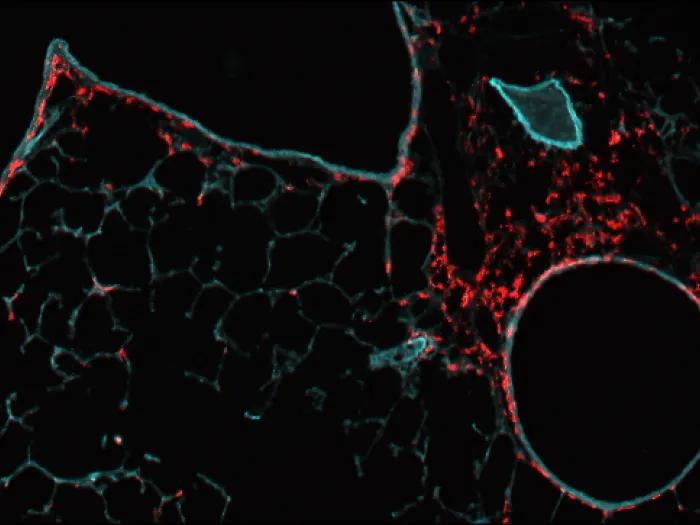
What do we do in M&I? "Adaptive Immunology"