The Answers in the Epigenome
Rogel researchers look to the epigenome to unlock potential drug targets and develop more effective therapies
Author |

The matrix of cancer research involves interconnected layers, each with their own networks of information. A foundational layer of this matrix is the genetic code embedded within every cell of the body.
While these codes are immutable and inherent to the cellular make-up of living organisms, epigenetics, the layer of biology atop them, holds equally exciting potential for cancer researchers.
Epigenetics are the mechanisms that control which genes, including those that drive cancer, are turned on and off. These alterations — like methylation of DNA, histone acetylation and RNA modification — don’t change the genetic code itself but rather impact its activity: which genes are activated, when, and how much.
Epigenetics maybe the puppet-masters that control oncogenes, but much about their make-up remains a mystery.
To better understand the epigenome, Rogel researchers are looking inward and outward, investigating its cellular biology and mechanisms, while also examining the role of environmental factors on these vulnerable systems. One thing these researchers have in common?
A belief in the potential of the epigenome to lead to more effective therapies, more knowledge about how to guard against cancer drivers and better outcomes for patients.
Key Players
Patrick Grohar, M.D., Ph.D.,has dedicated his career to developing new therapies for Ewingsarcoma. Grohar, Russell G. Adderley Professor of Pediatric Oncology at Rogel and U-M’s C.S. Mott Children’s Hospital, joined Rogel in 2024 and also runs the Ewing Sarcoma Institute. His team focuses on mechanistic pharmacology, using discovery science to identify molecules that might be good candidates for new drugs.
As Grohar tells it, researching therapies for Ewing sarcoma means directly engaging with epigenetics given the role of transcription factor oncogenes in the formation of the disease.
Transcription factors are proteins that help coordinate the structure of chromatin to affect gene expression and directly regulate gene expression – and many transcription factors are oncogenes. These cancer drivers can form by chromosomal translocations – chromosomes that rejoin in usual ways during cell division to result in oncogenes.
“Ewing sarcoma is the paradigm of this process,” Grohar says. “The disease has a fusion transcription factor that drives the tumor, which presents a very challenging drug target.”
Grohar explains that these fusion transcription factors have been described in many tumor types, including sarcomas, leukemias, prostate cancers and other solid tumors.
While transcription factors are central to many biological processes – they find DNA in thousands of places, turn on and off thousands of genes with one single mutation, interact with other proteins – they are notoriously difficult to target with therapies due to the slippery nature of the protein; there is no “pocket,” or place for the drug molecule to latch onto.
“Epigenetics is fundamental to both the formation of tumors as well as the emergence of drug resistance, but we don’t fully understand how to most effectively target epigenetic processes,” Grohar says.
“We have a lot of molecules that target specific proteins that regulate chromatin structure, and we need to understand how they impact drug resistance, metastasis and tumor biology.”
Recently, Grohar’s team made a breakthrough linking a class of molecules called trabectedins with EWS::FLI1, a transcription factor and driver oncogene of Ewing sarcoma. The drug had previously been successful in a phase 1 clinical trial, but showed no response when moved to phase 2. Grohar’s team wanted to understand why it succeeded in one trial but not the other.
“Over the span of 10-15 years, we did a series of mechanistic studies and showed genome - wide epigenetic and transcription effects. We determined that the drug worked better if given over a one-hour period instead of a 24-hour period. The trial has been tremendously successful,” Grohar explains.
These observations may explain the negative phase II described above and provided the basis for a new trial in collaboration with Rashmi Chugh and Denise Reinke at U-M.
Grohar says this research exemplifies the potential within epigenetics research. “For many tumors, we develop drugs based on genetic mutations. There’s a specific area in a protein that’s druggable that we can target,” he explains.
But that’s not the case for epigenetic mutations. “Many of those tumors that are driven by oncogenic transcription factors don’t have a lot of mutations,” Grohar continues. “It can be unclear what distinguishes a high-risk Ewing sarcoma from a low-risk because the oncogenic driver is the same – both have EWS::FLI1.”
Grohar says epigenetic factors likely determine the difference between high and low risk tumors. “We’re starting to gain some understanding of the differences by examining large data sets and finding things like proteins that are impactful at the chromatin structure that influence epigenetics.”
Epigenetics impact everything in the cancer: from tumor formation and continued growth, to relapse and metastasis,” Grohar continues. “Keen understanding of how to best manipulate these epigenetic processes therapeutically has tremendous promise for all tumor types.”
Drugging the Undruggable
Arul Chinnaiyan, M.D., Ph.D., director of the Michigan Center for Translational Pathology and S.P. Hicks Endowed Professor of Pathology, has been researching the link between epigenetic mechanisms and possible therapeutic targets for over 20 years. “There has been a lot of traction in terms of targeting epigenetic pathways as a valid way to impact cancer,” he says.
In 2002, Chinnaiyan’s team discovered that the enzyme EZH2, a key transcriptional repressor, is overexpressed in metastatic prostate cancer. Now, drugs have been developed to inhibit EZH2 and approved for the treatment of prostate cancer, stemming from Chinnaiyan’s initial discovery.
More recently, Chinnaiyan has focused on therapeutic targeting of oncogenic transcription factors by indirectly affecting their ability to access enhancer DNA in chromatin. In a paper published in Nature in 2022, Chinnaiyan’s team used that model to inhibit key components of the SWI/SNF pathway by using PROTAC degrader molecules. By disabling the pathway, oncogenic transcription factors cannot access chromatin to bind to the enhancer elements in DNA that drive the overexpression of oncogenic gene programs.
Since the initial publication of these findings, the team has also discovered the SWI/SNF pathway plays a role in small-cell lung cancers and multiple myeloma.
“Targeting the SWI/SNF protein complex gives us a workaround for direct targeting of transcription factors such as androgen receptor, FOXA1, ERG or MYC, which have been notoriously difficult to target,” says Chinnaiyan.
He recently collaborated with Abhijit Parolia, Ph.D., assistant professor of pathology and a Rogel Fellow, on a study related to FOXA1, a key transcription factor that facilitates androgen receptor binding to DNA and is mutated in 10–40% of prostate cancers. The findings appeared in Science earlier this year.
In addition to establishing FOXA1 as a true oncogenic driver in prostate cancer, their findings reveal the distinct ways that each class of FOXA1 mutations operate: Class 1 mutations, commonly observed in primary prostate cancer, work with loss of the gene TP53 to promote the formation of aggressive tumors; Class 2 mutations, typically found in metastatic prostate cancer, do not independently initiate tumor growth. Instead, they reprogram the cellular lineage identity, driving resistance to hormonal therapies comprising the first line of targeted treatment.
“We demonstrated that prostate tumors driven by Class 1 mutations require continuous androgen supply for growth and survival, establishing the FOXA1/p53 mouse model as a valuable preclinical system,” says Chinnaiyan.
In metastatic disease, Class 2 mutants acquire the ability to access latent DNA sites. “Activation of these sites turn on genes that drive adaptation to androgen blockade, enabling cancer’s escape from therapy,” Parolia explains.
This work highlights a key factor of the role epigenetics plays in cancer progression. “While initiation of prostate cancer seems to rely on mutations in the DNA, its progression to metastatic, aggressive therapy - resistant disease depends less on further changes to the DNA sequence and more on epigenetic alterations — modifications to the chemical state or function that govern how these mutations are expressed,” Parolia continues. “This is where we’re focusing our current research.”
Looking to the Environment
Investigating the epigenome is not only relevant to better understand cancer biology; it can also shed light on the effect of the environment on our cellular make-up.
Dana Dolinoy, Ph.D., M.Sc., NSF International Chair of Environmental Health Sciences at the U-M School of Public Health, works to define the connection between cancer and the environment, which she defines holistically, including chemical exposures, diet, stress and social experiences. “The epigenome is the layer of regulation on top of our genes that controls how genes are expressed: when, where, and how much genes are turned on and off.”
Unlike the genome, the epigenome can change throughout the course of a person’s life, making it vulnerable to outside environmental influences. Dolinoy explains that early in life is the most vulnerable time for the environment to impact the epigenome, and there are other periods throughout life when the epigenome goes through a series of reprogramming, in essence, “resetting” gene regulation.
“Certain marks like DNA methylation are erased and reestablished very early in development,” she says. “If there is an environmental exposure already on board, we can imagine that it can greatly affect programming such that you might see the effects at birth, but they could manifest at various points throughout life.”
Exposure to PFAS chemicals, air pollution from factories or wildfire smoke has been shown to alter the epigenome, along with other chemicals that disrupt the endocrine system. Longitudinal studies like MI-CARES, conducted at U-M with Dolinoy and researchers Leigh Pearce, Ph.D., and Justin Colacino, Ph.D., are gathering data to understand the long-term impact of environmental exposure a nd cancer risk.
Although researchers have strong evidence that the environment does, in fact, connect to cancer, Dolinoy explains that the mechanism for how this happens is still unclear. “We’ve done a wonderful job for the past 20 years looking at how environmental exposures change epigenetic marks. There is amazing technology at U-M where we can look at DNA methylation, histone modifications, or non-coding RNAs. We’ve shown many different changes, thousands of changes,” she says.
“What is more difficult to understand is what happens between the environmental exposure and the molecular read-out. It’s a black box.”
Some exposure will directly affect epigenetic machineries – histones or enzymes – the exact knobs and levers responsible for turning genetic marks on and off. Other environmental exposures will increase oxidative stress, which will dampen the efficiency of the one - carbon metabolism pathway throughout the body, which then ends up affecting DNA and histones.
And while the malleability of the epigenome presents certain vulnerability when it comes to cancer risk, Dolinoy notes that that exact characteristic also signals the epigenome as having a lot of potential to protect and treat against cancer.
“Not all cancer is genetic or spontaneous; some emerges just from the switching on or off, or of different levels, of genes that are expressed,” Dolinoy says. “Unlike a genetic mutation, which doesn’t change, the epigenome is plastic and modifiable. We have a higher chance of being able to redirect that gene expression back to a normal profile. Epigenetics as a mechanistic linkage in cancer gives us a lot of hope.”

Illuminate
Rogel Cancer Center magazine
Featured News & Stories
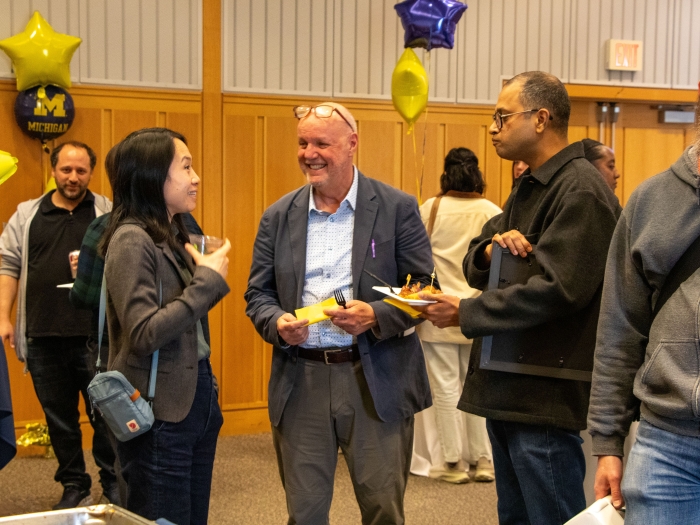
Celebrating Scientific Journeys: Inside CDB’s 2026 Annual Celebration

Stopping Ewing sarcoma relapses where they start
Dr. Jorge Ruas featured in article "Supplementing with peptides: Good for extra pep or a needless step?"
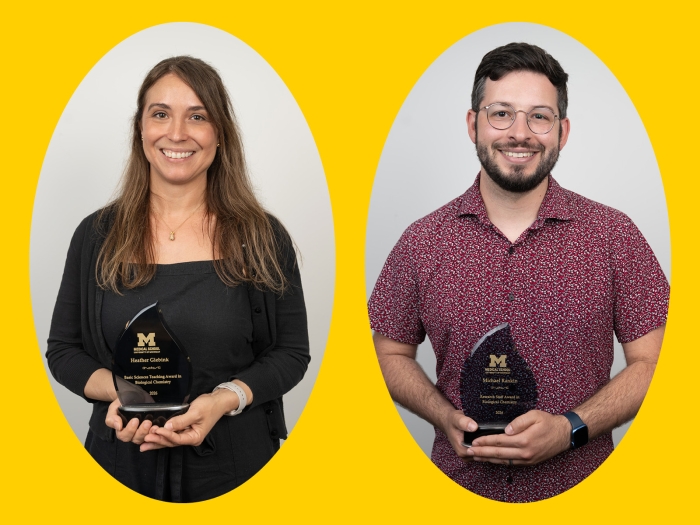
Heather Giebink and Michael Rankin receive Endowment for Basic Sciences Awards
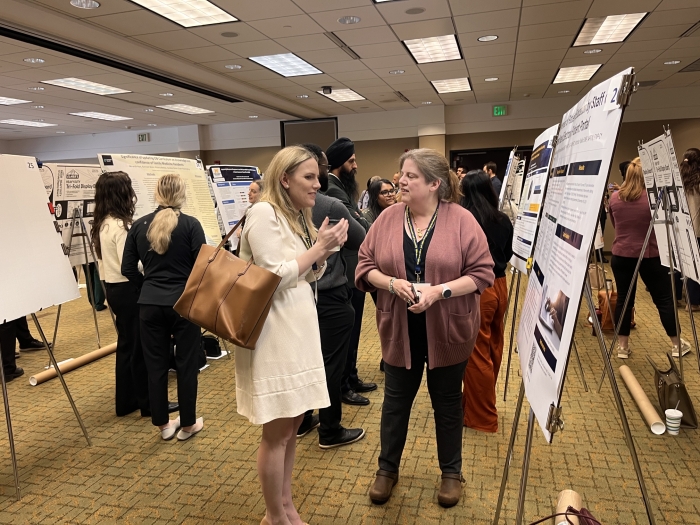
Family Medicine faculty, residents and students showcase innovative studies at Michigan Family Medicine Research Day