
Andre’s Michigan Answer: A second surgery. And a second chance.

Andre Gibson was a typical man, but not in a good way.
According to a recent study by the insurer AFLAC, in the past 12 months, 45% of men did not visit a family doctor or general practitioner for an annual check-up or wellness visit.
Candidly, Andre admits he never thought he needed a doctor. “I’ve always been pretty active and because I felt good, I just never felt the need to go in.” But in early 2017 at the age of 49, Andre began to rethink his doctor-less position, because he noticed some subtle changes in how he felt. Sleeping and breathing difficulties created a willingness to visit a primary care physician. After a trip to the ER revealed Andre was in early stage heart failure and that he would need the aortic valve in his heart replaced.
I’ve always been pretty active and because I felt good, I just never felt the need to go in.
Both Andre and his now-wife Heidi remember feeling stunned by the news. “Neither of us were expecting to hear that something was wrong,” remembers Heidi. “And then to be given a diagnosis that severe was pretty shocking.”
Less than 4 weeks later, Andre went to a local hospital near his home and followed his physician’s advice to have heart surgery. But, over the next four years, he was never truly healed. Andre recalls, “I felt tired a lot and just knew something wasn’t right. I kept hoping to fully recover, but just never did and felt like this was my new normal.”
After another visit to the same team of doctors who performed his heart surgery, it was discovered that the surgeon had failed to notice Andre had a thoracic aortic aneurysm. Worse, the reason he was sluggish all the time was that the valve the surgeon used was too small.
It was then suggested that Andre have a second surgery to replace his undersized valve and repair his aneurysm. This time, his doctor told him to go to Michigan Medicine.
While Andre was excited by the thought of Michigan Medicine helping him, Heidi already had a deeper connection with the hospital and was even more ecstatic. “My sister overcame cancer with the help of Michigan Medicine. So, I had full confidence that they could work the same wonders for my husband,” says Heidi.
In July of 2021, Andre met with Himanshu Patel, M.D. at Michigan Medicine. As a cardiac surgeon inside the Frankel Cardiovascular Center, Dr. Patel has treated hundreds of patients suffering from heart aneurysms. He helped Andre and Heidi understand the complexity of Andre’s heart condition and why a second surgery was imperative.
“As a result of what’s most likely a congenital abnormality, Andre has what’s known as a bicuspid aortic valve, which makes his heart more prone to early failure. Patients with aortic valve disease can have an increased frequency of aortic aneurysms, so I wasn’t surprised to see that Andre had that condition as well,” remembers Dr. Patel.
After assessing Andre’s condition and how he was affected by the first surgery, Dr. Patel suggested implanting a better and stronger mechanical valve into Andre’s heart to give him the necessary blood flow he was missing.
“The average life expectancy for a tissue prosthetic aortic valve like Andre’s is 10 to 15 years and often requires a second operation to place a new one. But patients who chose a mechanical valve will see it last up to 30 years. So, it’s a much better option,” says Dr. Patel.
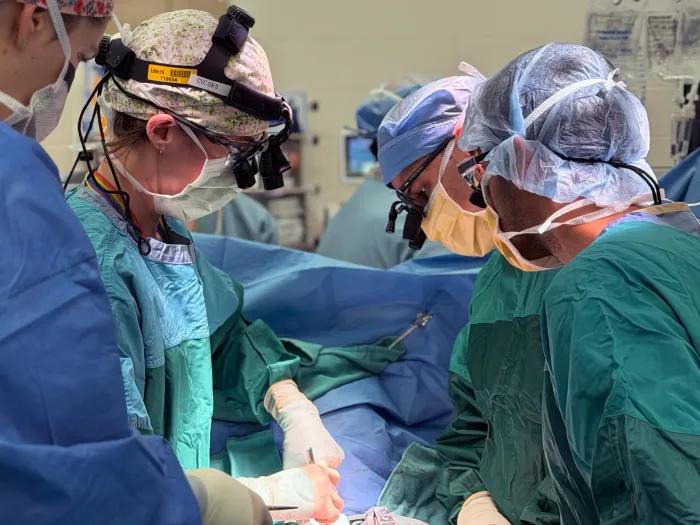
Less than six weeks after his first visit with his Michigan Medicine team, Dr. Patel performed surgery to insert a new mechanical valve in Andre’s heart. Within days, he not only left the hospital but was feeling immensely better. “I could definitely feel the difference with the mechanical valve,” remembers Andre. “I definitely had more energy.”
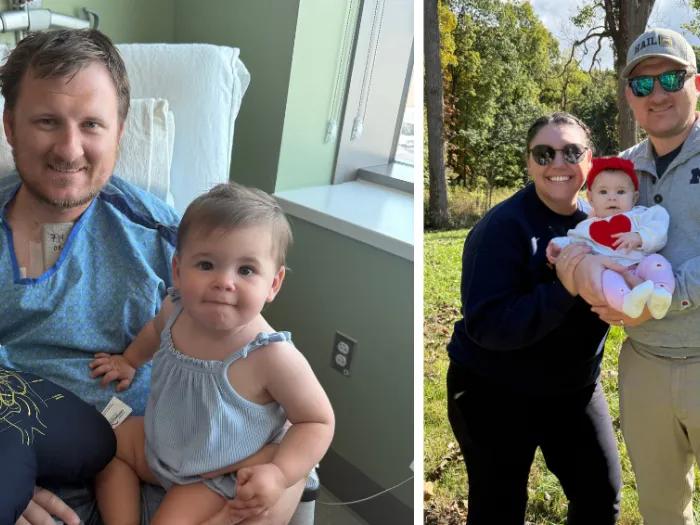
Now at 54, Andre continues to feel great. “I can rake leaves and don’t feel like I’m going to pass out. I just feel young again,” says Andre.
And Heidi has also noticed her husband’s dramatic improvement. “I can tell that Andre is better. We like to garden, and he is more active. He feels better and looks better,” she says.
Today, Andre is back at work, where he’s able to perform physical labor. He can ride his bike again and be active in all the ways he previously did. And Dr. Patel is optimistic for a full recovery and believes Andre’s future will likely be surgery-free.
“Andre should be set for life with the new valve. That’s the advantage of this remarkable technology,” says Dr. Patel.
As for his experience with Michigan Medicine, both Andre and Heidi remain forever grateful for the care they received.
“Everyone was excellent. The doctors, nurses and everyone else were rooting for me to get back on my feet,” says Andre.
“The team empowered us in every way. Now, we get to tell everyone we know that we went to Michigan Medicine,” says Heidi.

Health Lab
Explore thousands of health news & research stories by visiting the Health Lab homepage for more.
In This Story

Himanshu J Patel, MD
Professor
Featured News & Stories
Young father survives aortic dissection after delayed diagnosis
Failed TAVR? Heart surgeons explain TAVR explant, options and risks
1 in 5 older adults get infections after heart surgery, and women have a 60% higher risk

Paying it forward

“The strength and grace” of one mom with severe heart disease

